
Guides
Accessible Caribbean Cruise Ports & Activities
At a glance
- Who it is for: wheelchair users, scooter users and cruisers who walk slowly or cannot manage long distances or steps.
- Sailing from: Florida terminals (Port Everglades, PortMiami, Port Canaveral), typically seven nights.
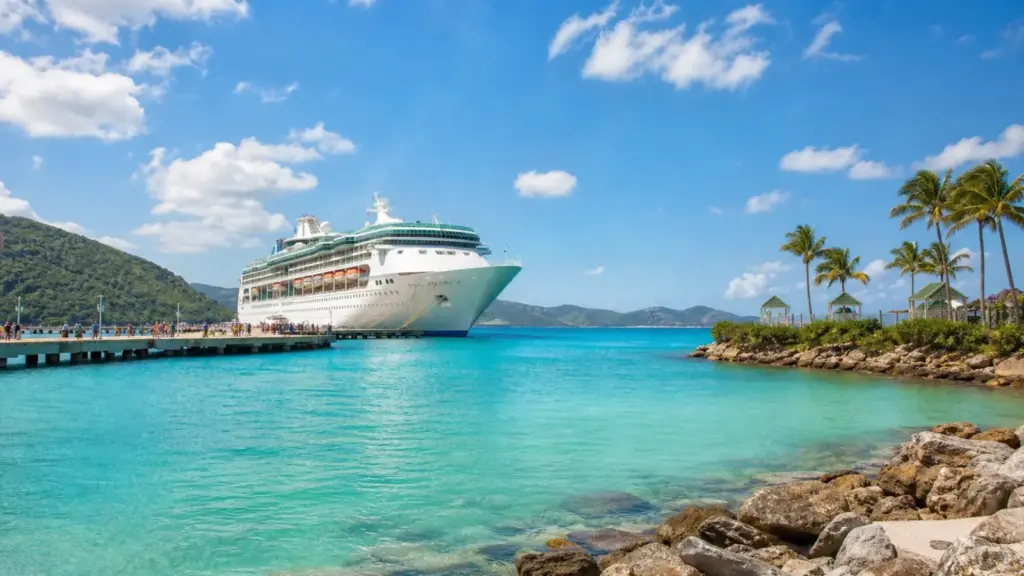
- The big split: ports with a ship-side pier are usually far easier than tender ports, where you ride a small boat from an anchored ship.
- Ports covered: Nassau, a line-owned private island, St. Thomas, San Juan, Cozumel and Grand Cayman, with swap notes for Costa Maya, Jamaica and St. Maarten.
- Book early: accessible staterooms are few and sell out, so ask the line before or right after you pay your deposit.
- Paperwork: US citizens on closed-loop cruises still carry proof of citizenship, so check the CBP page before you go.
- Stay-aboard days are a legitimate choice, not a failure.
- Advisory levels (State Dept, seen 2026-10-11): Mexico 2, Jamaica 2, Bahamas 2, Cayman Islands 1.
When to go
Caribbean cruises run all year. Hurricane season is typically June through November, which can reroute ships; travel insurance and flexible plans matter more then. Winter is the dry, busy season, with crowded piers and higher demand for accessible cabins. Heat is a real issue for people who cannot easily seek shade, so consider early-morning port outings in summer. Confirm the sailing dates with your line.
Where to stay by area (before you sail)
- Fort Lauderdale (Port Everglades): many airport-and-port hotels. Ask each hotel directly about roll-in showers and shuttle lifts.
- Miami (PortMiami): downtown and Brickell hotels sit close to the terminals; confirm shuttle accessibility.
- Cape Canaveral/Cocoa Beach (Port Canaveral): beach hotels with a longer drive from Orlando airport.
Check each hotel chain's own map for accessible-room options. We list no room rates.
Rough cost of the trip, three ways
-
Plan your budget
Your trip budget worksheet
Prices change daily, so we don’t quote them. Fill this in from the official fare pages.
Your trip budget worksheet Item Your amount Budget: fare taxes/fees flights or drive pre-cruise night gratuities port-day budget -
Plan your budget
Your trip budget worksheet
Prices change daily, so we don’t quote them. Fill this in from the official fare pages.
Your trip budget worksheet Item Your amount Mid: balcony or accessible cabin fare one ship excursion per two ports equipment rental insurance -
Plan your budget
Your trip budget worksheet
Prices change daily, so we don’t quote them. Fill this in from the official fare pages.
Your trip budget worksheet Item Your amount Points-heavy: points used taxes/fees paid flights on points insurance
Fill these from the cruise line's booking page; we do not quote prices.
Entry rules
US citizens on a closed-loop sailing (back to the same US port) typically need proof of citizenship and photo ID. A passport is the safest choice and the one most ports of call expect. Confirm on cbp.gov. Non-US citizens should check visa rules for each port. Mexico, Jamaica and the Bahamas each have their own entry process; the cruise line usually handles group clearance, but you carry your own documents.
Three free things (each with a photo)
- Watch the ship come into port from the terminal's waterfront promenade at Port Everglades or PortMiami before you board.
- A free, level waterfront stroll in Charlotte Amalie or Nassau's pier-front area, staying on pavement.
- Sit in the shade at Old San Juan's flat plaza near the cruise piers and watch the harbor.
How to read a port: the five questions
Before any port day, ask five things of your cruise line's port page and the ship's daily planner. First, is the ship at a pier or anchored and tendering? Second, how far is it from the ship to anything worth seeing, and is that distance on level pavement? Third, are there step-free options at the places you want to go, and who says so (the official site, or a tour brochure)? Fourth, can you reach a beach, and does an official page list beach wheelchairs? Fifth, what time must you be back aboard, and what is your plan if a taxi or tender is late? Answering these five questions on paper before you sail is the single most useful habit in this guide. It turns a vague worry into a short checklist, and it tells you early which ports you will happily skip.
Staying aboard is a real plan
Many experienced cruisers with mobility limits pick one or two ports a week and spend the rest of the time on quiet decks, in the spa, or at the theater. Ports that require a tender, ports with steep cobbled streets, and ports where the only accessible transport must be booked through the ship are the usual candidates. Treat a stay-aboard day as part of the itinerary, not a loss. Empty pool decks and short dining-room queues are a genuine perk.
What this guide does and does not do
This guide helps you plan; it cannot promise access. Cruise lines, ports and attractions change their rules, and several official pages did not open from our research environment on 2026-10-11. Where a fact could not be confirmed we say so and name the page to open. Mexico and Jamaica port details carry a human-pass flag in our notes and should be confirmed with your cruise line before you rely on them.
Choosing your ship
Newer, larger ships often have more accessible cabins in total, while smaller ships may offer more pier ports and fewer tenders. Either way, read the line's accessibility page for deck plans, cabin layouts and elevator counts, and ask about doorway thresholds and balcony lips, which are common snags for wheels. Our cabin guide at /guides/cruises/choosing-a-cruise-cabin/ covers cabin categories in general.
Pacing your week
Pick your must-do port first and protect the days around it. A week with one big outing, two gentle strolls and a stay-aboard day tends to feel better than six half-days of effort. Sea days between ports are for charging batteries, yours and your equipment's. Tell your travel companions the plan in advance so nobody feels pressured to squeeze in one more stop. Keep a short list of the ship's accessible restrooms, quiet lounges and shaded decks; you will use it more than you expect.
Quick first steps
- Choose a line and ask about accessible staterooms.
- Choose an itinerary that favors pier ports.
- Read the cruise-ports guide at /guides/cruises/cruise-ports-101/ and the cabin guide at /guides/cruises/choosing-a-cruise-cabin/.
- Buy the full guide for day-by-day plans.
This is the free lite guide. The full day-by-day guide, with maps, photo stops, rain plans and the points playbook, is part of PerkJolt All-Access.
Good to know before you go
We checked the facts below on 2026-10-11. Confirm hours, fees, pier assignments, tender status and schedules on the cruise line's official page and the port's official page (and their official social accounts for same-day changes) before you book.