
Guides
Oaxaca for Día de Muertos: A Six-Day Festival-Week Guide
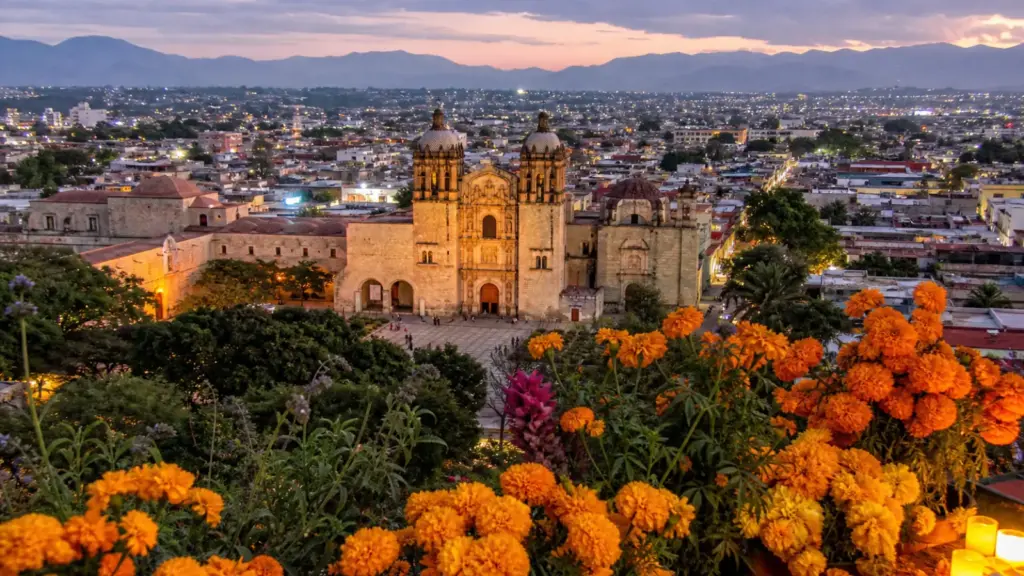
Day of the Dead in Oaxaca is not a Halloween party. It is a family and community week of remembrance: altars in homes and shops, marigolds everywhere, street parades called comparsas, sand tapestries, and quiet candlelit vigils in cemeteries where families sit with their dead through the night. This guide covers that week, roughly Oct 28 to Nov 3. For Oaxaca outside the festival, read /guides/oaxaca-december/. For the Mexico City and Oaxaca pairing, read /guides/mexico-city-oaxaca/, and for the capital itself /guides/mexico-city/. We won't repeat those; this one is about the festival week and how to be a good guest in it.
At a glance
- Fly into: Oaxaca Xoxocotlán International Airport, code OAX, about 1,550 m above sea level (altitude is mild; drink water, go easy on mezcal on day one).
- Base: Centro Histórico for walking; Jalatlaco for quieter nights.
- Getting around: walk in the center, taxis or DiDi at night, a driver or tour for the valley day.
- Cash: pesos. Markets, cemetery food stalls and colectivos are cash.
- Book ahead: rooms, usually many months ahead for this week (check availability now). Cemetery night tours are optional; you can go on your own.
- The mistake: treating the cemeteries as a photo set. Be quiet, ask before photographing anyone, no flash, no costumes inside.
- Safety level: the U.S. State Department lists Oaxaca at Level 2, Exercise increased caution (checked Oct 12, 2026). The Mexico advisory was issued May 29, 2026.
When to go
The core of the festival is generally Oct 31 to Nov 2, with preparations and markets building from about Oct 27 and parades and vigils across those nights. Official dates and programs vary by year; check oaxaca.travel and the city's cultural pages. The state tourism page describes the Days of the Dead as a November event of altars, music and memory but, when we opened it, named no 2026 events (checked Oct 12, 2026). Expect crowds, high prices and sold-out rooms; the days either side of Nov 2 are calmer.
Where to stay by area
- Centro Histórico: walk to the Zócalo, Santo Domingo and the markets. Loudest at night. Best for first timers.
- Jalatlaco: colorful, quieter, ten to fifteen minutes on foot from the center. Fewer big hotels.
- Xochimilco: old barrio north of the center, local feel, simpler lodging.
Hotel programs: check each chain's own map (Marriott, Hilton, IHG, Hyatt, Wyndham, Choice) for Oaxaca; we did not confirm any property.
Rough cost three ways
We don't publish hotel or meal prices we haven't verified. Fill these in on the day you book:
- Lean: hostel or guesthouse, market comida, colectivos and walking.
- Comfortable: boutique hotel in the center, a mix of sit-down meals, one private driver day.
- Points-led: hotel nights on a chain program if one exists in Oaxaca (see the chain's map), flight by miles, everything else in pesos.
The festival week is the most expensive of the year for rooms; price it early.
What the week actually feels like
Most visitors arrive expecting skulls and face paint. What you find is quieter and stranger: a city that is cooking, building and remembering at the same time. During the day, families buy marigolds (cempasúchil), sugar skulls, candles and pan de muerto at the markets. They build altars (ofrendas) at home with photographs, favorite foods, water, salt, papel picado and incense, and many open their homes or shop windows to the street. In the evening, bands wind through the center in comparsas, often with dancers and costumes, and the pace picks up toward midnight. In the cemeteries, families clean and decorate graves, sit with candles, and stay late. The tone shifts from street to street; a comparsa is a party, a graveside is not.
For visitors, that means two modes. In the streets and squares, enjoy yourself, watch, listen and photograph the scene from a respectful distance. In the cemeteries, you are a guest at someone's family gathering. If you hold that distinction, almost everything else about the week works.
A simple six-day shape
- Day 1: arrive, Zócalo and Alcalá, early night.
- Day 2: Santo Domingo, Centro Cultural, markets, altars.
- Day 3: Monte Albán in the morning; first cemetery visit at night.
- Day 4: valley day: Tule, Teotitlán del Valle, Mitla, Hierve el Agua.
- Day 5: Santiago Matatlán mezcal; comparsas; Xoxocotlán vigil.
- Day 6: Jalatlaco and Xochimilco; fly out.
The full guide has clock times, photo stops, rain plans and half-day cuts for every day.
The honest downsides
It's crowded, loud late into the night, and expensive for rooms. Some families will not want to be photographed, and some cemeteries feel more like events than quiet vigils at the busiest hours. Go with patience, book early, and keep Nov 2 loose.
Who it suits
Couples and families with older kids who can stay up late and understand that a cemetery is not a theme park. It is a poor fit for toddlers at night, for anyone who dislikes crowds, and for anyone hoping for a Halloween-style party.
Entry rules
U.S. citizens normally need a valid passport for Mexico; confirm entry, visa and customs rules on the Mexican government's and the State Department's official pages before you fly. We did not verify entry rules for other nationalities.
Three free things
- Tapetes de arena in the Zócalo (sand tapestries; typically made in festival week). Photo subject: sand tapestries and marigolds in the Zócalo.
- Altars and marigold displays around Santo Domingo and the markets. Photo subject: altar offerings with marigolds and candles.
- A comparsa on a side street. Photo subject: a street parade at dusk, no faces. Follow the music, stay at the edge, don't block the band.
This is the free lite guide. The full day-by-day guide, with maps, photo stops, rain plans and the points playbook, is part of PerkJolt All-Access.
Good to know before you go
We checked what we could on 2026-10-12. Festival schedules, hours, entry fees, road status and event dates move, and Oaxaca's official program is often published late. Confirm hours, fees and schedules on the official pages named below, and on the official social accounts of the venue or tourism office, before you book or travel.