
Guides
Japan’s Inland Sea and Kyushu by Small Ship: Ponant, Windstar and Silversea Itinerary Guide
Why this route
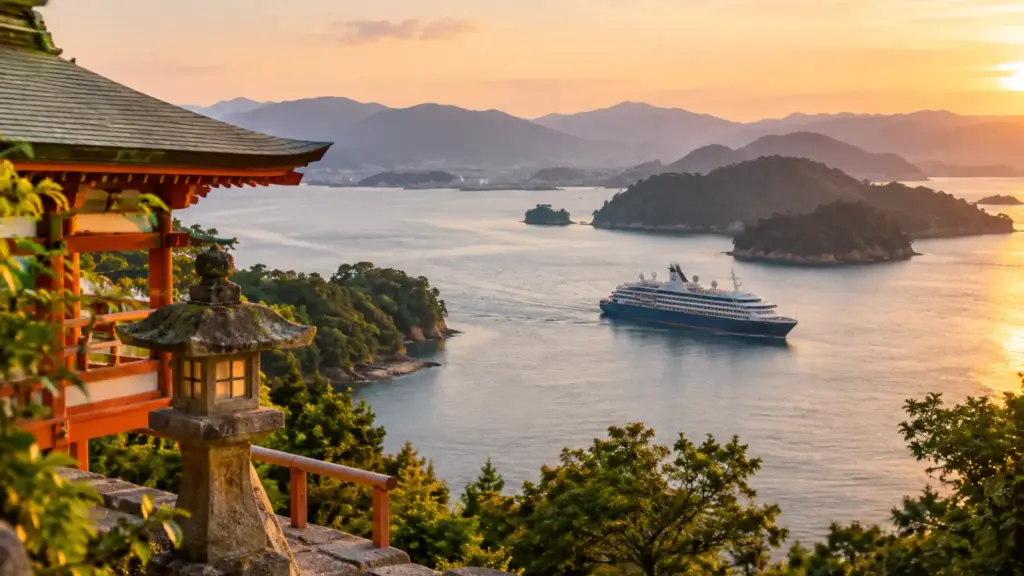
The Inland Sea is the quiet middle of Japan. Instead of the Tokyo-and-Kyoto sprint, a small ship threads between islands, ties up close to town centers in ports big ships skip, and gives you a floating hotel while Hiroshima, Nagasaki, Kagoshima and Fukuoka pass by one morning at a time. Small-ship lines such as Ponant, Windstar and Silversea have each marketed Japan sailings in recent seasons (last we checked; confirm which current sailings include Inland Sea and Kyushu on each line's official Japan page). Ship size matters here: smaller vessels can use central berths and tuck into harbors that larger cruise ships cannot.
This guide works for any sailing that follows the classic shape: start in the Kobe or Osaka area, run west through the Inland Sea, loop through Kyushu, and finish in Fukuoka or a nearby port (or the reverse). Your sailing's exact order, length and port list will differ, so use the day-by-day as a template and match it to your booking.
At a glance
| Typical length | 7 to 12 nights for the Inland Sea and Kyushu pattern (confirm on the line's itinerary page) |
| Best months | Late March to early April for cherry blossom; late October to November for autumn color; May and early June are mild |
| Avoid if you can | Rainy season (typically June to mid-July) and peak summer heat and typhoon season (August to September) |
| Entry | Many nationalities can enter visa-free for tourism, typically up to 90 days (checked Oct 21, 2026); check your own passport on the Ministry of Foreign Affairs list |
| Money | Yen; carry cash for small shrines, ferries and local buses even though cards are widely accepted |
| Walking level | Moderate: castle slopes, shrine steps, cobbled and stepped lanes |
| Biggest mistake | Booking a ship tour for every port when two or three ports are easy by train, tram or ferry on your own |
| Must-book-ahead | Naoshima art museums (timed online tickets, typically weeks ahead in peak season); pre-cruise Kobe or Osaka hotel; flights |
Three free things
- Walk the Peace Memorial Park in Hiroshima. The park is open-air and free to walk; only the museum charges (¥200 for adults, see the museum chapter below). Go early, when the park is quiet and the light is soft.
- Watch Miyajima's torii at the tide you prefer. The shrine's great gate looks completely different at high and low tide, and you can see it from the shore for free. Check the island association's tide page for your date.
- See Kumamoto Castle's towers from outside. Even with earthquake repairs ongoing, the official castle page says the towers can be seen from Ninomaru Hiroba and Kato Shrine (checked Oct 21, 2026). No ticket is needed for the view.
What a good day looks like
You wake in a new harbor, eat a long breakfast with a window, walk or tram to one landmark before the tour buses arrive, have a local lunch in town (noodles, grilled seafood, a convenience-store snack on a bench), and are back on board with a comfortable buffer. Small ships typically sail on a tight clock: the all-aboard time printed in your daily program is firm, and port workers will lift the gangway on schedule.
Who this suits and who it does not
Suits: first-time Japan visitors who want a gentle introduction without changing hotels every night; couples and solo travelers who want comfort and a handful of well-planned shore days; travelers who like history and food more than shopping.
Does not suit: anyone who wants Tokyo, Kyoto and Mount Fuji on the same trip (you will need a land extension); budget travelers expecting hotel-only prices (small-ship fares are a premium product); people who dislike port-intensive schedules.
Key money notes
- Fares are per person and vary widely by line, season and cabin. We never quote a specific sailing's price here; check the line's own page.
- Ask each line what is included. Small-ship lines typically bundle more than mass-market ones (some or all of dining, drinks, gratuities, wifi), but inclusions differ; confirm on the line's fare page or in your booking.
- Budget separately for flights, pre- and post-cruise hotels, shore tours and local transport.
Pointing a points budget at this trip
Cruise fares themselves rarely book directly with transferable points, but the pieces around them do. Flights to Osaka (Kansai), Fukuoka or Tokyo can come from airline miles you transfer from Chase, Amex, Capital One, Citi or Bilt, and the hotel night before sailing and after can come from hotel points. The full guide covers which program to try first and a step-by-step award search.
The route in one glance
Kobe or Osaka embarkation, then Hiroshima and Miyajima, Naoshima, a castle-and-hot-spring town such as Matsuyama, Beppu, Nagasaki, Kumamoto, Kagoshima and Fukuoka. That is the shape; your sailing may drop some stops and add others, such as small island calls only a small ship can make. Because itineraries differ by line and year, always compare the port list on the line's official page before you compare prices.
Four tips for first-timers
- Keep one stretchy layer and a rain shell in your day bag; weather turns fast on this coast.
- Learn to read the printed all-aboard time and subtract at least 30 to 45 minutes for your own planning.
- Save the name of the pier in Japanese on your phone so a taxi driver can read it.
- Pair one big sight with one slow meal in each port, rather than stacking sights.
Before you read the full guide
Check three things now: your passport's validity against Japan's and the cruise line's requirements; whether your chosen sailing's dates fall in blossom, autumn or rainy season; and whether your sailing starts and ends in the same port. The answers change your flights and hotels more than anything else.
. Confirm fares, fees, itineraries, port calls and policies on the official page of your cruise line before booking.
This is the free lite guide. The full day-by-day guide, with maps, photo stops, rain plans and the points playbook, is part of PerkJolt All-Access.