
Guides
Aurora Expeditions insider’s guide (polar small-ship)
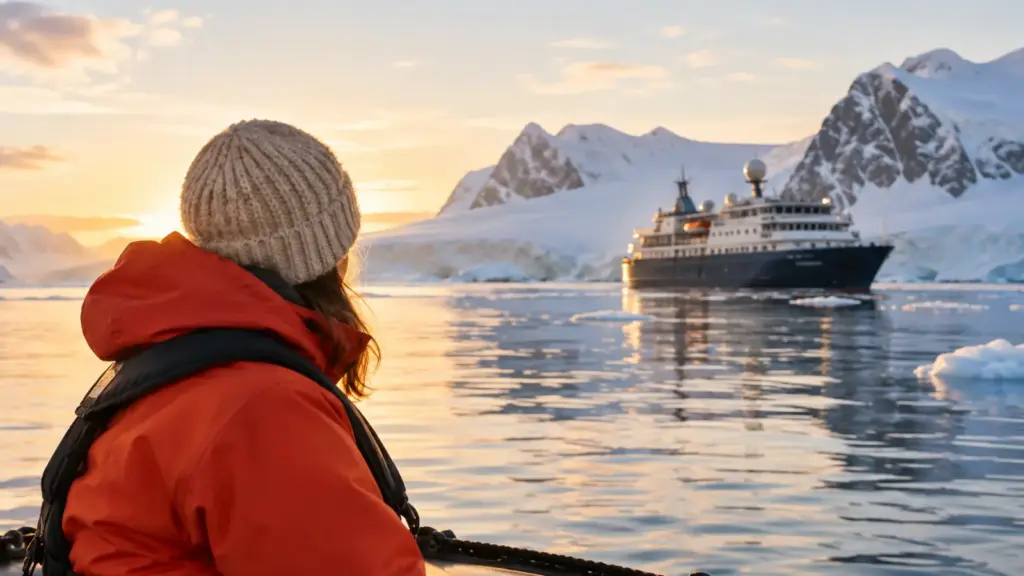
Aurora Expeditions in one minute
Aurora Expeditions is an expedition cruise line focused on the polar regions: Antarctica, the Arctic, Svalbard, Greenland, the Northwest Passage, Iceland, Scotland and parts of Latin America (checked Oct 20, 2026). It runs small, ice-strengthened ships. The line's own page counts three purpose-built small ships; the same fleet is described on its travel-advisor page as the Greg Mortimer and Sylvia Earle at up to 130 passengers each, and the newer Douglas Mawson at up to 154 guests (checked Oct 20, 2026).
This is not a big-ship cruise with a polar port tacked on. It is closer to a floating field trip: landings by inflatable boat, guided hikes, Zodiac cruising, and optional activities such as kayaking and diving (checked Oct 20, 2026). The line says it operates with a staff-to-passenger ratio of about 1:7 and has been running for 33 years (checked Oct 20, 2026).
At a glance
| Best for | Active, curious travellers who want wildlife, landscape and learning over entertainment |
| Not for | Anyone wanting casino, nightlife, kids' clubs or a guaranteed schedule |
| Ship size | About 130 to 154 guests per ship (see above) |
| Booking deposit | $2,500 per person, non-refundable, due within 7 days of booking (checked Oct 20, 2026) |
| Final payment | 90 days before departure (checked Oct 20, 2026) |
| Solo travellers | Roommate matching by gender and stateroom category; solo supplement waived if no match is found (checked Oct 20, 2026) |
| Currency note | Deposit is quoted in the booking currency; as of 2026-10-20, confirm which currency applies to you |
Three free things you can do today
- Price your real budget before you fall for a photo. Write down the voyage fare you were quoted, then add flights to the embarkation city, a pre-night hotel, travel insurance with medical evacuation cover, and tips. Our cost sheet in the full guide has the blanks. A polar trip rarely breaks a budget on the fare alone; it breaks on the extras.
- Check your passport and entry rules. Many polar voyages leave from Ushuaia, Argentina, or from Longyearbyen in Svalbard, and the rules differ by country. Check this on the official page before you book.
- Open the line's voyage page and read the "inclusions" and "extras" lists top to bottom. The line says full inclusions are listed on each voyage's itinerary page, and that extras can include the polar jacket, flights on Fly/Sail Antarctic programs, pre- and post-voyage accommodation in South America, and high Arctic activities in Longyearbyen (checked Oct 20, 2026). Print it and tick what you need.
What a typical day looks like
You wake to an announcement. Breakfast is early. By mid-morning you are in a parka and rubber boots, stepping into an inflatable boat, and an expedition guide is telling you where to stand and how far to keep from the penguins. Afternoon is a second outing or a Zodiac cruise among icebergs. Evening is a recap talk, dinner, and a look at the sky if the weather allows. The ship decides the day. The captain and expedition leader pick landings based on wind, swell and ice, and the plan can change in an hour.
Timing and seasons
Polar seasons are short and the best month depends on what you want. Antarctic voyages typically run through the southern summer, roughly November to March, with early season favoring ice and snow, midsummer favoring penguin chicks, and late season favoring whales. Arctic and Svalbard voyages typically run in the northern summer. These are general patterns, not Aurora's schedule; as of 2026-10-20, confirm exact dates on the voyage page at auroraexpeditions.com. Book early for the best cabins, because ships are small and capacity is limited.
Who it suits
Pick this if you want to be outdoors every day, learn from expert guides, and be comfortable with a changing plan. Skip it if you need fast internet, fixed schedules, nightlife or a hotel-style room. If you are travelling alone, note the line's roommate-matching option and waiver of the solo supplement when no match is found (checked Oct 20, 2026).
Where points fit, in one paragraph
Expedition cruise fares are usually paid in cash, and we found no official Aurora page offering a points-based fare. Points help around the edges. Transferable points can move to airline programs for the flight to Buenos Aires, the usual gateway for Ushuaia, or to Europe for Svalbard connections. For example, Chase, Capital One and Citi points each reach Flying Blue at 1:1, and Amex points reach Delta, ANA and Flying Blue at 1:1. If your card has a travel portal, the cruise may be bookable there; as of 2026-10-20, confirm on the portal itself, because we did not open any card portal for this guide. Our rule of thumb: spend points on the flight, pay cash for the voyage, and use a card with good travel protections for the fare.
Three mistakes first-timers make
First, they book the cheapest cabin without checking where it sits. On a small ship, the difference between a quiet mid-ship cabin and a noisy one near the lowest deck can matter on rough crossings. Second, they under-pack warm layers and over-pack nice clothes. Nobody dresses up on an expedition ship. Third, they forget that the sea crossing to the Antarctic Peninsula can be rough and plan nothing for it: ask your own doctor about seasickness remedies and expect a day or two of rocking.
Should you buy the full guide?
If you are still deciding whether polar small-ship cruising is for you, the lite guide is enough. If you are close to booking, the full guide walks through fleet, cabins, dining and wifi caveats, fees, booking order, paying with points, packing, a one-page printable plan and a cost sheet.
Lite guide word count target met; facts stamped above were opened on 2026-10-20.
This is the free lite guide. The full day-by-day guide, with maps, photo stops, rain plans and the points playbook, is part of PerkJolt All-Access.
Good to know before you go
Cruise facts here are "as of 2026-10-20; confirm on auroraexpeditions.com or in your booking before you sail." Polar voyages can be re-routed for ice and weather, so treat every plan as a plan, not a promise.