
Destination hub
Melbourne
From the laneways and free city trams to the MCG and Great Ocean Road day trips, here is how to plan Melbourne with points.
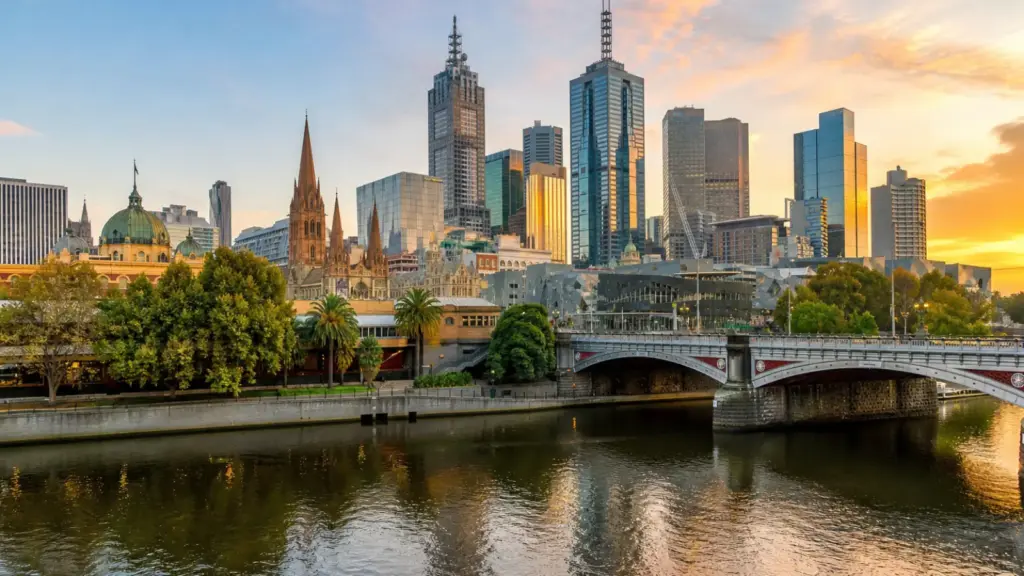
Melbourne is the capital of Victoria. It's a walkable grid of laneways, cafés, galleries, big sport and bayside suburbs, all linked by one of the world's largest tram networks. It rewards food lovers, sports fans and anyone who likes a city with a lot going on.
Who Melbourne suits
- Food, coffee and culture fans. You can fill days on foot and by tram without a rental car.
- Sports travelers. The calendar includes the Australian Open in January, the Grand Prix in March and horse racing in November. The Australian Open is a January draw, the Grand Prix is in March and horse racing is in November. (checked Oct 13, 2026)
- Points collectors with flexible dates. Several transferable-point programs can reach Australia, though award space is never guaranteed.
- Skip it if you only have a long weekend. The flight from the US is very long, and jet lag will eat a short trip.
- Skip it if you need guaranteed beach weather. Melbourne's weather is famously changeable, and its city beaches are not tropical.
When to go
Seasons are reversed from the US. The best overall times are September to November and March to May. Those shoulder seasons bring comfortable temperatures, smaller crowds and typically cheaper airfares and accommodation. (checked Oct 13, 2026)
For the cheapest and quietest trip, the same source points to June to August. That is winter, so pack layers. (checked Oct 13, 2026)
December starts summer, and average temperatures run roughly 14–25°C (about 57–77°F). (checked Oct 13, 2026) Expect the highest hotel prices and the heaviest crowds around Christmas, January and major events like the Australian Open. Book early for those dates.
Getting there
Melbourne Airport (MEL, often called Tullamarine) is the main gateway. International flights use Terminal 2, and the airlines listed there include Air Canada, Air New Zealand, Cathay Pacific, Emirates, Qantas, Singapore Airlines, United and Virgin Australia. Destinations include Los Angeles, San Francisco and Vancouver. (checked Oct 13, 2026) Airline lineups shift, so check Melbourne Airport's own airline list before you commit.
From the US, you'll typically fly nonstop from the West Coast or connect through a Pacific hub. Nonstops from Los Angeles take roughly 15 hours.
How points help: Alliances matter here. Qantas is oneworld, United is Star Alliance and Delta is SkyTeam.
- Qantas: Capital One and Citi both transfer 1:1.
- United: Chase and Bilt transfer 1:1.
- Aeroplan (a Star Alliance option, handy via Vancouver): Chase, Amex, Capital One and Bilt transfer 1:1.
- Virgin Atlantic: Amex and Citi transfer 1:1.
- Delta: Amex transfers 1:1.
See our transfer partners chart for the full list. Search award space first, then transfer. Transfers can't be reversed.
Airport to city: SkyBus Melbourne City Express runs between the airport and Southern Cross Station. It takes about 30 minutes on average, or around 45 during peak traffic. (checked Oct 13, 2026) Fares have typically been around A$25 each way. Confirm the current fare and overnight frequency on SkyBus's own site.
Getting around
The city center is easy on foot, and trams cover most of the rest.
- Free Tram Zone: Trams are free inside the zone, which covers the CBD and Docklands. You don't need a myki card if you stay within it. (checked Oct 13, 2026)
- Don't tap by mistake: If you tap on with a myki inside the zone, you're charged a 2-hour Zone 1+2 fare. (checked Oct 13, 2026)
- Daily cap: With myki Money, you get unlimited travel for the cost of a full daily fare. (checked Oct 13, 2026) Fare levels are reviewed by the state, and Victoria has typically adjusted them on January 1. Check Public Transport Victoria (ptv.vic.gov.au) for current prices.
- Driving: Australians drive on the left. You only need a car for day trips like the Great Ocean Road. City parking is pricey.
Where to stay
- CBD (Melbourne Central, Flinders Street, Southern Cross): Best for first-timers. It's inside the Free Tram Zone and close to the SkyBus drop-off.
- Southbank and Docklands: Good for big-brand towers, river views and easy tram links. Docklands is inside the free zone.
- St Kilda: Suits beach, sunset and nightlife seekers who don't mind a tram ride into town.
- Fitzroy and Carlton: Suit café-hoppers, bar-goers and shoppers.
- South Yarra: Suits shoppers and travelers who want a quieter base near the Botanic Gardens.
Using points here
Hotels: We haven't confirmed specific award properties for this page. Search Melbourne on each brand's own site (Hyatt, Marriott, IHG, Hilton) and compare cash and points rates. Transfer ratios from our chart: Chase→Hyatt 4:3, Chase→Marriott and IHG 1:1, Amex→Marriott 1:1, Amex→Hilton 1:2, and Bilt→Hyatt, Marriott, IHG and Hilton 1:1. See the transfer partners chart.
Flights: Check award space on Qantas, United and Aeroplan first. If your dates are flexible, shoulder-season months often open up more seats. Keep the airline's own site as your final check, since we don't quote award prices here.
Top things to do
- Ride the free trams around the CBD and Docklands to get your bearings at no cost.
- Wander the laneways and arcades for street art, coffee and small bars.
- Browse Queen Victoria Market, and check the market's own site for current trading days and hours.
- Catch an AFL game or tour the MCG, and check the venue's site for fixtures and tour times.
- Spend an afternoon at the National Gallery of Victoria and the Royal Botanic Gardens.
- Take a tram to St Kilda for the beach and the pier at sunset.
- Plan a Great Ocean Road day trip. It's a long day, so consider staying overnight.
- See the Phillip Island penguins, and check Phillip Island Nature Parks for current times and prices.
Know before you go
- Entry for US citizens: You need a visa or an approved Electronic Travel Authority (ETA) before you arrive. An ETA covers tourism or business stays under 90 days. (checked Oct 13, 2026)
- How to apply: Apply through the free Australian ETA app. There's no visa application charge, but the app has a AUD20 service fee. ETAs can only be requested through the app, not a website. (checked Oct 13, 2026)
- Validity: ETAs cover multiple visits within 12 months, up to 3 months each. Apply before you book flights. (checked Oct 13, 2026)
- Currency: Australian dollars. Cards and tap-to-pay are widely accepted.
- Tipping: Generally not expected. Rounding up or leaving about 10% for great table service is a courtesy.
- Plugs: Australia uses Type I plugs at 230V. Bring an adapter, and check that your charger supports 230V.
- Safety: Melbourne is generally a safe city. The sun is strong, so wear sunscreen, and always swim between the flags. Check the State Department page above for current advisories.
More PerkJolt planning for Melbourne
- Trip guide: Melbourne and the Great Ocean Road: A 5-Day Plan Using Points
- Every question about Melbourne: /answers/melbourne/
Popular questions:
- How much does a Great Ocean Road day trip cost?
- How many days should I spend in Melbourne?
- What is the best time of year to visit Melbourne?
- How many days do I need for the Great Ocean Road?
- Is the Phillip Island penguin parade worth it?
- Is Melbourne safe for tourists?
Last verified: 2026-10-13. Airline routes and myki fares are the most likely to change, so check Melbourne Airport's airline list and Public Transport Victoria (ptv.vic.gov.au) before you go.
Good to know before you go
. Confirm hours, fees, schedules and entry rules on the official pages before you book.
Sources
- Virgin Australia: best time to visit Melbourne
- Virgin Australia: Melbourne climate
- Webjet: Melbourne Airport
- SkyBus Melbourne City Express via Experience Oz
- Transport Victoria: cheaper travel with myki
- US State Department: Australia
- Australian Embassy, US: Visas and Migration
- Australian Department of Home Affairs: ETA post
Plan the details
Food
Melbourne Food Guide: Markets, Coffee, Dumplings, and Seasonal Dining
Plan market mornings, Melbourne coffee, CBD dumplings and seasonal Australian dining around the neighborhoods and market days in your itinerary.
Lodging
Where to Stay in Melbourne: CBD, Southbank, South Yarra, and St Kilda
Compare central, riverside, neighborhood and bay bases with current hotel links and practical MEL versus Avalon transfer guidance.