
Guides
Cherry Blossoms in Tokyo and Kyoto
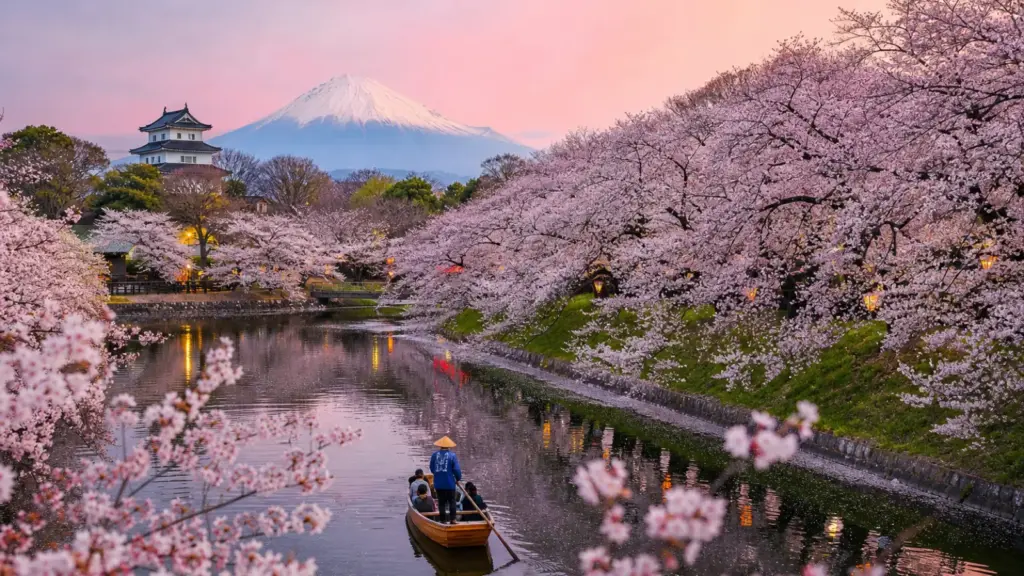
Sakura is the one Japan trip where timing matters more than anything else you book. The petals last about a week in full bloom, the flowers arrive on a schedule the weather decides, and every hotel in the two cities knows it. This guide builds nine nights around that: four in Tokyo, five on a Kyoto base (one of those days goes to Nara). We never state a bloom date for 2027, because nobody can know one this far out. We tell you the typical window and where the forecasts are published.
At a glance
- Typical window: Tokyo often blooms in the last week of March; Kyoto usually follows a few days later. In the 2026 forecast on JNTO's page, Tokyo's average first-bloom date was March 24 (checked Oct 11, 2026).
- Forecasts for 2027 are normally published by private weather firms and JNTO in late winter; check JNTO and the Japan Meteorological Agency (JMA) sakura pages.
- Airports: Tokyo Haneda or Narita in; Kansai (KIX) or Itami out, or fly back from Tokyo and skip the backtrack.
- Getting around: Suica-style IC card for trains and buses; the Tokyo-Kyoto shinkansen is about two and a quarter hours on the fastest trains (confirm on the operator's site).
- Base: Tokyo east side (Ueno/Asakusa) or Shinjuku; Kyoto near Kawaramachi, Gion or Kyoto Station.
- Must-book-ahead: hotels (many travelers book 6 to 12 months out, caveated), shinkansen seats for peak days.
- The mistake most visitors make: planning every blossom day on the same weekend as the peak. Pick weekdays and early mornings.
- Flexibility is your insurance: keep two "swing days" to move blossom stops after you see the live forecast.
When to go
Late March to mid April covers both cities in most years. If you can only fix dates once, choose roughly March 27 to April 5 and keep the plan loose. Arrive early and you may see buds in Tokyo but blossom in no other city; arrive late and Tokyo is petal-fall (hanafubuki) while Kyoto's later varieties and mountain temples still carry blossom. Both outcomes can be beautiful. The full guide has a "wrong timing" rescue plan.
Where to stay by area
- Tokyo: Ueno/Asakusa (park and river sakura on foot, cheaper), Shinjuku (transit hub, near Shinjuku Gyoen), or Nakameguro/Ebisu (the river is on the doorstep, small hotel supply).
- Kyoto: Kawaramachi/Gion (walk to Maruyama and the Philosopher's Path buses), Kyoto Station (easy for Nara, Arashiyama and the shinkansen), or Higashiyama (quiet, pricey).
Rough cost, three ways
Fill each blank using the official fare and booking pages named in the full guide.
-
Plan your budget
Your trip budget worksheet
Prices change daily, so we don’t quote them. Fill this in from the official fare pages.
Your trip budget worksheet Item Your amount Budget: hostel/business hotel per night x 9 + IC card and rail food temple fees Item 5 -
Plan your budget
Your trip budget worksheet
Prices change daily, so we don’t quote them. Fill this in from the official fare pages.
Your trip budget worksheet Item Your amount Mid: business-class hotel per night x 9 + shinkansen food fees Item 5 -
Plan your budget
Your trip budget worksheet
Prices change daily, so we don’t quote them. Fill this in from the official fare pages.
Your trip budget worksheet Item Your amount Points-heavy points per night at a program property x 9 + cash for rail and food Item 3 points
Entry rules
US citizens are visa-exempt for short stays, listed at 90 days on Japan's Ministry of Foreign Affairs list (checked Oct 11, 2026). You still need a passport valid for your stay and a return or onward ticket; confirm on the Ministry page and consider registering on Visit Japan Web (the government's digital immigration and customs form) before you fly. The US State Department's Japan advisory is Level 1, "Exercise normal precautions", with a page footer dated August 11, 2025 (checked Oct 11, 2026).
Three free things (each with a photo)
- Meguro River at dawn: the canal lined with cherry trees is free to walk; go early, before the lanterns and crowds.
- Maruyama Park in Kyoto: the weeping cherry at the center of the park is free to view any time the park is open.
- Philosopher's Path: a stone canal-side path under cherry trees, free and best before 8 a.m.
How the forecasts work (read this before you book)
Japan has two blossom signals. A forecast is a prediction from weather models and tree-temperature counting; an observation is the official record that a named reference tree has actually opened. Private weather firms and tourism bodies publish forecasts, and the Japan Meteorological Agency publishes the observation methods, the "normal" first-bloom and full-bloom maps and the historical records (checked Oct 11, 2026). JNTO hosts a forecast page that credits the Japan Weather Association (checked Oct 11, 2026). First bloom (kaika) is when about five or six flowers open on the reference tree; full bloom (mankai) comes roughly a week later and the flowers last about another week, depending on wind and rain. Forecasts tend to tighten to within a few days only in the final three to four weeks. So you book the hotels on the typical window, and you adjust the order of your days on the live forecast.
Crowd-dodging in one paragraph
The same tree is a different place at different hours. Go at sunrise (about 6 a.m. in late March) for the canal and moat spots, mid-morning for gardens that charge admission, and after dinner for lit trees where lighting is offered. Midday on a weekend in peak week is the worst time at the famous spots. Weekdays beat weekends; overcast mornings beat bright afternoons for photographs. If your dates are fixed, put the free, famous spots first thing and the paid gardens after.
What the full guide adds
Ten day plans with clock times, a photo stop and a rain plan on each; base cards for six neighborhoods; an arrival-too-early and arrival-too-late rescue plan; viewpoint-by-viewpoint light notes; illumination cautions; a points mini-playbook using only verified transfer ratios; cost sheet with blanks; and one-page printable day sheets with emergency numbers.
Want the day-by-day plan, base cards, the points playbook and printable day sheets? The full guide has all of it.
This is the free lite guide. The full day-by-day guide, with maps, photo stops, rain plans and the points playbook, is part of PerkJolt All-Access.
Good to know before you go
We checked the facts below on 2026-10-11. Confirm hours, fees, and schedules on the official page (and the agency's official social accounts for same-day closures) before you book. Bloom dates move every year with the weather, so treat every date here as a typical window, not a prediction.