
Lodging
Where to Stay on the Amalfi Coast: Amalfi, Positano, Ravello, Maiori/Minori or a Gateway?
Compare Amalfi, Positano, Ravello, Maiori and Minori, plus Salerno and Sorrento gateways, by road and ferry links, stairs, luggage and one-, two- or three-day trip length.
How long is your visit?
Choose an itinerary, or read the full guide below.
Check the full guide for arrival, ticket, accessibility and booking details.
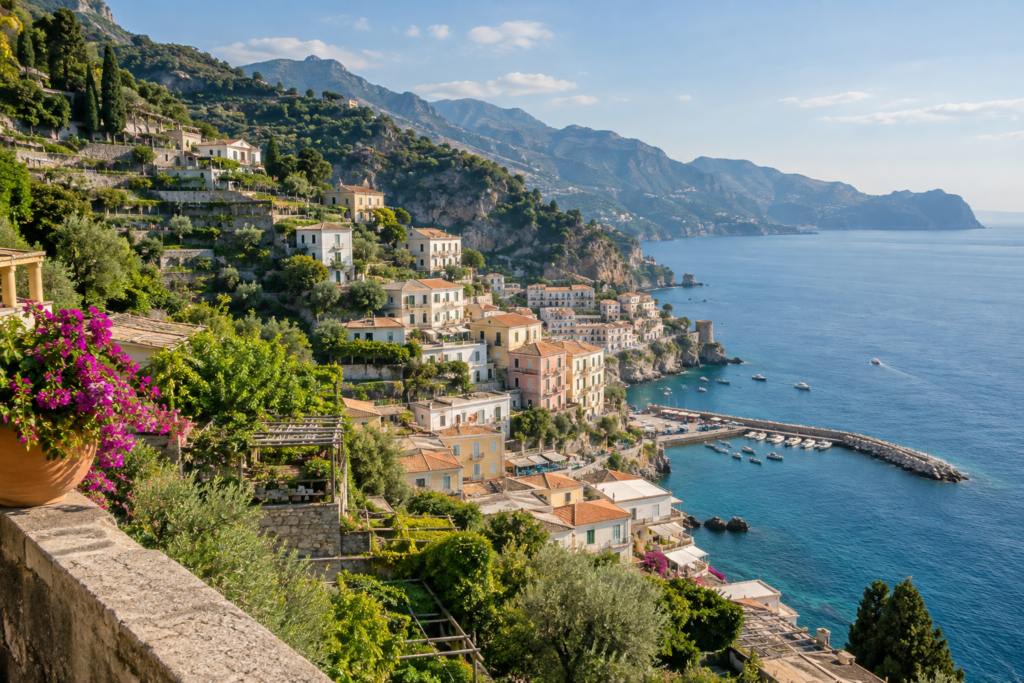
The Amalfi Coast is a collection of hill towns and small waterfront settlements linked by a narrow, winding coastal road, with some ferry connections and buses but no single rail line running through the coast. A base that looks central on a map can still mean a steep climb, a bus queue, a ferry change or a long transfer with bags. Amalfi is the practical middle coast hub; Positano is the iconic vertical village; Ravello sits high above the sea; Maiori and Minori are lower and more level; Salerno and Sorrento are transport gateways rather than coast-town substitutes. Choose by the journeys you will repeat, your tolerance for stairs and your dates. Confirm the hotel’s precise entrance and arrival instructions.
Compare the main bases
- Amalfi: The central bus and ferry interchange makes Amalfi a useful one-base choice for visiting both sides of the coast. The historic center clusters around the cathedral and harbor, but many hotels climb the hillsides or sit beyond the level waterfront. Ravello is uphill and reached by road; a ferry does not take you there. If arriving by boat, check whether your hotel is near the harbor or needs a steep walk, road transfer or luggage help. The town can be crowded around the harbor and central lanes in peak season.
- Positano: Best when the town itself, its beaches, dining and views are the main event. Positano rises steeply from the waterfront to the SS163; stairways and slopes connect the levels, and a hotel’s “near the beach” description may still involve a substantial uphill return. The ferry pier is at the lower town; buses stop higher along the road and may not serve the same hotel approach. With rolling luggage, agree on a porter or hotel luggage service and arrival point before travel. It is an awkward base for frequent cross-coast day trips because reaching either end can take time.
- Ravello: Choose this hilltop base for gardens, music, views and quieter evenings above the coast. It has no harbor and no railway station; access is by road, usually via Amalfi, with bus service subject to the current timetable and traffic. Reaching a beach or ferry means descending to a coastal town first, so account for that in every day plan. Check the hotel’s elevation, the distance from the bus stop, any stairs and whether luggage transfer is offered. Ravello suits a slower stay more than a rapid beach-hopping itinerary.
- Maiori and Minori: These neighboring east-coast towns have a more level seafront than Positano and Amalfi’s hillside addresses, and can be sensible for families, beach time or a less vertical daily routine. Maiori has a long waterfront and road/bus links; Minori is smaller and close by. Both have seasonal ferry calls on some services, but schedules and direct connections vary. Ravello still involves an uphill trip, and Positano is not a quick walk away. Compare the exact lodging address to the bus stop, harbor and beach, and verify the return service before planning a late evening elsewhere.
- Salerno: A practical mainland gateway with a mainline train station, urban services and ferry departures from more than one pier in some seasons. It usually makes transfers to and from Naples, Rome or other rail destinations simpler than sleeping in a small coast village. Staying here trades the postcard setting for more predictable rail access and a larger city selection. Match the hotel to the actual pier named on your ticket: Piazza della Concordia and Molo Manfredi are distinct departure points. For a coast-focused short trip, count each transfer before choosing Salerno as your base.
- Sorrento: A gateway on the peninsula, with EAV rail connections toward Naples and seasonal boat links toward parts of the coast. It is not on the Amalfi Coast proper and lies west of Positano; road trips between them still use the congested coastal route. Sorrento can fit an itinerary combining Pompeii, Capri or Naples, but it adds cross-peninsula travel for Amalfi, Ravello, Maiori and Minori. Use the current EAV timetable and ferry operators’ date-specific schedules rather than assuming a convenient same-day connection.
Five operator-listed stays to compare
Rates, open dates, room features and services change; compare the same dates, room category, taxes, breakfast, cancellation terms and total transfer cost. A map pin does not confirm a level route or luggage access.
- Anantara Convento di Amalfi Grand Hotel — Amalfi: Via Annunziatella 46, above the harbor; the operator says it is about 600 m from Piazza del Duomo and 350 m from the harbor. This illustrates a hillside address close to central Amalfi in distance but with elevation to consider. Ask how luggage is handled from the pier and whether your room route includes stairs. Official address and arrival information · Map.
- Villa La Tartana — Positano: Vicolo Vito Savino 4/6/8, in the center near Spiaggia Grande. The operator describes a pedestrian approach from the port involving stairs and lanes and says the property has no private parking. This is a useful waterfront-area example where ferry arrival may still include steps and wayfinding. Confirm the porter/luggage plan and exact room access. Official location and directions · Map.
- Hotel Graal — Ravello: Via della Repubblica 8, in central Ravello near the main square. The operator identifies Salerno station as about 25 km away and says the hotel can be reached by public transport or car. This shows the hilltop trade-off: convenient for Ravello’s center, but every coast visit begins with a descent by road. Ask which bus stop and luggage route fit your arrival. Official address and access information · Map.
- Maiurè Amalfi Coast B&B — Maiori: Corso Reginna 142, on Maiori’s main street. The operator places it about 400 m from the sea. It offers a town-center comparison for travelers wanting a lower, more walkable seafront setting; check the exact route from the bus stop or harbor with bags and confirm lift and room details directly. Official address and location · Map.
- Hotel Montestella 1914 — Salerno: Corso Vittorio Emanuele 156, a central-city comparison for train connections and a mainland stay. Check the walking route from Salerno station with luggage and which ferry pier serves your planned coast trip; the hotel address alone does not tell you which dock is convenient. Confirm current amenities and accessible-room details on the operator’s site before booking. Official Hotel Montestella website · Map.
One, two or three days
- One day: Avoid a hotel move and pick the town that contains your main experience. Use Positano for its own village and beach; Amalfi for the cathedral, harbor and a central launch point; Ravello for gardens and hilltop views; or Maiori/Minori for a more level waterfront day. If this is a one-night connection, Salerno can simplify a rail connection. Sorrento is sensible if the rest of the trip is based on the peninsula. Do not plan a string of towns around an unverified ferry schedule.
- Two days: Usually keep one base. Amalfi makes a balanced pairing of Amalfi/Atrani with one other coast town, subject to road or boat service. Positano works for a slower stay plus one outing, while Ravello rewards time in the hills and a planned descent. Maiori/Minori can pair beach time with a carefully checked trip to Amalfi or Ravello. Salerno suits a rail arrival and a single coast excursion; Sorrento suits peninsula sights and a targeted coast visit. Check the last return connection before booking dinner or an evening event elsewhere.
- Three days: A single Amalfi, Maiori or Positano base can work if you accept transfer time; Ravello is best when its quiet, elevated setting is part of the plan. Group nearby places instead of attempting the full coastline each day. Consider splitting between a coast town and Salerno/Sorrento only when arrival/departure logistics or a mixed-region itinerary justify the move; check-in, luggage transfer and lost touring time can consume much of a short stay. In shoulder or winter dates, let confirmed services determine the base, since some boat links and seasonal businesses may not operate as they do in summer.
Road, ferry and rail logistics
The SS163 Amalfitana is a winding coastal road shared by local traffic, buses, taxis, delivery vehicles and visitors. Journey times are traffic-sensitive, and the road can be subject to event-specific closures or seasonal restrictions. Amalfi’s 2026 notice described alternating-plate restrictions for specified holiday periods; rules are date- and vehicle-specific, so check current notices from the relevant municipalities and ANAS before driving. Parking is limited in many town centers. A rental car can add stress without solving the last steep section to a hotel; ask about parking, permitted access and luggage transfer before booking.
SITA Sud buses connect coastal towns and provide the main year-round public transport backbone, but frequency, stopping patterns and service hours vary by route, day and season. The operator’s published timetable uses weekday, Sunday/holiday and school-day codes. Road congestion can make a scheduled journey slower in practice, and buses may be crowded at peak times. Check the exact line, direction, stop, service day and return before each outing; buy tickets according to current operator rules.
Travelmar’s official timetable currently publishes a 2026 schedule marked effective from June 6 and labels the service annual, but an annual service description does not mean every route or departure operates every day. Other operators publish their own combinations, dates and service-day symbols. Departures may use different Salerno piers; Positano, Amalfi, Maiori and Minori connections are not identical, and some journeys may require changing boats. Sea conditions and operational changes can affect service. Treat schedules as date-specific, verify the operator’s live notices and ticket conditions, and keep a road-based backup. Do not plan an arrival or flight connection around an assumed ferry departure.
Salerno is on the national rail network. Sorrento is reached by EAV’s Napoli–Sorrento line; it is a separate regional operator and station from Trenitalia services. To reach the coast by rail, travelers commonly connect at Salerno or Naples to road or water transport rather than riding a train directly into Amalfi, Positano or Ravello. For Naples airport arrivals, compare airport bus/taxi to Naples rail connections and the onward route to your base. For Salerno Costa d’Amalfi Airport, verify current airport-to-city service and onward connections; do not infer a direct coast link from the airport’s name.
Stairs, luggage and access
Topography is part of the lodging choice. Positano and many Amalfi addresses involve stairs, steep lanes or repeated uphill walks; Ravello is elevated; even a hotel near a harbor may sit above it. Ferries can reduce road time but do not eliminate the walk from landing to reception, and luggage may need to be carried over steps. Ask the property to describe the precise arrival route from the pier, bus stop or parking place, including stairs, ramps, porter arrangements, elevator coverage and the route to your booked room. Confirm accessible room features, bathroom layout and transfer help directly. Do not rely on a neighborhood label, a map’s walking estimate or a generic “accessible” claim.
Before you book
Compare full-stay cost, including local taxes, parking or transfers, ferry/bus fares and any luggage service. Ask the hotel about seasonal opening dates, reception hours, late arrival, room access, stairs and whether its restaurant or pool is seasonal. Check the address and route against your actual arrival point and the last connection you need. Recheck official transport timetables, live notices, weather-related ferry changes, road restrictions and municipal traffic information close to travel.
Official transport and lodging sources
- Travelmar: 2026 Amalfi Coast ferry timetable
- SITA Sud: current Campania bus timetables
- Alicost: current schedules and fares
- EAV: current rail timetables, including Napoli–Sorrento
- Trenitalia: regional rail timetable entry point
- Comune di Amalfi: 2026 SS163 holiday traffic restrictions
- Comune di Amalfi: 2026 historic-center pedestrian access rules
- Anantara Convento di Amalfi: address and approach
- Villa La Tartana: Positano location, stairs and parking approach
- Hotel Graal: Ravello address and access
- Maiurè: Maiori location and address
- Hotel Montestella: official site
Check the official sources
Schedules, admission, fares and service can change. Recheck these for your travel dates.
- travelmar.it (checked 2026-09-27)
- sitasudtrasporti.it (checked 2026-09-27)
- alicost.it (checked 2026-09-27)
- eavsrl.it (checked 2026-09-27)
- trenitalia.com (checked 2026-09-27)
- comune.amalfi.sa.it (checked 2026-09-27)
- comune.amalfi.sa.it (checked 2026-09-27)
- anantara.com (checked 2026-09-27)
- villalatartana.it (checked 2026-09-27)
- hotelgraal.it (checked 2026-09-27)
- maiurecostadamalfi.com (checked 2026-09-27)
- montestella1914.it (checked 2026-09-27)