
Food
A Food Guide to Bath: Buns, Somerset Produce and Georgian Dining
Taste Bath's distinct Sally Lunn and Bath buns, find a considered mix of central restaurants and regional produce, and fit meals around a one-, two- or three-day visit.
How long is your visit?
Choose an itinerary, or read the full guide below.
Check the full guide for arrival, ticket, accessibility and booking details.
Bath’s food identity is a mix of historic local baking and the broader produce of Somerset and the West Country. The city’s most famous bun is not the only bun in town: a Sally Lunn bun and a Bath bun are different things, and there is no need to choose a single style of dining. The compact center makes it easy to pair a tea room or market stop with major sights, then settle in for dinner. Menus, opening days and ingredients change, so use the official venue pages linked here to confirm details for your dates.
Two Bath buns, two different traditions
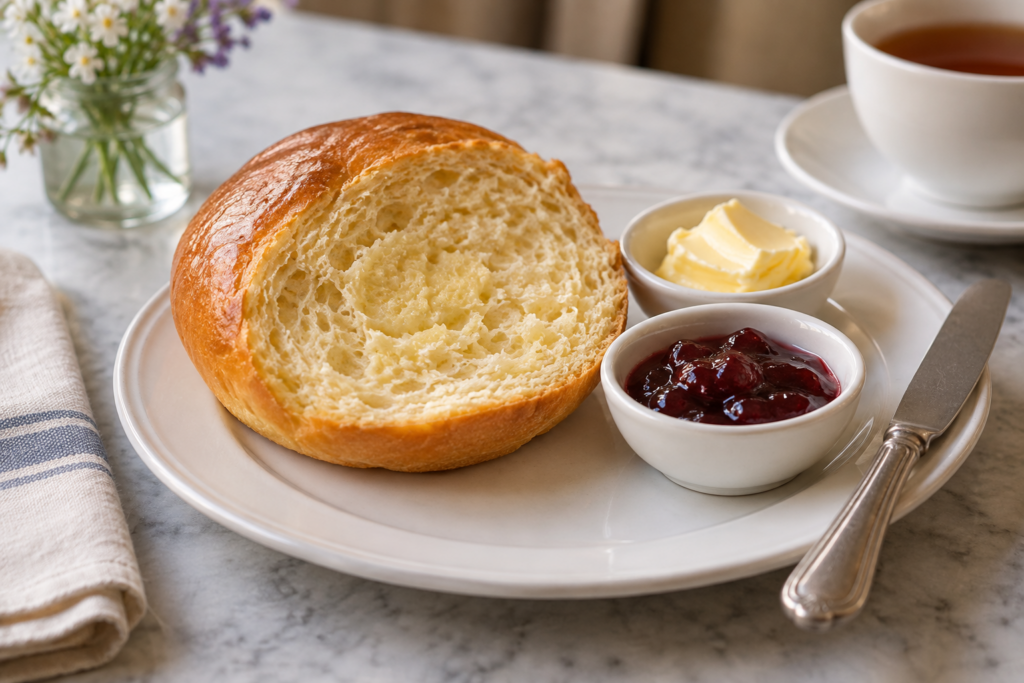
The Sally Lunn bun is a large, light, brioche-style bread associated with Sally Lunn’s Historic Eating House on North Parade Passage. It is served in halves with sweet or savoury toppings, making it work as breakfast, a snack or a light meal. The restaurant’s daytime menu is built around the bun; its evening service is a separate English dinner offer. A small kitchen museum is in the historic house. Visit Bath recounts the popular story of a Huguenot refugee and notes that the exact recipe remains a closely guarded secret. Visit Bath: local specialities · Sally Lunn’s official site.
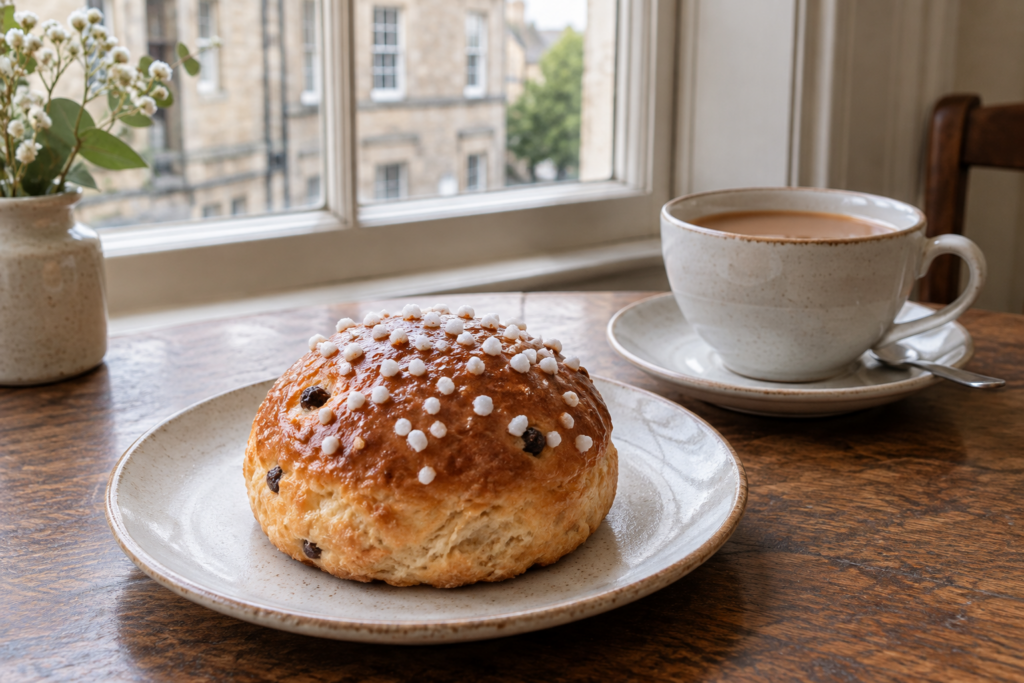
The Bath bun is a separate, sweeter yeast bun associated with eighteenth-century physician William Oliver. Visit Bath describes a local version topped with crushed sugar and mixed with currants; recipes have varied over time. Do not assume a bakery’s Bath bun is the same as the larger Sally Lunn bun. A Bath bun is often a pastry-counter purchase, while a Sally Lunn bun is a sit-down experience with a choice of toppings. Visit Bath on Bath’s local specialities.
Other historical foods are worth looking for without treating them as guaranteed staples. Bath chaps, a prepared pork cheek, and Bath Oliver biscuits have local associations; the local tourism guide discusses Bath chaps and Bath Soft Cheese, a cheese made just outside the city. Ask a restaurant or cheesemonger what is currently available. A cheese board featuring Bath Soft Cheese or other Somerset cheeses can be a more practical way to taste regional dairy than planning a meal around a specialty that may not appear every day. Visit Bath: five historical foods.
Central Bath: the historic bun and independent dining
Sally Lunn’s sits in the old center, a short walk from Bath Abbey and the Roman Baths. It is an easy stop between timed attractions, but it is popular, so check the operator’s current hours and booking arrangements, especially if you want a particular service. The main entrance has step-free access according to Visit Bath, but the old building’s layout and museum access may differ; contact the venue about the route that suits you. If you want dinner there, treat it as a separate reservation decision rather than assuming the daytime tea-room setup continues unchanged.
For contemporary cooking that makes regional ingredients part of the story, compare OAK Restaurant on North Parade Passage and Emberwood at the Francis Hotel on Queen Square. Visit Bath describes OAK’s vegetable-led menus and sourcing from community gardens and farms across Somerset; menus change, so check the restaurant directly if you have dietary needs or want a specific dish. Emberwood’s operator describes fire-led cooking and local sourcing, with a menu that changes with ingredients. These are useful choices for a more deliberate dinner close to the central sightseeing area. OAK official site · Emberwood at the Francis.
Root, in Shires Yard, is another vegetable-centred restaurant highlighted by Visit Bath for produce from local community farms and cheese from Homewood in the Chew Valley. Check its current service and menu before making it the anchor of an evening. For a less formal stop, the central lanes have cafés and bakeries, and Bath’s independent shops make it straightforward to assemble a picnic or room snack. Choose a place close to the next sight instead of trekking across town for a single plate.
West and Green Park: market food and a flexible lunch
Green Park Station combines a historic railway setting with food businesses and events. Bath Farmers’ Market is held on Saturdays, with seasonal local produce and makers; verify the market’s current date and details with its operator before planning a Saturday around it. Bath Pizza Co and Green Park Brasserie are based at the station, giving this area an easy option for a casual lunch or evening meal. Their menus and service times vary, and events can affect the atmosphere. Bath Farmers’ Market · Green Park Brasserie · Bath Pizza Co.
The station is west of the main Abbey and Roman Baths cluster, so it suits a visit to the Jane Austen Centre, Royal Crescent or a walk along the former railway path more naturally than a rushed detour during a tightly booked central day. Check the current food businesses and event calendar: a market day and a regular weekday can feel quite different. If the market is not operating, Green Park remains a useful place to eat, but do not assume every stall is open.
Neighborhood choices beyond the bun
Bath’s restaurant scene is not limited to English cooking. Visit Bath’s current food coverage points visitors toward Indian restaurants including Bandook and The Mint Room, Vietnamese cooking at Noya’s Kitchen, and Japanese dishes at Robun. These provide useful options for groups who want a broader choice or are staying several days. Use each restaurant’s official menu and reservation channel to check service, ingredients and dietary accommodations; a tourism listing is a discovery tool, not a promise that a specific dish is available. Visit Bath restaurant directory.
For a classic afternoon tea, compare hotel tea services and independent tearooms. Visit Bath lists Hands Tearoom and the Regency Tea Rooms at the Jane Austen Centre among Georgian-themed options. Afternoon tea is a substantial meal, so place it in lieu of lunch rather than immediately before dinner. Ask in advance about vegetarian, vegan, gluten-free and allergen handling, since substitutions and kitchen practices vary. For a quicker sweet stop, the city has confectioners, bakeries and gelato shops; pick what is fresh and in season.
Practical food itineraries
One day: Keep meals close to the central sights. Have breakfast or half a Sally Lunn bun as a late-morning snack, then visit the Roman Baths and Abbey area. For lunch, choose a café or a light meal nearby rather than booking a long lunch that competes with a timed entry. After an afternoon rest, reserve one dinner at OAK, Emberwood or another central restaurant that suits your group. If dining at Sally Lunn’s is the priority, check its daytime and evening offers separately.
Two days: On day one, sample the Sally Lunn bun and explore the old center; choose a booked dinner in the evening. On day two, walk toward Queen Square and the Royal Crescent, stopping at a café or tearoom. If it is Saturday, plan lunch around Green Park Station and the farmers’ market after checking its schedule; otherwise, choose a nearby restaurant. Leave a gap between afternoon tea and dinner, or make tea the main meal for the afternoon.
Three days: Use one day for the Abbey, Roman Baths and historic lanes; another for the Royal Crescent, Circus and independent shops; and a third for a slower food or countryside excursion. Pair a Saturday market with a light evening, or consider a producer tour only after checking its current route, transport and availability. A trip to a farm shop or producer outside Bath requires its own transport plan. Do not assume a countryside venue is walkable from central Bath; confirm bus or tour service before committing.
Booking, access and dietary details
Book a table for a destination dinner, particularly on weekends and during festivals, and confirm cancellation terms. The center can be busy, and a restaurant’s listed address does not tell you about its stairs, entrance width or table access. Ask venues directly about step-free entry, accessible toilets and seating. Bath’s sloping streets, cobbles and uneven paving can make a short map distance tiring; allow time between a long walk and dinner, and consider a taxi for a steep or wet-weather return.
Traditional baking commonly contains wheat, and recipes may include dairy, eggs, nuts or other allergens. Savoury toppings and restaurant dishes can involve meat, fish, shellfish or stock even when the main ingredient sounds plant-based. Tell the venue about allergies when booking and confirm with staff on arrival; do not infer safety from a menu description alone. For vegan, vegetarian or gluten-free needs, check the current menu directly and ask about cross-contact.
Menus, ingredients, market dates, opening hours and reservation policies change. Recheck official venue pages close to your visit, especially for Sundays, bank holidays and festival dates.
Official sources
Check the official sources
Schedules, admission, fares and service can change. Recheck these for your travel dates.
- visitbath.co.uk (checked 2026-09-27)
- sallylunns.co.uk (checked 2026-09-27)
- visitbath.co.uk (checked 2026-09-27)
- oakrestaurant.co.uk (checked 2026-09-27)
- francishotel.com (checked 2026-09-27)
- visitbath.co.uk (checked 2026-09-27)
- bathfarmersmarket.co.uk (checked 2026-09-27)
- greenparkbrasserie.com (checked 2026-09-27)
- bathpizzaco.com (checked 2026-09-27)