
Food
Delhi & Agra Food Guide: Old Delhi, Mughlai Cooking, and Agra Sweets
A practical, city-by-city food guide to Delhi parathas, chaat and kebabs, then Agra bedai, jalebi and petha, with verified venue links and realistic meal planning.
How long is your visit?
Choose an itinerary, or read the full guide below.
Check the full guide for arrival, ticket, accessibility and booking details.
Delhi and Agra belong on one itinerary, but they are not one dining district. Delhi’s food story ranges from Old Delhi’s narrow market lanes and Mughlai kitchens to Punjabi-influenced restaurants across a much wider capital. Agra has its own breakfast traditions, Mughlai restaurants and a sweet that has become part of the city’s identity. Treat the rail or road transfer as a separate leg: a meal plan that assumes you can comfortably move between Delhi and Agra for lunch or dinner is too optimistic without a specifically checked connection.
Delhi: plan one Old Delhi food cluster
Begin with a single neighborhood rather than collecting addresses across the city. Chandni Chowk and the lanes around Jama Masjid offer the clearest concentration of established Old Delhi food styles: stuffed parathas, chaat, sweets, kebabs and slow-cooked meat dishes. Delhi Tourism’s Old Delhi food overview describes the market’s paratha and chaat traditions, while its specific profile for Pt. Babu Ram Devi Dayal Parathe Wale identifies a Chandni Chowk shop and examples such as rabri, lemon and papad parathas. Use that official venue page to orient the choice, then confirm current service, menu and access directly; the source’s published hours may change.
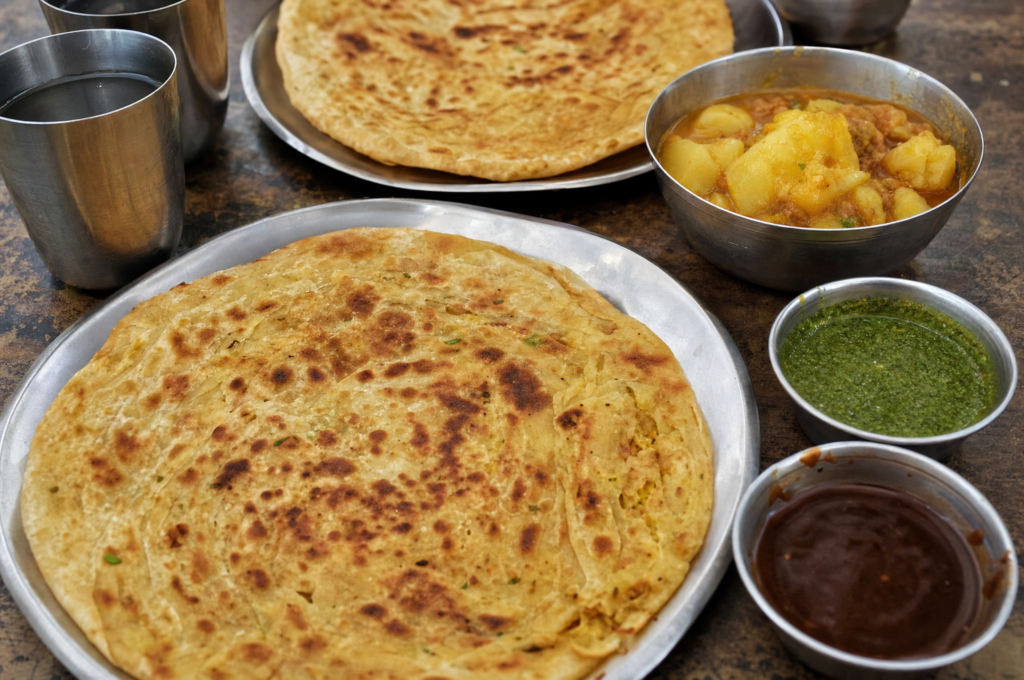
Paratha here is a substantial meal, not a light snack. A plain potato or cauliflower filling gives a savory baseline; richer combinations and sweet fillings make more sense to share than to order alongside several other heavy dishes. The accompaniments commonly described by Delhi Tourism include chutneys and potato curry. If a group wants to sample rather than commit to a large meal, split one or two parathas and continue with a small chaat serving elsewhere in the same historic-market cluster. Ask vendors directly about ingredients, spice, dairy, nuts, shared utensils and frying oil; a dish name alone is not an allergy or dietary guarantee.
For a sit-down Old Delhi meal by Jama Masjid, consider Al-Jawahar. The restaurant’s current online menu lists mutton nahari, mutton stew, chicken Jahangiri, seekh kebab and mutton biryani, and gives its address as Shop No. 8, Jama Masjid, Matia Mahal, Delhi 110006. Delhi Tourism’s Al-Jawahar profile also places the restaurant opposite Jama Masjid and describes its Mughlai dishes. Menus can change and online listings can lag, so verify current service, address and dietary details with the venue before setting out. The historic quarter is dense and crowded. Plan a short, flexible food walk, follow current directions and decide how the group will regroup if it separates. Do not make a car pickup at a narrow lane entrance the anchor of the schedule.
Central and modern Delhi: choose a meal by location
Delhi’s culinary identity is layered rather than narrowly regional. Punjabi-style breads and tandoor dishes, North Indian curries, sweets and food traditions brought by communities from across India all appear in the capital. A visitor staying around central New Delhi can choose a hotel restaurant or a current neighborhood venue instead of crossing town just to check a famous name off a list. If South Delhi or a museum day is on the schedule, eat near that day’s actual area. Delhi Tourism’s Delhi delicacies directory is a starting point for browsing city food areas, not proof that an individual listing is open today.
For a compact first food day, make breakfast or brunch the paratha meal, take a pause in the Old City, then choose a kebab or lighter meal near your evening base. Avoid stacking fried bread, chaat, kebabs and a large dinner into one short stretch; heat, walking and crowded lanes can make an ambitious tasting list tiring. If the group includes children or older relatives, select a sit-down stop with a confirmed address and restroom details rather than treating street vendors as a guaranteed break point.
Agra: breakfast, Mughlai dishes and a sweet to take home
Agra’s recognizable local breakfast is bedai (also spelled bedhai), a fried bread commonly served with spiced potato curry, often alongside jalebi. The official Taj Mahal visitor site’s About Agra page mentions bedhai and jalebi among the city’s food specialties; use the description as regional context, not a restaurant recommendation. Build breakfast around a vendor or hotel whose current service is confirmed locally. Bedai is rich and filling, so it can anchor a morning meal before sightseeing rather than become one stop in a long crawl.
Agra’s petha is a crystallized ash-gourd sweet with a distinctive place in the city’s food culture. The district administration’s One District One Cuisine page identifies petha as Agra’s recognized district product and also names dalmoth and gajak as traditional foods. Varieties and packaging differ. If carrying sweets onward, check the maker’s current product details, ingredients, shelf-life guidance and packaging suitability rather than assuming every style travels equally well. Panchhi Petha’s own store directory lists multiple Agra outlets, including Noori Gate, Sadar Bazaar, Fatehabad Road and a location near the Taj East Gate; choose a listed branch close to the day’s route and verify its current status before going.
For a sit-down meal, ITC Mughal’s official dining pages list Peshawri, described by the operator as North-West Frontier cuisine, as well as the multicuisine Mughal Pavilion. These are hotel restaurants, useful when a predictable reservation channel and a fixed location matter. The operator page includes current dining information and a reservation option; confirm opening, seating, dress requirements if any, and any dietary request directly. Cuisine descriptions are not a promise that a specific dish or ingredient is available on a particular date.
For street food and sweets, treat Agra’s center, Sadar Bazaar, Fatehabad Road and the Taj-area hotel zone as separate micro-plans. They are not interchangeable addresses for a quick walk between meals. Use an official hotel or venue location link and a live map to judge the ride from your actual starting point, and keep the Taj visit’s gate and security arrangements in mind. The official Taj visitor site says food is not allowed inside the monument complex; finish breakfast or snacks before entry and check the current visitor rules rather than planning a picnic there.
One day: Delhi food, without an Agra detour
Keep a one-day food itinerary in Delhi. Start with a shared paratha breakfast in Chandni Chowk, take time for the historic market rather than racing to unrelated neighborhoods, and choose chaat or a sweet as a small mid-day taste. For the evening, reserve or verify a meal near your Delhi base; Al-Jawahar is one Jama Masjid-area option if that part of Old Delhi fits. Do not add an Agra dinner to this plan: reaching another city requires a separately booked transfer, not a neighborhood hop.
Two days: one Delhi day and one Agra day
Give day one to Delhi and its food cluster. For day two, travel to Agra using a train or road plan you have confirmed for your date, then eat within the Agra area you actually reach. A breakfast of bedai and jalebi works if you have an Agra morning; a later arrival can shift the emphasis to a hotel meal and petha from an official listed branch. Avoid promising a full breakfast, Taj visit, multi-stop lunch and return to Delhi in a single day when the transfer schedule and ticket conditions are unknown. If the Taj is central to the trip, staying overnight in Agra makes the meal and monument plan less dependent on a same-day return.
Three days: two food geographies, one unhurried transfer
Use the first day for Old Delhi, the second for a different Delhi neighborhood or a relaxed meal near your base, and the third for Agra after an overnight there or a transfer early enough to fit your actual arrival. In Agra, pair one substantial local meal with one sweet-shopping stop rather than trying to cover every market. If returning to Delhi on day three, keep dinner near the arrival station or hotel and choose it only after confirming the train or road connection. The point of three days is to give each city its own table, not to imply that the route between them is effortless.
Practical food checks
Menus, branch locations, hours and reservation availability can change. Follow the official venue link before travel and contact the outlet directly for current details. Clarify vegetarian, vegan, Jain, halal or allergy needs with the people preparing the food; shared kitchens and regional recipes vary. For Old Delhi, wear comfortable footwear and keep the walking portion flexible; for Agra, group meal stops by the day’s monument or hotel area. Choose drinking water and food handling according to your own needs. These practical choices leave room to enjoy the contrast between Delhi’s layered capital cooking and Agra’s own breakfast-and-sweets tradition without turning the itinerary into a contest to eat the most.
Check the official sources
Schedules, admission, fares and service can change. Recheck these for your travel dates.
- delhitourism.gov.in (checked 2026-09-28)
- delhitourism.gov.in (checked 2026-09-28)
- tajmahal.gov.in (checked 2026-09-28)
- agra.nic.in (checked 2026-09-28)
- panchhipetha.com (checked 2026-09-28)
- itchotels.com (checked 2026-09-28)
- aljawaharcaterers.com (checked 2026-09-28)
- delhitourism.gov.in (checked 2026-09-28)