
Pilgrimage
Holy Etchmiadzin Pilgrimage Guide
Plan a respectful Armenian Apostolic pilgrimage to the Mother See in Vagharshapat, with current church and museum checks, transport choices, local lodging and meals, and flexible one-, two- and three-day itineraries.
How long is your visit?
Choose an itinerary, or read the full guide below.
Check the full guide for arrival, ticket, accessibility and booking details.
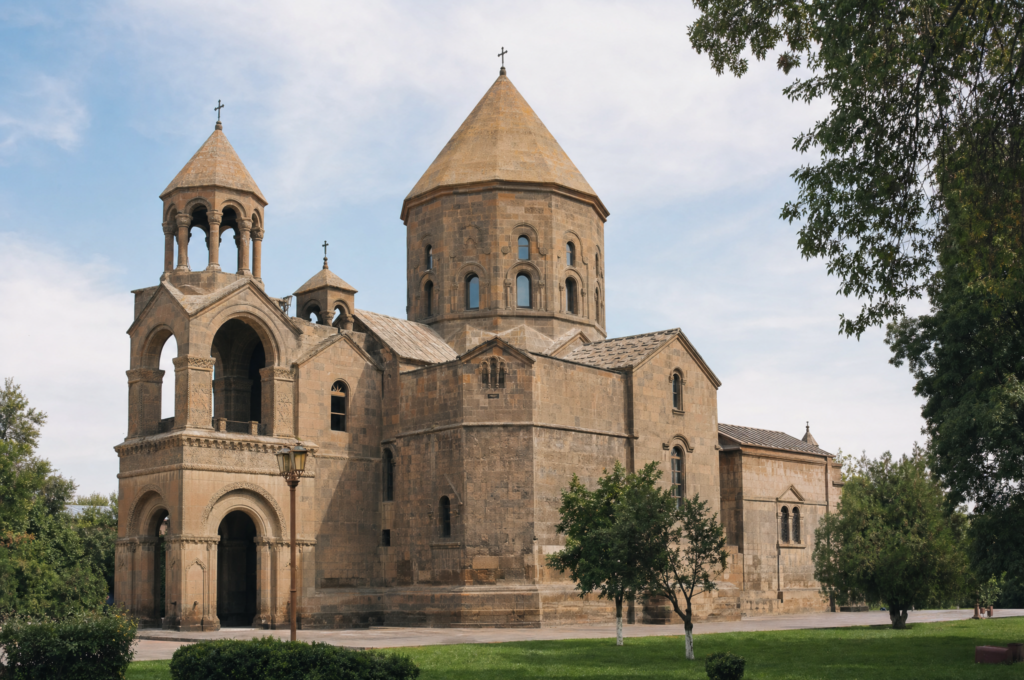
Holy Etchmiadzin, in the city of Vagharshapat in Armenia’s Armavir Province, is the spiritual and administrative center of the Armenian Apostolic Church. The Mother See describes its Cathedral as the place associated with the Descent of the Only-Begotten; generations of Armenian faithful have come here for Divine Liturgy, prayer and the Church’s living heritage. The name Etchmiadzin is widely used for the city and the Mother See, while Vagharshapat is the city’s present official name. This guide focuses on the Mother See and its nearby churches, with optional time at Zvartnots.
Begin with the Mother See
The Mother See is an active religious center, home to the Mother Cathedral, clergy, services, museums and church institutions. The Armenian Apostolic tradition has its own liturgy, calendar and forms of worship. Before planning to enter the Cathedral or attend a service, check the Mother See’s current notices and church calendar and contact the Church to confirm visitor arrangements for your date. Major feast and service announcements are date-specific; a past annual schedule is not a reliable timetable for a future visit. Give worship priority over photography or a fixed sightseeing order.
The Cathedral is the spiritual focus, but the larger story includes nearby churches and the Armenian Church’s role in the country’s history and identity. UNESCO groups the Cathedral and the churches of St Gayane, St Hripsime and St Shoghakat with the archaeological site of Zvartnots as one World Heritage property. UNESCO’s record explains how these distinct sites document Armenian ecclesiastical architecture; it is a heritage summary, not a guarantee that every interior or museum is open on your date. The Mother See’s own overview describes its spiritual and administrative role and the sacred objects associated with the Cathedral.
Worship and visitor etiquette
If attending Divine Liturgy matters to you, look for the current Mother See announcement and verify the day, language and place directly with the Church. Major feasts draw pilgrims and can change the rhythm of a visit. The Mother See’s announcements document celebrations such as the Cathedral feast and other church feasts; use a notice for the year it names, not as a recurring schedule. Do not call Armenian Apostolic worship a Roman Catholic Mass or assume Catholic schedules, rites or visitor procedures apply.
During worship, move quietly and follow clergy, staff and posted instructions. Choose modest clothing as a considerate personal approach to an active church; confirm directly with the Mother See whether any specific clothing or photography rules apply on your date. This guide does not assert a published general dress code or promise that every visitor may enter every area. Do not touch icons, relics, furnishings or barriers unless invited. If you are unfamiliar with the liturgy, observe quietly from a place staff identify as open to visitors, without blocking worshippers or copying gestures you do not understand. For a group visit, ask the Mother See in advance about visitor access, a guide, a specific service or other arrangements.
The complex can include restricted working and monastic areas. Treat a closed door or roped-off section as a boundary, even if no staff member is standing beside it. If a ceremony is underway, save architectural photography for later and give the congregation room. Keep conversation and group explanations away from active prayer. Rules can change during liturgy, restoration or major events; ask staff rather than relying on a travel blog’s account of an earlier visit.
Plan the museums separately
The Mother See lists the Alex and Marie Manoogian Treasury Museum, the Ruben Sevak Museum and other collections among its museums. The official museums page describes the collections as sacred artifacts, church objects, vestments and Armenian cultural heritage, and publishes current opening information, prices for some collections and a phone number for arranging an excursion. Verify those details before visiting: hours differ by museum and may be affected by church events. A museum visit complements the Cathedral, but allow time to understand the objects rather than squeezing several collections between services.
The city also offers a useful contrast between the quiet scale of the Mother See and the wider landscape of early Christian architecture. St Hripsime and St Gayane are active churches, each with its own setting and worship life. They are not interchangeable museum stops; keep the distinction between the UNESCO-listed property and the experience of visiting an operating church. Consult church or local tourism information for current access and transport rather than assuming the buildings remain open to visitors throughout the day.
Arrival from Zvartnots and Yerevan
Zvartnots International Airport is the closest air gateway. The airport operator’s transport page lists official airport buses to central Yerevan and taxi and rental-car providers in the arrivals hall. Those buses are not a direct airport-to-Mother-See shuttle. A traveler with checked bags, children, a mobility need or a tight connection will usually find a direct prearranged car to Vagharshapat simpler; agree the drop-off point, luggage capacity, fare and return plan with a licensed operator before setting out. Richmind Hotel’s official information places its property near the Cathedral and around 10 km from the airport, but exact travel time depends on the route and traffic.
For a lower-cost public-transport plan, Armenia Travel says Vagharshapat is served from Yerevan’s Kilikia central bus station. The airport operator separately publishes its airport-to-city bus routes. This is a two-stage journey: reach Yerevan, cross to Kilikia, then board onward transport to Vagharshapat. Confirm the current departure point, service and payment with the operators, and leave enough margin to manage luggage across the city. Avoid relying on a remembered minibus number or an old timetable. If arriving late, ask your lodging to confirm whether a same-day public connection is practical before you buy the flight.
In town, agree a recognizable pickup point with your driver and save the address in Armenian or show it from your reservation. English-language signage and transport information may be limited outside larger tourism services. Keep small Armenian dram notes available if the current operator requires cash. A car is helpful for the airport, Zvartnots and the outlying churches; it is unnecessary for every part of the central city. Ask your lodging whether it can arrange transport and confirm the driver’s contact details directly.
One day: the Mother See and one museum
Start by checking the Mother See’s calendar and any event notice for your date. Give the Cathedral first place in the day, arranging your visit around active worship. Then choose one museum whose official hours and access are confirmed; the Treasury Museum or Ruben Sevak Museum offers a focused complement. Leave a generous pause for lunch and a slower walk around the public parts of the complex. If a major service is taking place, let that shape your visit rather than trying to see every collection. A single day is enough for an intentional visit to the Mother See, not for every sacred site in Armavir.
Two days: add the nearby churches
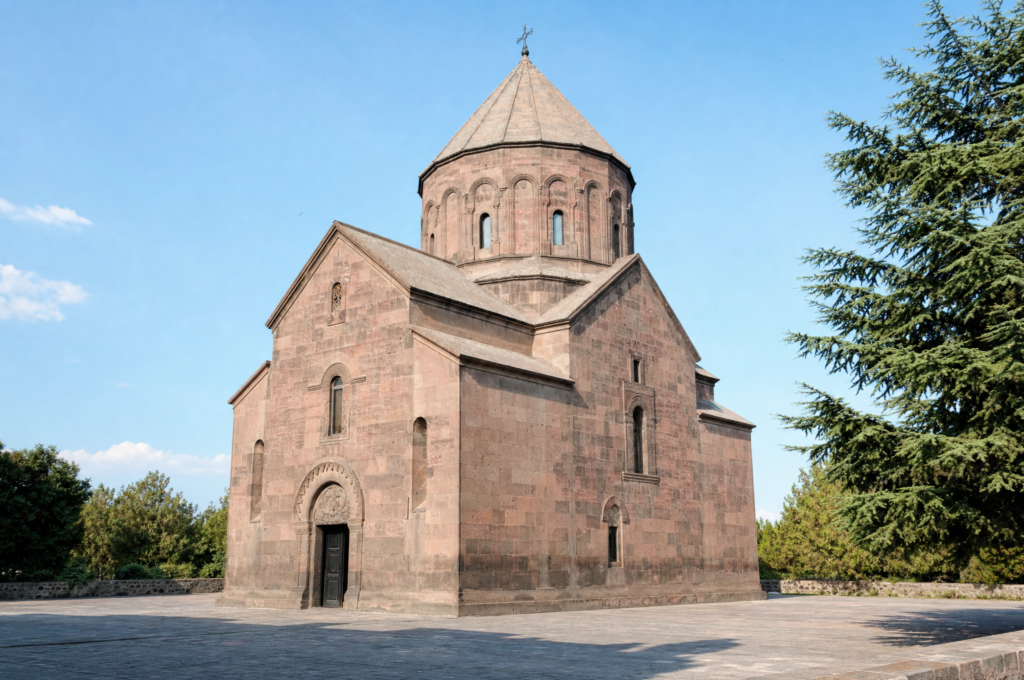
Use the first day for the Cathedral, worship calendar and one museum. On the second, visit St Hripsime and St Gayane, checking current access and service arrangements before leaving. Their different architecture and separate settings repay attention; pause at each instead of treating them as quick stops on a checklist. Continue to St Shoghakat only if the timing and local transport work for your party. Arrange a driver or confirm local transport and return pickup before traveling between sites. Keep the late afternoon free so a service, closure or longer visit does not turn into a race.
Three days: include Zvartnots with room to think
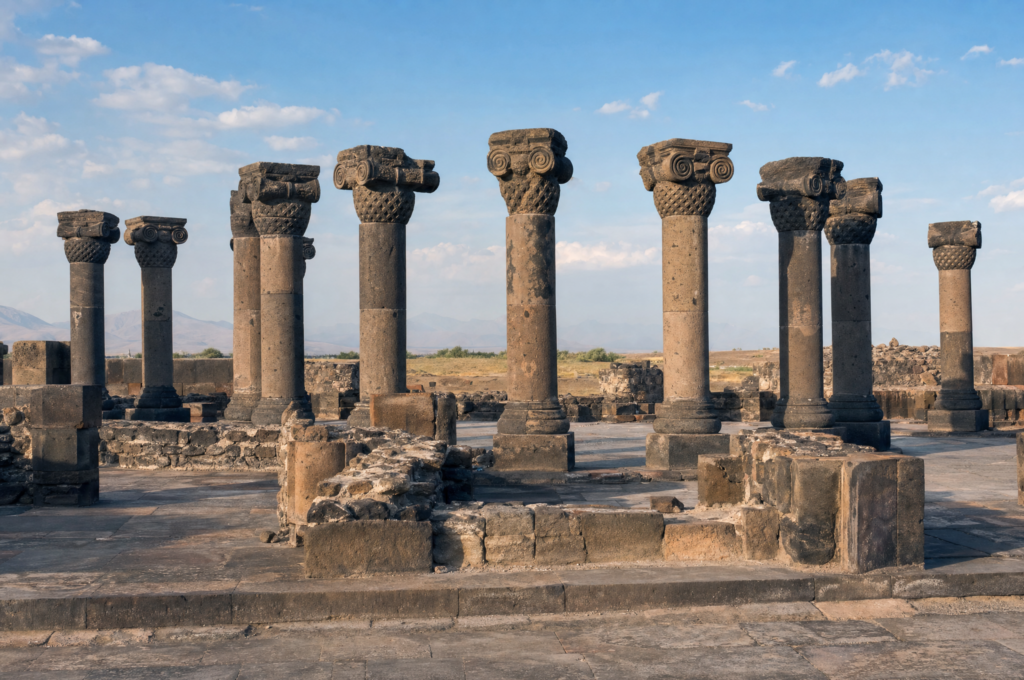
With three days, use one for the Mother See and museum, one for the nearby churches, and one for the archaeological site of Zvartnots or a return to worship. The ruins at Zvartnots are an archaeological landscape rather than an intact church interior; UNESCO identifies the site as the remains of a seventh-century cathedral and associated buildings. Check the local operator’s current access, weather and transport before making it the day’s anchor. You may instead want a slower second visit to the Mother See, especially if a major feast or service falls during your stay. This is a flexible itinerary, not a prescribed devotional sequence.
Where to stay
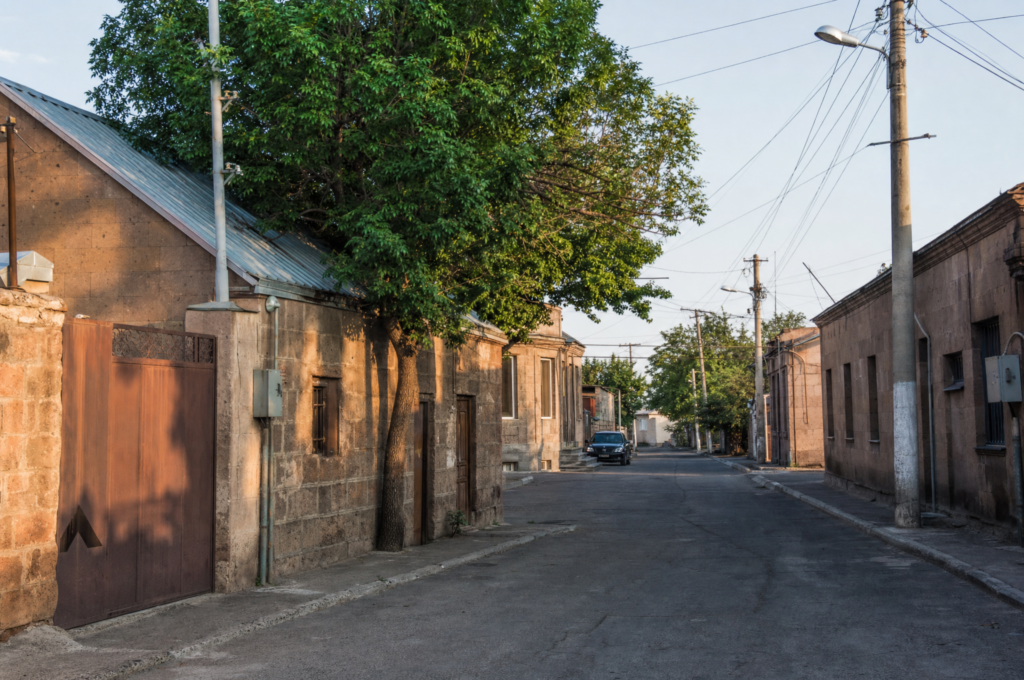
If worship and early visits are your priority, base yourself in central Vagharshapat near the Mother See. Staying in Yerevan gives you a larger choice of city services and can suit a short day trip, but it adds a cross-city road journey each way; it is less convenient if you plan to attend more than one service or visit museums at separate times. For a stay in Vagharshapat, compare the walk or drive from the property to your planned entrance, how you will reach St Hripsime or Zvartnots, and whether meals are available at the times you need.
Richmind Hotel publishes room types, meal plans, an on-site restaurant and its Mashtots Street address, close to the Cathedral. For a guesthouse-and-cultural-center model, Machanents House describes its themed rooms, guesthouse and art hotel at Shahumyan 36; the same operator describes its social restaurant and Armenian cooking activities. These are two locally based properties to compare, not endorsements or guarantees of availability. Confirm current room offers, your exact arrival point, luggage storage, late check-in, meal service, payment, accessibility and cancellation terms directly. If you prefer more hotel choice, Yerevan is a separate base with a longer daily transfer; compare that added travel against the number and timing of your visits before choosing.
Food decisions in a small city
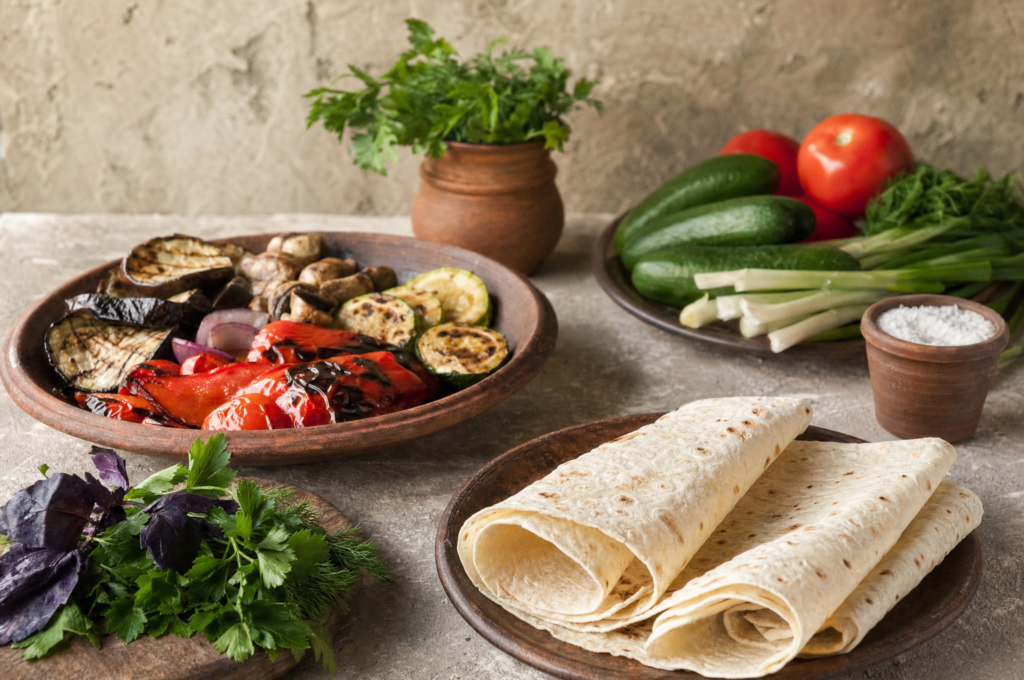
Make a meal plan before leaving the central area, especially if your schedule includes a long museum visit, a major church feast or an outlying site. Armenian dishes to look for include lavash, tolma and khorovats; the national tourism site’s cuisine guide explains these dishes and notes vegetarian variations of tolma. Menus change, so treat those as useful words to recognize rather than promises about what a particular restaurant serves. For dietary restrictions, ask about ingredients and preparation directly; do not assume a dish is vegetarian from its name.
Machanents House describes its social restaurant, guesthouse, national-cuisine activities and location on Shahumyan Street. Its operator contact page lists current contact details and posted hours; confirm meal service for your date before building an itinerary around it. Richmind’s official site lists an on-site restaurant and meal plans, which may be convenient when you want to return to your lodging after worship. The Mother See describes the historic Agape building as a public canteen established in 2012; that historical listing does not confirm current opening, menu or independent-diner access. Check with the Church before planning a meal there. Keep a simple backup near your lodging, since opening hours and meal service in a smaller city can be more limited than in Yerevan.
Practical planning notes
- Use the Mother See’s current calendar and direct contact for worship, guides, visitor access and feast-day changes.
- Check each museum’s separate hours and booking requirements on the official museums page.
- For public transport, verify airport-to-Yerevan and Yerevan-to-Vagharshapat separately; Kilikia is the onward bus reference.
- Arrange lodging and a return ride before planning an evening outside central Vagharshapat.
- Carry water, sun protection and a layer for cool or changeable weather; avoid scheduling exposed ruins at the hottest part of the day.
- Dress and behave as a guest in an active Armenian Apostolic religious center. Follow staff directions and protect worshippers’ privacy.
The Mother See’s worship calendar, museum hours, transport services, hotel facilities and restaurant service can change. Reconfirm them with the responsible church, museum, transport operator or venue for your travel dates.
Official planning links
Use the current operators and custodians to confirm your visit, transport and stay.
- Mother See precinct
- Mother See of Holy Etchmiadzin
- Mother See museums
- Mother See liturgical news
- UNESCO heritage context
- Armavir visitor information
- Transport around Armenia
- Zvartnots Airport transport
- Richmind Hotel
- Machanents House lodging and restaurant
- Machanents House contact
- Armenian cuisine
- Vagharshapat and other cities
- Mother See Agape refectory
Check the official sources
Schedules, admission, fares and service can change. Recheck these for your travel dates.
- armenianchurch.org (checked 2026-09-27)
- armenianchurch.org (checked 2026-09-27)
- armenianchurch.org (checked 2026-09-27)
- armenianchurch.org (checked 2026-09-27)
- whc.unesco.org (checked 2026-09-27)
- armenia.travel (checked 2026-09-27)
- armenia.travel (checked 2026-09-27)
- zvartnots.aero (checked 2026-09-27)
- richmind.am (checked 2026-09-27)
- machanents.com (checked 2026-09-27)
- machanents.com (checked 2026-09-27)
- armenia.travel (checked 2026-09-27)
- armenia.travel (checked 2026-09-27)
- armenianchurch.org (checked 2026-09-27)