
Food
What to Eat in Jaipur: Rajasthani Dishes and Where to Find Them
Plan Jaipur meals around Rajasthani specialties, current restaurant sources and the city's distinct Pink City, station-side and outlying food areas.
How long is your visit?
Choose an itinerary, or read the full guide below.
Check the full guide for arrival, ticket, accessibility and booking details.
Jaipur is a good place to build meals around the day’s geography: a breakfast snack near your base, a longer Rajasthani meal after the walled-city sights, and a lighter dinner if the afternoon has involved a long ride to Amber or a museum. The city is spread out, and a famous dish is not a reason to cross town twice. Choose a meal stop close to the neighborhood you already plan to explore, then confirm the venue’s current menu, hours and branch before setting off.
What to taste in Jaipur and Rajasthan
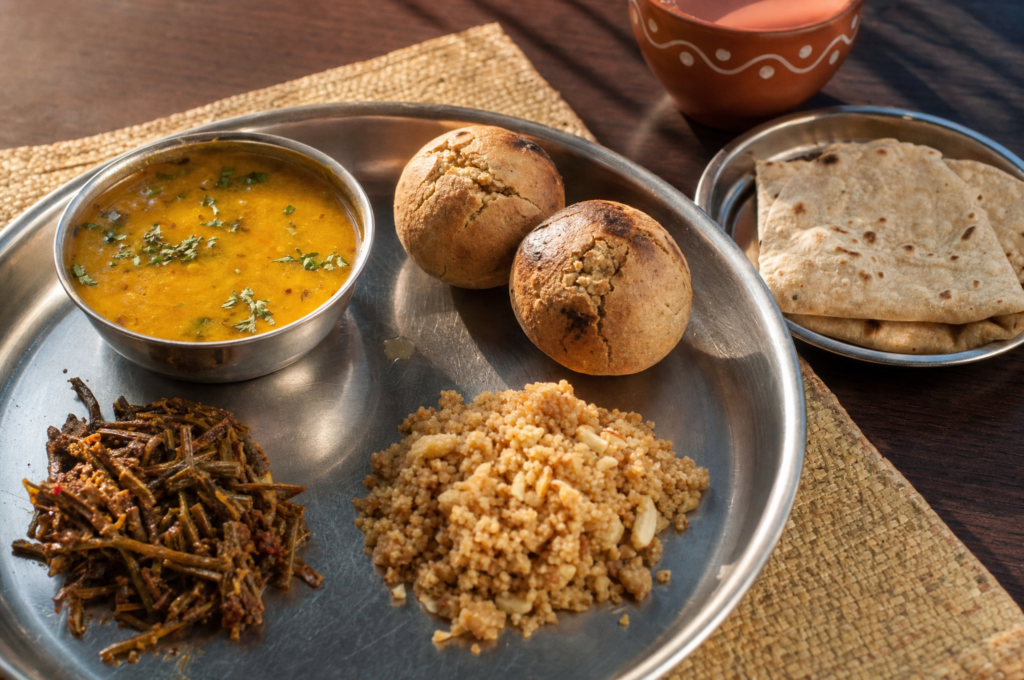
Dal baati churma is a substantial meal of lentils, baked wheat baati and sweet churma; Rajasthan Tourism describes the baati served with ghee, dal and spicy garlic chutney. It is filling, so share or plan a slower afternoon if you are also ordering snacks. Recipes and serving sizes vary. Ask whether the baati arrives with ghee already added and whether the accompaniments can be adjusted.
Ker sangri combines desert beans and berries, often cooked with spices and oil. It is a distinctive regional vegetable dish that pairs well with breads, but preparation is not identical from one kitchen to another. Gatte ki curry uses gram-flour dumplings in a yogurt-based sauce; it brings a different texture and tang from dal baati. Rajasthan Tourism also describes gatte ki khichdi, a rice dish with spiced gram-flour dumplings. Ask what is available that day rather than assuming every menu includes every regional specialty.
For a quick bite, Jaipur’s pyaaz kachori is a crisp pastry filled with spiced onion. It is richer than a plain breakfast roll and can work as a small meal with tea, chutney or another shared snack. Mawa kachori and ghewar make a sweeter stop. Rajasthan Tourism connects ghewar with Jaipur and notes its association with Teej and Raksha Bandhan; LMB lists several ghewar varieties and other Rajasthani sweets. Festival assortments, availability and recipes change, so treat any specific sweet as something to check rather than a guaranteed daily item.
Vegetarian cooking is prominent in many local menus, but do not infer that a dish is vegan or free of dairy, ghee, yogurt, nuts or gluten. For a meat meal, choose a restaurant whose current operator material explicitly describes its non-vegetarian menu; do not assume that a Rajasthani thali will include meat. If a menu names laal maas or another slow-cooked specialty, ask whether it is available that day and how spicy it is. This guide does not promise that any one dish is on offer.
Where to eat: useful food stops across the city
Laxmi Misthan Bhandar (LMB) sits in Johari Bazaar inside the walled city. Its current operator pages describe a restaurant and sweet shop, list a Royal Rajasthani Thal and sweets including paneer ghewar, doodh phini, mishri mawa, sohan halwa and rasmalai, and publish the Johari Bazaar address. That makes it a practical choice to pair with a Pink City day when you want one seated meal plus a sweet-shopping stop. Read the operator’s current product or restaurant information before choosing an item; the online shop catalog is not a promise that every product is served at the restaurant on your date.
Rawat Misthan Bhandar lists its main branch at B9 Station Road, in front of Polo Victory Hotel, in the Sindhi Camp area. The operator identifies pyaaz kachori, other kachori varieties, sweets and ghewar among its specialties, and maintains a locations page with several Jaipur outlets. Use the branch that fits your journey: Sindhi Camp is convenient to the intercity bus stand and station-side hotels, while other branches are in separate parts of the city. Confirm the address and current menu, and check the operator’s allergen guidance if you have an allergy; it warns that its kitchen handles gluten, dairy and nuts and cannot guarantee no cross-contact.
For a longer dinner built around regional food, Chokhi Dhani Village is an outlying Tonk Road destination, not an Old City restaurant. Its operator lists the village at 12 Miles, Tonk Road via Vatika and publishes dining pages and a Bindola menu that includes pyaaz ki kachori, dal baati churma, Rajasthani kadhi, gatta curry and laal maas. This can make sense when the group wants a planned evening meal and the trip is already arranged; it is a poor add-on between two central monuments. Check the current opening, entry or dining arrangements, transport home and menu directly before committing.
At ITC Rajputana on Palace Road, Jaipur Pavilion describes Rajasthani delicacies alongside dishes from other cuisines, while Peshawri focuses on North-West Frontier cooking. These hotel dining rooms offer a more predictable booking channel for a sit-down meal near the railway-station and MI Road side of central Jaipur. They are not a substitute for a bazaar snack, and their cuisine descriptions do not guarantee a particular regional dish. Check the operator’s current dining page for hours and reservations.
Build meals around the city rather than a checklist
The walled Pink City contains Hawa Mahal, City Palace, Jantar Mantar and several bazaars; they are close enough to make one sensible sightseeing-and-lunch cluster, but walking in the heat or weaving through crowded streets still takes energy. If you want a seated regional meal, decide whether it will be lunch or dinner and reserve only if the venue requires it. A kachori or sweet stop works as a flexible tasting rather than a second full meal. Save the exact venue address before you enter busy lanes.
MI Road, Sindhi Camp, Bani Park and the railway-station area are a different practical cluster. A Rawat branch near Sindhi Camp can suit an arrival or departure day, while a hotel dining room near Palace Road may work for a calmer dinner. These locations are not interchangeable: confirm which branch you selected and do not follow an old pin to another outlet. For a trip to Amber, Jaigarh or Nahargarh, agree on the return ride first and plan food near the route or back at your base instead of assuming there will be a convenient stop at the monument.
Chokhi Dhani lies outside the central visitor circuit. Treat it as the evening’s destination, with enough time for the road journey and a return transfer; avoid fixing a second cross-city dinner before or after it. For a slower day, pick one area such as the Pink City or a museum-and-garden pairing, then choose a meal within that area. Jaipur’s traffic, sun and occasional rain can turn an ambitious route into a tiring one.
One, two or three days of eating
One day: Keep the plan central. Have a light breakfast near the hotel, explore the Pink City at a measured pace, then make LMB your planned seated meal or sweets stop if its current menu fits your needs. Try one regional dish rather than ordering a full spread plus several snacks. Leave the late afternoon open for a rest, then choose dinner near your base.
Two days: Use one day for the walled city and one for the Amber-side sights or a distinct museum day. Put your longer Rajasthani meal on the Pink City day, with a small kachori tasting on the other day if Rawat’s branch fits your station-side route. If you reserve Chokhi Dhani, dedicate an evening to it and confirm how you will return. Do not combine an outlying dinner with an already long fort day unless the group has the time and energy.
Three days: Keep breakfast flexible and organize each lunch or dinner by cluster: Pink City, central station/MI Road, then a fort-side or outlying evening if desired. One day can include a full thali; another can focus on savory snacks and sweets; the third can leave room for a restaurant meal chosen near the last stop. Add a rest break after a substantial lunch. You do not need to taste every specialty in one visit.
Diet, family and ordering practicalities
Tell the restaurant about allergies in plain language and ask about ingredients in chutneys, gravies, breads, desserts and shared oil. Ghee and dairy are common in sweets and some savory cooking; gram flour does not mean a dish is gluten-free if it shares fryers or surfaces. Rawat’s operator site specifically warns that its kitchen handles several allergens and that it cannot guarantee a dish free from cross-contact. If an allergy is severe, confirm the venue’s ability to accommodate it before traveling across town.
With children or older relatives, favor one main meal near the day’s final stop and avoid stacking a long fort visit, bazaar walk and late dinner. Ask the restaurant about seating, stairs, washroom access, reservation needs and whether children can share dishes. Street food is a personal choice; use your own judgment about food temperature, water and busy service conditions. Carry drinking water, take shade breaks and choose a quieter indoor alternative during heat or rain.
Official planning links
For the dishes, start with Rajasthan Tourism’s Rajasthani cuisine overview. Check LMB’s specialties and its Johari Bazaar address, plus Rawat’s product context, current locations and allergen notice. For an outlying dinner, read Chokhi Dhani’s dining page, its Bindola menu and operator address. For a central hotel meal, use ITC Rajputana’s dining and location information. Reconfirm current menus, hours, reservation terms and routes directly with each operator.
Check the official sources
Schedules, admission, fares and service can change. Recheck these for your travel dates.
- tourism.rajasthan.gov.in (checked 2026-09-28)
- lmbsweets.com (checked 2026-09-28)
- lmbsweets.com (checked 2026-09-28)
- rawatmisthanbhandar.in (checked 2026-09-28)
- rawatmisthanbhandar.in (checked 2026-09-28)
- rawatmisthanbhandar.in (checked 2026-09-28)
- chokhidhani.com (checked 2026-09-28)
- chokhidhani.com (checked 2026-09-28)
- chokhidhani.com (checked 2026-09-28)
- itchotels.com (checked 2026-09-28)