
Pilgrimage
Lumbini Pilgrimage Guide: Plan a Respectful Visit to the Sacred Garden
Plan a Buddhist pilgrimage to Lumbini with a clear orientation to the Sacred Garden and monastic zones, current access checks, arrival choices, local bases, and flexible one-, two-, and three-day outlines.
How long is your visit?
Choose an itinerary, or read the full guide below.
Check the full guide for arrival, ticket, accessibility and booking details.
Lumbini, in Nepal’s Terai region, is revered in Buddhist tradition as the birthplace of Siddhartha Gautama, the Buddha. It is also an active archaeological and conservation landscape and a place of worship for Buddhist communities from many countries and traditions. The visit is strongest when you give the central shrine time, approach the monasteries as living religious places, and resist treating the site as a checklist of buildings.
Understand the layout before you arrive
The Lumbini Development Trust’s master plan organizes the broader pilgrimage area along a north–south axis in three principal zones: the Sacred Garden, the Monastic Zone, and the Cultural Center/New Lumbini Village. Use the Trust’s official map downloads to orient yourself. The scale of the plan matters: the central archaeological precinct is only one part of a much larger landscape, and walking between zones takes time. The map shows pedestrian and light-vehicle routes, a canal, bus park, and named monastery plots; it is an orientation plan, not a promise that every facility or route is open on your date.
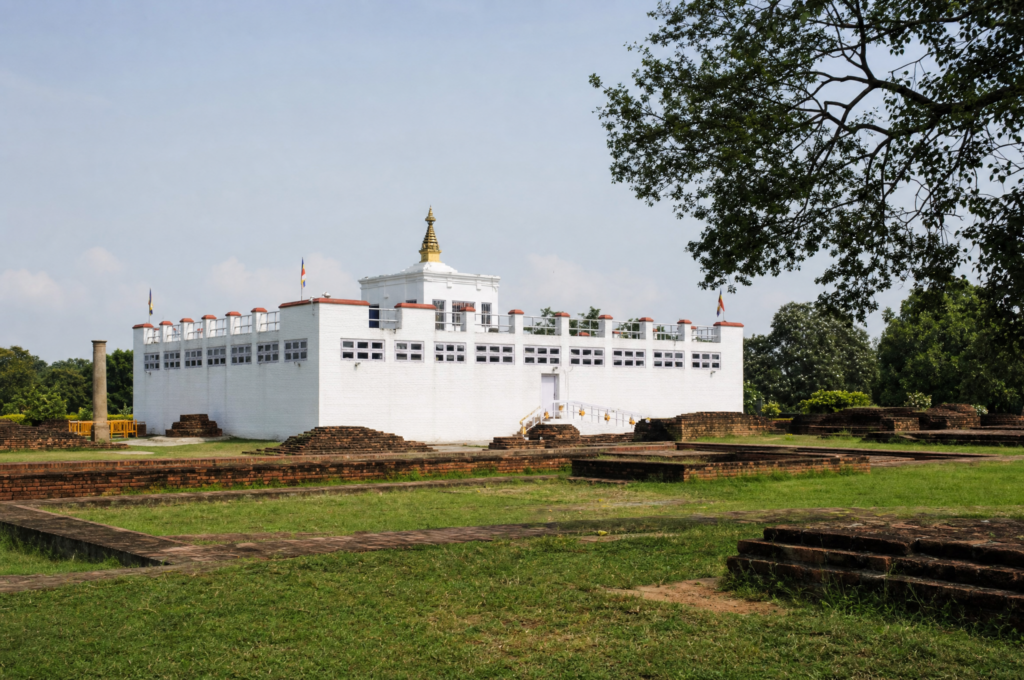
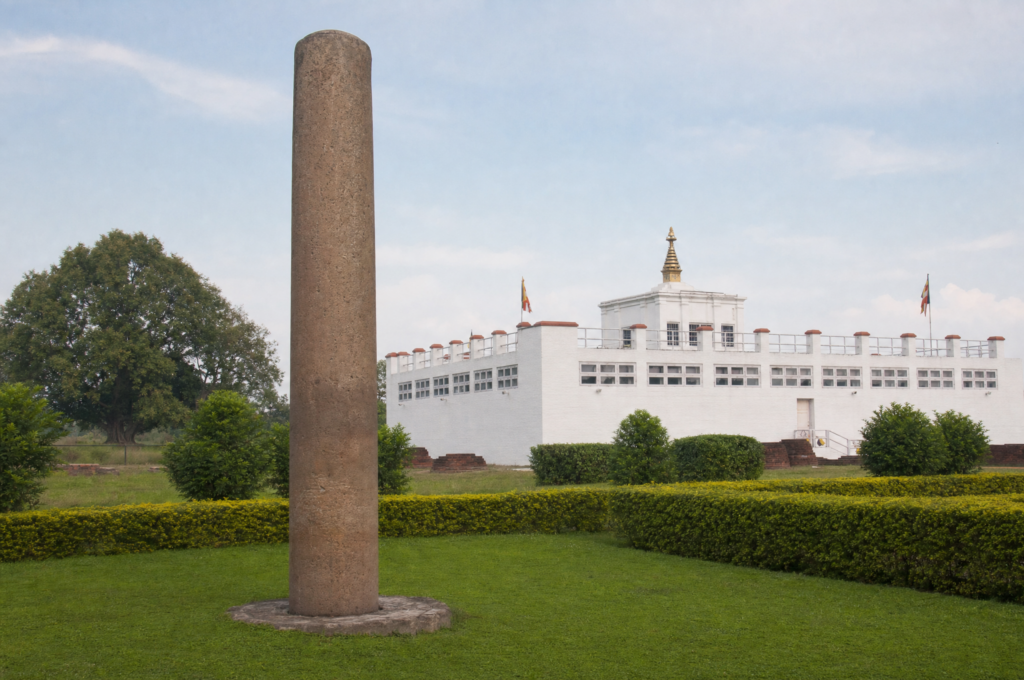
The Sacred Garden is the spiritual and archaeological focus. The Trust’s site description identifies the Mayadevi Temple, Asoka Pillar, Marker Stone, Nativity Sculpture, Puskarini pond, and remains of ancient monastic and stupa structures. The present temple enclosure protects layers of remains, and the central area is both a sacred place and a conservation site. UNESCO identifies the inscribed property as a place whose archaeological remains document Buddhist pilgrimage from antiquity; it stresses that visitor impact and conservation need careful management. Treat barriers and staff directions as part of caring for the place.
In Buddhist tradition, Queen Mayadevi gave birth to Siddhartha at Lumbini. The Asoka pillar inscription, set up by the Mauryan emperor in the third century BCE, is an important historical attestation of Lumbini as the Buddha’s birthplace. The temple and nearby remains carry meanings that are simultaneously devotional and archaeological. You do not need to resolve questions of faith to visit respectfully: let Buddhist communities’ understanding of the site stand alongside the evidence and interpretation presented by Nepal’s authorities and UNESCO.
The Monastic Zone is not a single architectural style or one uniform visitor attraction. The Trust lists Theravada monasteries and centers in the eastern enclave and Mahayana establishments in the western enclave, with temples and meditation centers connected by paths and a canal. Individual monasteries belong to their own communities. An open-looking gate does not mean that a shrine, meditation hall, retreat, teaching, or residential area is available to casual visitors. Read posted notices, ask permission before entering or photographing, and keep voices low around worship and practice.
Entry, conduct, and a realistic visit
Before travel, check the Trust’s current notices and official e-ticket portal for entry arrangements, fees, and any registration steps. The Trust’s site guidance says a conservation ticket is required and gives practical instructions for the Mayadevi Temple: remove shoes before entering, wear modest clothing, and leave food and drinks outside the temple. Fees and exceptions can change, so use the portal or ticket counter’s current information instead of relying on an old price copied elsewhere. Photography restrictions or separate charges can apply to professional equipment; follow the signs and ask staff if unsure.
Inside the shrine area, move slowly and avoid blocking pilgrims who are circumambulating, praying, making offerings, or waiting to see the protected remains. Do not touch archaeological fabric or cross a barrier to improve a photograph. Ask before photographing worshippers, monks, nuns, ceremonies, or monastery interiors. A camera rule that applies in one area may not apply in another. Keep food, drink, litter, and loud conversation away from sacred and protected spaces, and defer to custodians’ instructions.
The official visitor information describes the Lumbini Development Trust’s Visitor Information Centre as a place to get site information, register, pay fees, and ask about local guidance. Confirm its current location and service before depending on it. The Trust’s development is ongoing, and recent conservation reporting by UNESCO makes clear why access arrangements can evolve. Check for temporary closures, construction, event-related restrictions, and seasonal conditions close to departure. Do not plan around a particular temple interior or facility without current confirmation.
Lumbini is a broad, low-lying Terai site. Heat, sun, monsoon rain, humidity, and long distances between zones can shape the day more than an elevation change would. Carry water for use outside protected interior spaces, sun protection, and footwear you can remove easily at the temple. Build in shade and rest breaks, especially for older travelers, children, or anyone who finds prolonged walking difficult. Ask the Trust and accommodation directly about step-free routes and transport suited to a specific mobility need; a map’s pedestrian line is not an accessibility assessment.
Arriving in Lumbini
For many visitors, the simplest air gateway is Gautam Buddha International Airport at Bhairahawa. Nepal Tourism Board places Lumbini about 22 km from Bhairahawa and notes local buses and taxis; the airport authority and airline schedules are the right places to check which flights actually operate for your travel dates. Buddha Air publishes a Kathmandu–Bhairahawa route and current flight information, while its schedules can change. Once in Bhairahawa, arrange a taxi or other road transfer to your accommodation. Ask the driver or hotel to confirm the meeting point, fare basis, luggage capacity, and return plan before you set out.
Overland travelers can take an intercity coach from Kathmandu or connect by road from other Nepali cities. The Nepal Tourism Board lists tourist buses to Lumbini from Kathmandu; the Trust’s orientation material also describes the Bhairahawa–Lumbini bus connection. Departure points, journey duration, and frequency vary by operator and day, so confirm the exact terminal and current schedule before buying. Road journeys in the Terai can take longer than a map estimate suggests, especially in rain or traffic. If you have a flight connection, leave a buffer rather than counting on a same-day bus arriving precisely on time.
For visitors crossing from India, the Nepal Tourism Board identifies the Belahiya/Sunauli border among Nepal’s land entry points and Bhairahawa as the nearby gateway. Check Nepal’s Department of Immigration for visa eligibility and application steps based on your passport; some nationalities need a visa arranged before departure, while others may qualify for visa-on-arrival under current rules. Border processing and onward transport are separate steps. Confirm the border’s current operating arrangements, your visa documents, and transport onward before setting out.
Inside the master-plan area, the Trust’s map labels pedestrian and light-vehicle routes. Trust material describes locally available electric rickshaws, manual rickshaws, and bicycle hire, but availability and fares are not guaranteed. Ask at your hotel or the Visitor Information Centre about current pickup points and prices, and agree a return time before going to a less busy area. A bicycle may suit a traveler who is comfortable in local conditions and weather; it is not the right choice for everyone. Walking is rewarding in the quieter sections, but allow generous time and rest, and don’t assume that a short map distance means quick progress.
Where to stay and eat
For a short pilgrimage, choose a base by how you want to move through the day. Lodging in or near the Cultural Center/New Lumbini Village can reduce transfers to the information center and Sacred Garden. A property near Mahilwar or another outer approach may offer a different setting, but it adds transport planning. Bhairahawa is useful when your flight, onward bus, or other appointments make airport-city access more important than being near the shrine; budget for road transfers both ways.
Three properties with direct official information to compare are Buddha Maya Gardens, which describes itself as close to the main temples and offers direct booking and an in-house restaurant; Lumbini Hotel Kasai, whose official site lists rooms and dining in the Sacred Garden area; and Hotel Peaceland, whose own site describes its Lumbini accommodation and dining. These are examples for comparison, not endorsements or a ranking. Check the exact address, room configuration, current facilities, meal service, access needs, cancellation terms, and total cost directly with the property before booking. Ask each hotel to confirm how guests reach the temple, whether it can arrange airport pickup, and how far any proposed drop-off is from your room.
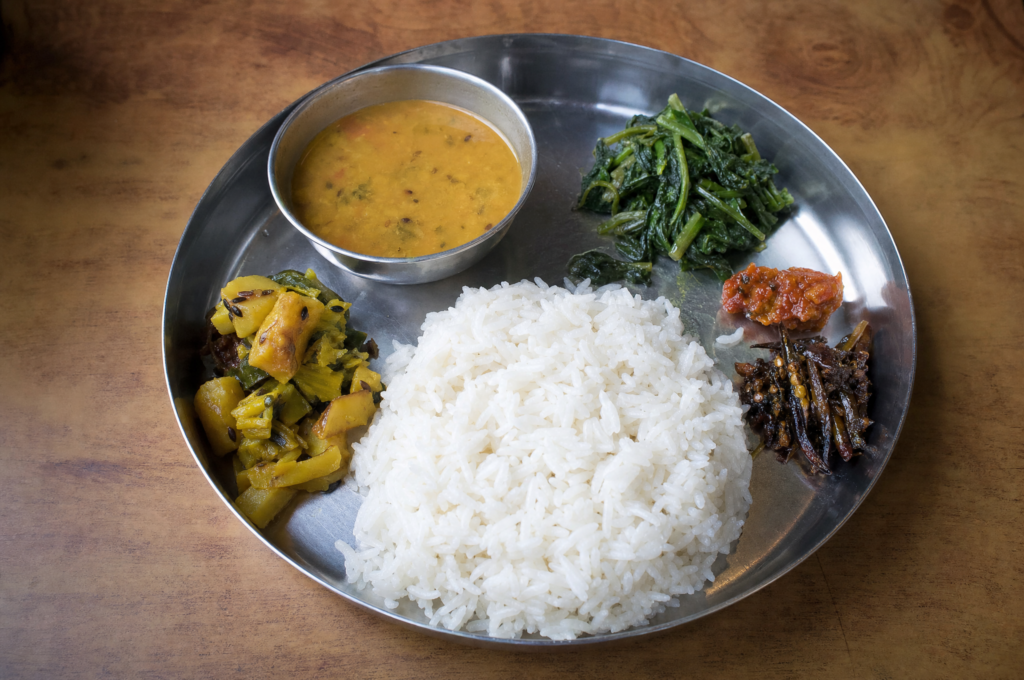
Food planning is simpler if you expect flexible, familiar options rather than a guaranteed regional tasting menu. Nepali dal-bhat sets, vegetable curries, momo, and tea are common menu categories in the area, but ingredients, preparation, and availability vary. Hotel Peaceland’s Kudan Restaurant page describes Nepali and Indian food alongside other options and references Nepali thali sets, momo, and vegetarian choices. The hotel’s nearby-to-the-site meal option may help when you want to return to rest between visits; reconfirm its current menu, hours, and reservation arrangements.
Amma Café’s published menu describes drinks and light food made with local ingredients, and says its seasonal menu can change. It is a useful prospect for a daytime pause near the Sacred Garden, but check current operation and opening before building it into your schedule. Buddha Maya Gardens and Lumbini Hotel Kasai also publish their own restaurant details, including Nepali dishes. Ask venues directly about allergies, dietary requirements, ingredients, and meal timing, especially if you have a fixed ceremony or transport connection. Food and drink should remain outside the Mayadevi Temple premises as the Trust instructs.
One-day plan
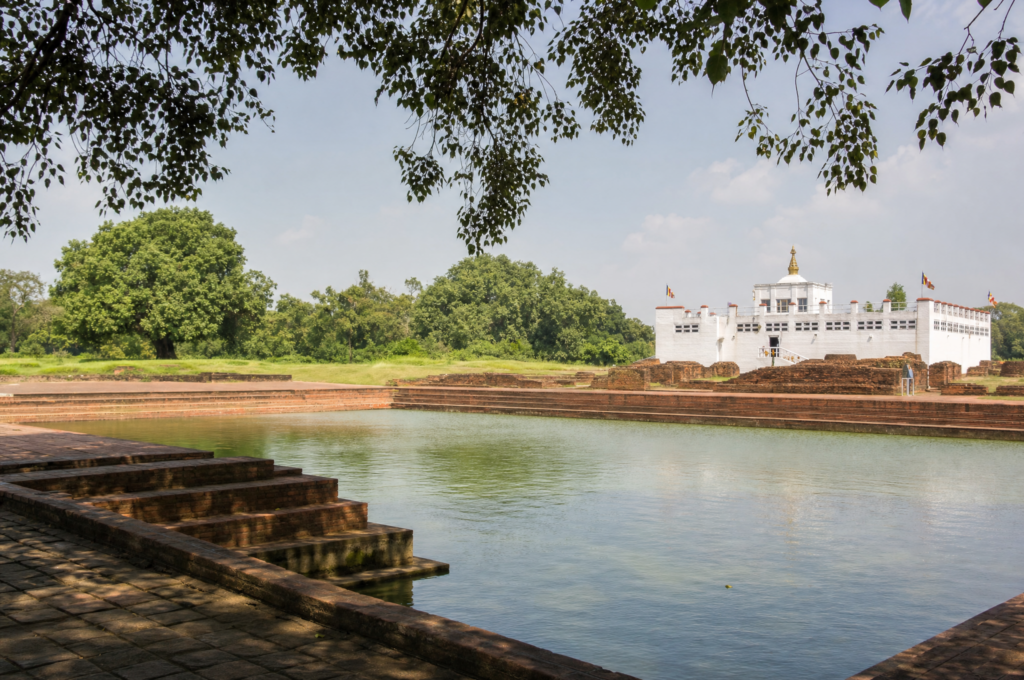
Arrive early enough to check in, purchase or validate the required conservation entry, and read the day’s notices. Spend the main part of the day in the Sacred Garden: approach the Mayadevi Temple quietly, leave shoes and food as instructed, and allow time for prayer, observation, or reflection without crowding the inner space. Continue to the Asoka Pillar and Puskarini pond, then take a slow circuit of the surrounding protected remains if paths are open. Rest and eat outside the shrine precinct. If energy and time allow, choose one monastery in the eastern or western enclave and verify that visitors are welcome. A one-day visit should not try to cover every monastery or the wider Greater Lumbini region.
Two-day plan
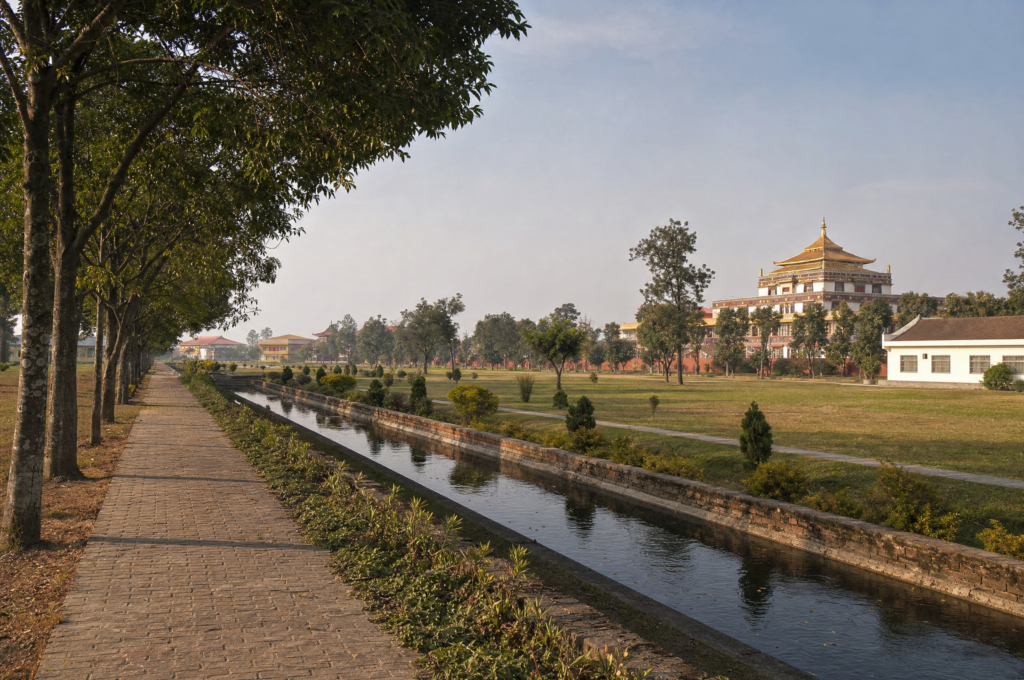
Use the first day for the Sacred Garden at an unhurried pace, returning to the temple at a quieter time if that suits your purpose and current access. On the second day, focus on the Monastic Zone. Choose a small number of communities whose architecture, tradition, or practice interests you, and check each one’s visiting expectations before going. The different national and Buddhist traditions represented here are living communities, not themed exhibits. If a monastery is closed, in retreat, or hosting worship, accept that boundary and spend time on the canal-side walk or in the public landscape instead. Confirm whether the museum or another Cultural Center facility is open before adding it.
Three-day plan
Three days can provide room for a slower rhythm and a regional extension, but only if you arrange the logistics directly. Keep one day for the central shrine, another for the monasteries and cultural facilities you have verified, and reserve the third for rest or a separately planned trip to a Greater Lumbini-area archaeological site. The Trust’s official materials discuss places such as Tilaurakot/Kapilavastu, Devadaha, and Ramagrama; they are distinct sites with their own access and transport needs. Do not assume they are a quick add-on or that local transport waits for you. Ask an authorized local operator or your lodging to confirm the exact site, road condition, entry status, guide arrangements, and return transport. If those details are not confirmed, let the extra day deepen your Lumbini visit instead.
When to go and what to verify
Vesak/Buddha Jayanti and other Buddhist observances can bring special ceremonies and larger pilgrim gatherings. Those occasions may be meaningful if you wish to share a public celebration, but confirm the date and current program with the Trust and relevant monastic community. Expect that crowd controls, access routes, traffic, and accommodation demand may differ from an ordinary day. Do not assume a ceremony is open to visitors or that you can take photographs. If quiet reflection is your priority, choose dates after checking the event calendar and retain flexibility.
Before travel, check the Lumbini Development Trust’s latest notices, map, e-ticket system, and contact details; verify flights or coaches with the operator; and review Nepal’s current immigration information for your passport. Ask hotels and restaurants about the details that matter to you rather than relying on old listings. Schedules, ticket arrangements, site access, services, transport, menus, and availability can change. For current site guidance, start with the Trust and follow any instructions from custodians on the ground.
Official planning links
- Lumbini Development Trust: current notices and site information
- Trust: official maps, including the Sacred Garden and master plan
- Trust: official e-ticket portal
- UNESCO World Heritage Centre: Lumbini property, significance, and conservation context
- Nepal Tourism Board: Lumbini access orientation
- Civil Aviation Authority of Nepal: current domestic airline schedule references
- Buddha Air: route and flight information
- Department of Immigration, Nepal: visa information
- Nepal Tourism Board: transport orientation
- Amma Café: current menu information
Check the official sources
Schedules, admission, fares and service can change. Recheck these for your travel dates.
- lumbinidevtrust.gov.np (checked 2026-09-27)
- lumbinidevtrust.gov.np (checked 2026-09-27)
- tickets.lumbinidevtrust.gov.np (checked 2026-09-27)
- whc.unesco.org (checked 2026-09-27)
- ntb.gov.np (checked 2026-09-27)
- caanepal.gov.np (checked 2026-09-27)
- buddhaair.com (checked 2026-09-27)
- immigration.gov.np (checked 2026-09-27)
- trade.ntb.gov.np (checked 2026-09-27)
- buddhamaya.com (checked 2026-09-27)
- lumbinihotelkasai.com.np (checked 2026-09-27)
- hotelpeaceland.com (checked 2026-09-27)
- hotelpeaceland.com (checked 2026-09-27)
- ammacafe.tscpl.com (checked 2026-09-27)