
Food
A Food Guide to Madrid: Cocido, Calamari Sandwiches and Market Meals
A neighborhood-based guide to Madrid’s cocido madrileño, bocadillo de calamares, tavern tapas, churros and markets, with practical timing for Centro, La Latina, Chueca and Salamanca.
How long is your visit?
Choose an itinerary, or read the full guide below.
Check the full guide for arrival, ticket, accessibility and booking details.
Madrid’s food is more than a checklist of famous dishes. Its castizo cooking includes chickpea stew, tripe, fried squid sandwiches, tavern snacks and hot chocolate with churros; its markets and restaurants also bring food traditions from every region of Spain into the capital. For a short visit, plan one substantial cocido meal, one casual tapas route and a market stop, then leave room for a pastry or late-night chocolate. Keep geography simple: Plaza Mayor and the Austrias for calamari, La Latina for a tapas crawl, Chueca for San Antón market, and Salamanca for the traditional Mercado de la Paz.
Madrid dishes worth recognizing
Cocido madrileño is a hearty chickpea stew cooked with vegetables and an assortment of meats. It is traditionally served in separate stages, called vuelcos: broth, chickpeas and vegetables, then meats. Restaurants differ: Malacatín sets out three vuelcos, while La Bola describes serving its soup and the rest in two. Ask how the kitchen serves it and whether you can have everything together. It is a long, filling meal, often easier to share at lunch than to follow with a large dinner. Recipes vary by household and restaurant; common additions include beef, chicken and pork products, so it is not a vegetarian stew. Tourism Madrid on Madrid’s food traditions · Malacatín’s cocido service · La Bola’s cocido and menu.
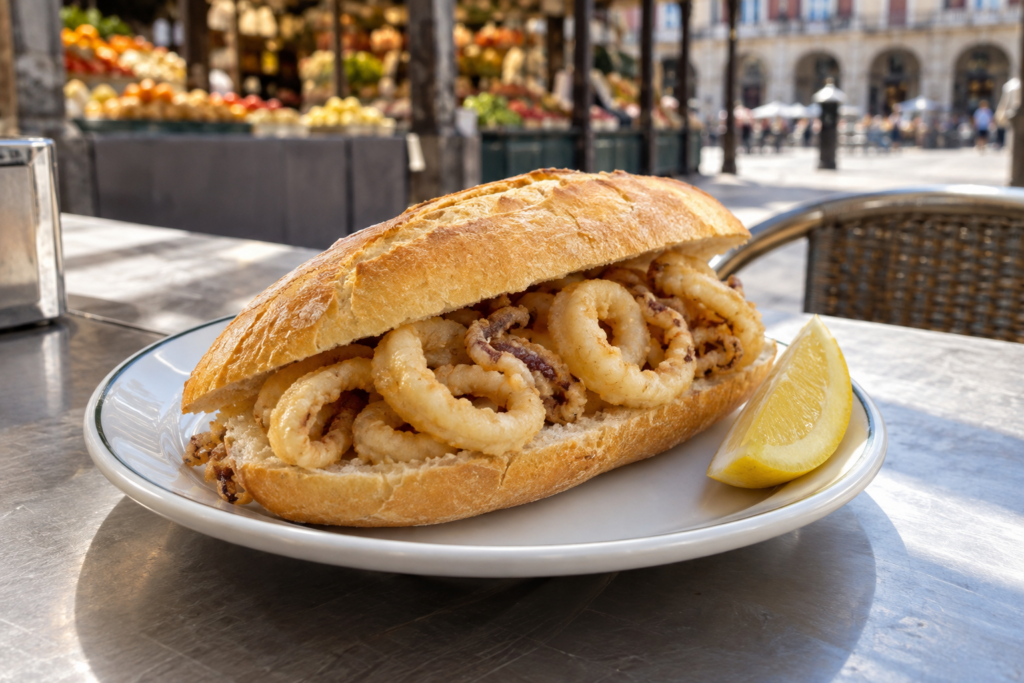
A bocadillo de calamares is a crusty roll filled with battered, fried squid. It has become a capital-city classic around Plaza Mayor, where it makes a straightforward snack or quick lunch. A tapa is a small serving, while a ración is a larger plate for sharing; do not assume that a tapa is complimentary with a drink. Some bars may bring a small snack, but menus and customs vary. Order clearly at the counter, and check whether a price is for a single piece, tapa or full portion.
Other recognizable Madrid dishes include callos a la madrileña, a slow-cooked tripe stew often made with sausage; oreja a la plancha, grilled pork ear; soldaditos de Pavía, battered fried cod; and patatas bravas, fried potatoes served with a spicy sauce. Chocolate con churros or thicker porras is a classic breakfast or merienda (afternoon snack), particularly useful after a late night. Seasonal sweets include rosquillas around San Isidro in May. Offal is common in traditional tavern menus, so ask what a dish contains before ordering. Tourism Madrid’s Madrid gastronomy guide · Tourism Madrid on market dining.
Madrid is also a hub for the cuisines of Spain. A market can sell Galician seafood, Basque cheese, Asturian products or Andalusian preserves alongside local specialties. That variety is part of the city’s appeal, but not every item described as Spanish food is specifically Madrileño. If you want a meal rooted in the capital, look for cocido, callos, a calamari sandwich or a named traditional tavern; use markets to explore the wider country as well. Tourism Madrid: cuisines of Spain in the capital.
Centro and the Austrias: Plaza Mayor bites and old taverns
The area around Plaza Mayor is the easiest place to try the calamari sandwich. Cervecería Plaza Mayor 2, at Plaza Mayor 2, identifies its squid sandwich as a specialty and says it fries fresh Cantabrian squid in olive oil; its operator site also lists hours and takeaway. It is a convenient example of the classic format, rather than a promise that every surrounding bar uses the same squid or bread. Near Sol, Casa Labra is a historic tavern that Tourism Madrid lists at Calle de Tetuán 12. It is a better-known address for battered cod and croquettes, including soldaditos de Pavía, than for cocido. For chocolate and churros near the same central walking area, Chocolatería San Ginés at Pasadizo de San Ginés 5 publishes its own current location and service information. Cervecería Plaza Mayor 2 · Tourism Madrid: Casa Labra · Chocolatería San Ginés.
Mercado de San Miguel, beside Plaza Mayor, reopened after conservation work in February 2026. It now operates as a gourmet food market with more than 30 counters serving tapas, seafood, cheeses, meat, produce and prepared foods from across Spain. The market’s operator lists hours from 10 a.m. to midnight Sunday–Thursday and until 1 a.m. Friday, Saturday and holiday eves. Treat it as a collection of small vendors, not a traditional produce market or a single restaurant: check each counter, expect crowding at peak times and use it for a grazing meal if you want choice in one stop. Mercado de San Miguel operator site, reopening and hours · Tourism Madrid’s market profile.
La Latina: cocido and a tapas evening
La Latina is a natural neighborhood for a slow lunch or an evening of bar-hopping along Cava Baja and nearby streets. Malacatín, at Calle de la Ruda 5, serves cocido in three stages: noodle soup first, then chickpeas and cabbage, then meat, with tomato and cumin sauce. Reserve ahead and treat it as the day’s main meal. Taberna La Bola, near the Royal Palace at Calle de la Bola 5, cooks its cocido in individual clay pots over holm-oak charcoal and serves soup and the remaining ingredients in two stages. The difference is useful: there is no single service format visitors should assume. Both are traditional cocido stops; check current menus, opening days and serving times when booking. Malacatín cocido · Taberna La Bola.
For smaller plates, the La Latina streets offer a mix of classic and modern bars. Look for patatas bravas, croquettes, boquerones en vinagre (marinated anchovies), tortilla, grilled ear or a stew of callos, then order a mix for the table rather than assuming one tapa will make a meal. Sunday is also the day of El Rastro flea market; it can make the neighborhood very busy, and the flea market is not the same thing as a scheduled food-market morning. If you want a food market rather than street stalls and browsing, Mercado de la Cebada is in the district; its official tourism listing describes produce and specialty merchants, but check individual stall service before planning a sit-down lunch there. Tourism Madrid: La Latina · Tourism Madrid: Mercado de la Cebada.
Chueca: San Antón market and flexible dining
Mercado de San Antón at Calle de Augusto Figueroa 24 is a modern, three-level market in Chueca. Tourism Madrid describes the first floor as fresh-food stalls with some tapas counters, the second as a mix of show-cooking and takeaway counters, and the upper floor as a restaurant and terrace. Current listed hours separate the daytime market, food counters and rooftop restaurant, so check which part you want: traditional shopping stalls run Monday–Saturday during the day, while counters and the restaurant operate later and on Sunday. This makes San Antón a useful lunch option for a group with different appetites, but it is not a guarantee that every stall remains open throughout the evening. Tourism Madrid: Mercado de San Antón and current hours · Madrid City Council: San Antón location.
Chueca also has a varied restaurant scene beyond the market, with traditional tascas beside contemporary Spanish and international menus. Choose it when you want flexible choices and an energetic evening, rather than treating every meal as a formal tasting of historic dishes. The practical distinction is neighborhood: San Antón is the market anchor; nearby streets have bars and restaurants, and late-night plans can continue after the market’s grocery stalls have closed. Tourism Madrid: Chueca.
Salamanca: a working-market lunch
Mercado de la Paz, on Calle de Ayala 28, is a traditional neighborhood market in Salamanca with fresh-food stalls and small places to eat. The City of Madrid lists it Monday–Friday from 9 a.m. to 8:30 p.m. and Saturday from 9 a.m. to 2:30 p.m.; Tourism Madrid lists slightly shorter weekday hours, so confirm with the market before a late visit. Sunday is not a regular shopping day here. Choose La Paz for produce, cheese, prepared food or a less nightlife-centered break while exploring Salamanca’s streets. It is a working market with independent stall schedules, so arrive before closing and ask which counters are serving food on site. City of Madrid: Mercado de la Paz hours and address · Tourism Madrid: Mercado de la Paz.
Three food itineraries
One day: Begin with coffee or churros near Sol, then walk through the Austrias to Plaza Mayor for a calamari sandwich. Browse San Miguel if you want a market-style tasting, keeping in mind that it focuses on prepared counters and national specialties. For a late lunch, book cocido at La Bola or Malacatín rather than trying to fit the full stew after several snacks. Finish with a light evening drink or an early night.
Two days: Give day one to Centro: churros in the morning, a short Plaza Mayor lunch, then the historic streets and Casa Labra for cod tapas or San Miguel for a varied grazing meal. On day two, visit La Latina and Mercado de la Cebada if open, then reserve a three-vuelcos cocido lunch at Malacatín. Rest before tapas in the evening, or make cocido the only planned meal after lunch.
Three days: Spend one day in the center, one in La Latina, and one choosing between Chueca and Salamanca. San Antón gives you later food counters and a rooftop option in Chueca; La Paz is better for daytime market shopping and a calm lunch in Salamanca. If your dates line up, make the Rastro a Sunday-morning activity, then choose lunch in La Latina but reserve early or expect a busy neighborhood. Avoid stacking two markets and a long cocido in one day: market visits and Spanish meal service take more time than a quick hop between pins on a map.
Meal timing and dietary notes
Many traditional restaurants serve lunch from early afternoon and dinner later in the evening, while market stalls may stop serving before the building or neighborhood closes. Cocido is a multi-stage meal; reserve it for lunch and plan a modest dinner. Markets can be busiest at weekend lunch, and independent counters may have different hours from the building’s general schedule. For an in-demand table, book directly and confirm the day cocido is available.
Cocido commonly contains chickpeas plus several meats, including pork products, and meat stock; callos and oreja are offal dishes. A calamari sandwich contains mollusk and wheat, and is usually fried; shared fryers are a concern for allergies and strict diets. Churros are wheat-based and may be fried in shared oil; hot chocolate commonly contains milk. Tapas can hide anchovies, pork, egg, dairy, nuts or meat stock in sauces and fillings. Vegetarian dishes are available across Madrid’s broad restaurant scene, but a traditional menu may offer few substantial plant-based choices. Ask about ingredients and cross-contact directly, especially for celiac disease, severe allergies or halal requirements.
Prices, opening schedules, market stalls and recipes vary. Recheck current service hours and menus with the venue or market, especially around holidays.
Official city, market and operator sources
- Tourism Madrid: Madrid’s food traditions
- Tourism Madrid: local dishes
- Tourism Madrid: Spain’s cuisines in Madrid
- Tourism Madrid: restaurants in markets
- Tourism Madrid: La Latina
- Tourism Madrid: Mercado de la Cebada
- Tourism Madrid: San Antón market
- Tourism Madrid: Chueca
- Tourism Madrid: La Paz market
- Madrid City Council: La Paz market
- San Miguel operator hours and reopening
- Cervecería Plaza Mayor 2
- Malacatín cocido
- Taberna La Bola
- Tourism Madrid: Casa Labra
- Chocolatería San Ginés
Check the official sources
Schedules, admission, fares and service can change. Recheck these for your travel dates.
- esmadrid.com (checked 2026-09-27)
- esmadrid.com (checked 2026-09-27)
- esmadrid.com (checked 2026-09-27)
- esmadrid.com (checked 2026-09-27)
- esmadrid.com (checked 2026-09-27)
- esmadrid.com (checked 2026-09-27)
- esmadrid.com (checked 2026-09-27)
- madrid.es (checked 2026-09-27)
- esmadrid.com (checked 2026-09-27)
- mercadodesanmiguel.es (checked 2026-09-27)
- labola.es (checked 2026-09-27)
- malacatin.com (checked 2026-09-27)
- plazamayor2.com (checked 2026-09-27)
- esmadrid.com (checked 2026-09-27)
- chocolateriasangines.com (checked 2026-09-27)
- esmadrid.com (checked 2026-09-27)