
Food
Where to Eat in Osaka: Takoyaki, Okonomiyaki and Kushikatsu
A practical Osaka food companion to takoyaki, Osaka-style okonomiyaki and Shinsekai kushikatsu, with six current restaurant examples, neighborhood context and flexible one-to-three-day meal plans.
How long is your visit?
Choose an itinerary, or read the full guide below.
Check the full guide for arrival, ticket, accessibility and booking details.
Osaka is often introduced through konamon—flour-based comfort foods—and its reputation for eating well. Takoyaki, okonomiyaki and kushikatsu are useful first tastes, but they are different dishes with different neighborhood associations. Takoyaki and okonomiyaki are easy to find in Minami, including Namba and Dotonbori; Shinsekai, around Tsutenkaku and Janjan Yokocho, is especially associated with kushikatsu and doteyaki (beef tendon simmered in miso). These are city foods with many versions, not a checklist every visitor must complete. OSAKA-INFO’s Osaka food guide places these dishes in the region’s casual food culture and notes that the city’s cuisine also depends on dashi.
What to taste in Osaka
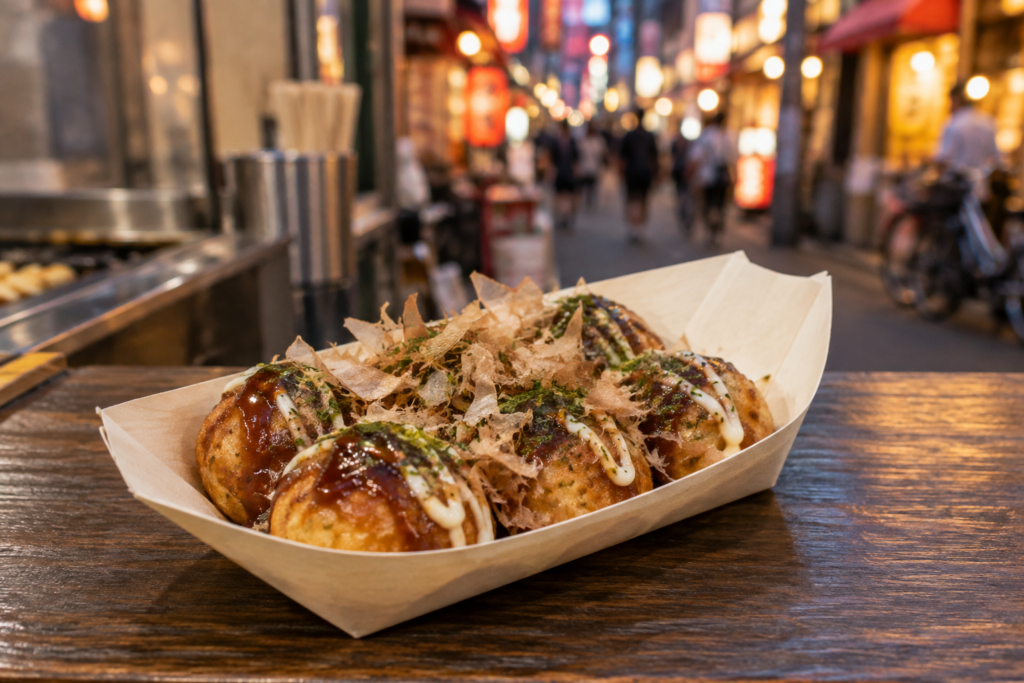
Takoyaki are small, round savory bites cooked in a dimpled pan, usually with octopus in a batter seasoned with dashi. Shops vary the batter, fillings, doneness and toppings: sauce, mayonnaise, aonori (seaweed flakes) and bonito flakes are common, but not universal. The center can be very soft and extremely hot, so let the first bite cool. A useful regional distinction: Akashiyaki, a soft egg-rich octopus dish dipped in broth, is associated with Akashi in neighboring Hyogo Prefecture, not Osaka takoyaki. OSAKA-INFO’s takoyaki overview describes the dish’s dashi batter and its relationship to other regional forms.
Osaka-style okonomiyaki is a griddled savory pancake: cabbage and batter are mixed together, commonly with pork or seafood, and cooked on a hot plate. Restaurants may add mountain yam for a soft texture, and toppings often include a sweet-savory sauce, mayonnaise, dried seaweed and bonito flakes. Staff commonly cook it for guests, though this depends on the shop. It is filling, so sharing one pancake with a side or making lunch the main meal can leave room to try other foods later. Hiroshima-style okonomiyaki is a distinct regional style, typically assembled in layers with noodles; this guide focuses on Osaka’s mixed-batter style. OSAKA-INFO’s okonomiyaki guide describes Osaka’s cabbage-and-batter approach and its toppings.
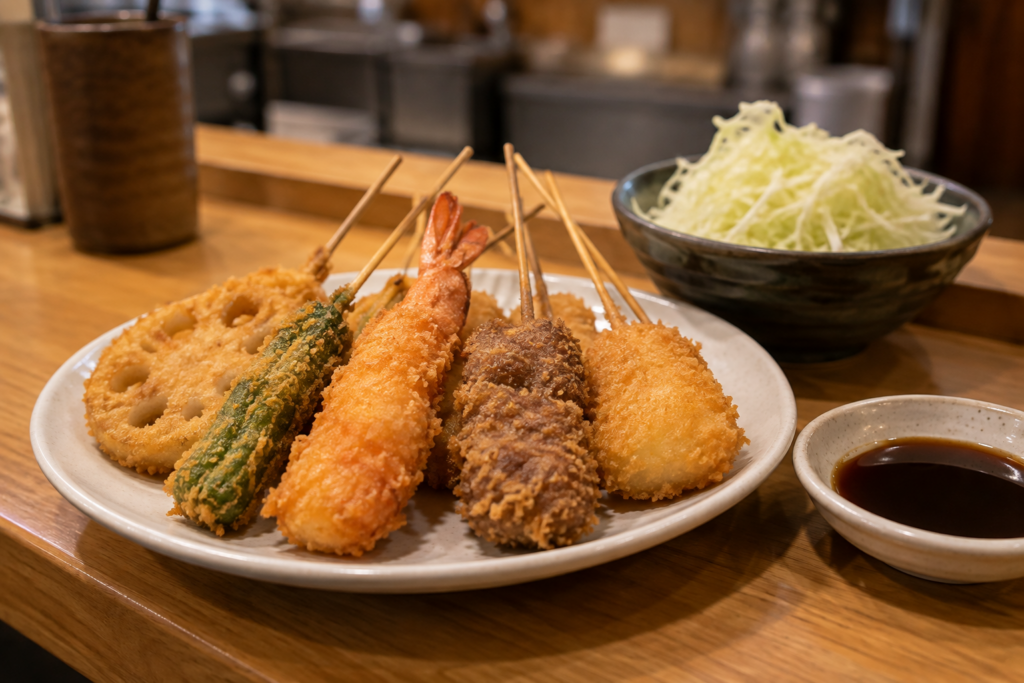
Kushikatsu (also called kushiage) are skewers of meat, seafood or vegetables coated and deep-fried. Shinsekai’s Janjan Yokocho is a traditional place to try them, though kushikatsu shops are found across Osaka. At shops using a shared sauce vessel, dip each skewer once; do not return a bitten skewer to communal sauce. Some places now offer individual sauce portions or different serving customs, so follow the restaurant’s instructions. Doteyaki is a common companion dish in the area. OSAKA-INFO’s kushikatsu guide explains the dish and the no-double-dipping custom.
Other local flavors worth noticing include kitsune udon (udon with seasoned fried tofu), grilled squid, negiyaki (a scallion-forward griddled pancake) and doteyaki. Osaka’s dashi traditions draw on kelp and fish-based ingredients, so apparently simple soups, batters and sauces may contain fish stock. OSAKA-INFO’s dashi overview gives more context.
Namba and Dotonbori: a first Osaka food walk
Minami’s Namba, Sennichimae and Dotonbori streets offer many takoyaki and okonomiyaki choices within walking distance. The central streets are busy, and popular counters can have queues; consider an early lunch or a weekday visit. A short walk between snacks is useful because these foods are rich and several are best eaten fresh. Keep some distance from shop entrances and walkways while eating where signs or staff request it.
Takoyaki Do-raku Wanaka — Sennichimae. The operator lists its Sennichimae flagship in the Namba area and publishes its store list and menu through its official site. This is a focused stop for takoyaki; decide toppings at the counter and let the centers cool before eating. Confirm the current store hours and any temporary notices before visiting. Wanaka official site and store information.
Aiduya — Namba Nannan, with a second option in Tamade. The operator’s current store page lists a Namba Nannan branch beneath Namba Station, as well as its original shop in Tamade, south of central Minami. Aiduya is a useful comparison because its original style is associated with eating takoyaki without relying on a heavy sauce topping. Check the live menu and the specific branch’s hours; Namba Nannan follows the underground shopping area’s holiday schedule. Aiduya official store list · Aiduya official menu.
Ajinoya Honten — Namba. This okonomiyaki specialist publishes a current business calendar, notices, menu information and a Namba address. Its main shop is at 1-7-16 Namba, Chuo-ku. It is a convenient place to try Osaka-style okonomiyaki and yakisoba in one stop. The operator warns that hours can change and that the main store closes on Mondays; check the live calendar before planning around it. Ajinoya official site, store information and notices.
Chibo Dotonbori — Dotonbori. Chibo is an Osaka okonomiyaki and teppanyaki restaurant group whose official store finder lists Osaka branches and branch services. Use the locator to confirm the Dotonbori shop’s address, current opening hours and available language support before you go; branch details vary. It offers another option if Ajinoya’s line or schedule does not fit. Chibo official store finder.
Takoyaki Kureoru — Dotonbori. The Osaka tourism bureau lists this large Dotonbori restaurant as a place to compare takoyaki varieties and also try okonomiyaki and kushikatsu in one sitting. Its published listing gives the location as 1-6-4 Dotonbori and describes it as a sit-down option. That can help groups who want to sample more than one dish without moving between counters. Confirm service and hours directly before visiting. OSAKA-INFO’s Minami model course listing · Kureoru official store finder.
Shinsekai: skewers and old downtown streets
Shinsekai is a southern Osaka neighborhood shaped by the area’s early twentieth-century development and known today for Tsutenkaku Tower, Janjan Yokocho and casual restaurants. Plan a separate half-day or evening here rather than trying to squeeze it into the same quick Minami snack walk. Janjan Yokocho is a covered, compact arcade; follow posted shop hours because individual businesses may close on different weekdays.
Kushikatsu Daruma — Shinsekai Sohonten or Janjan branch. Daruma’s official store list shows multiple current branches in Shinsekai, including the original main shop and Janjan branch, with posted hours and booking rules. The main shop does not accept reservations; the Janjan shop lists reservations for parties of two or more. Choose a branch based on the queue and your route, then order a mix of skewers and perhaps doteyaki. Follow the sauce and cabbage instructions at your table. Daruma official location list · Daruma official site.
One, two or three days of Osaka eating
One day: Start in Namba with a few takoyaki from Wanaka or Aiduya. For lunch, share an Osaka-style okonomiyaki at Ajinoya or a Chibo branch; leave time for the griddle-cooked meal. Walk Dotonbori and choose either a small extra snack or an early dinner rather than forcing in every dish. If kushikatsu is the priority, take the train or walk south to Shinsekai for an evening meal at Daruma instead of adding another fried snack beforehand.
Two days: Spend day one around Namba and Dotonbori: compare two takoyaki styles, then settle in for okonomiyaki. Keep day two for Tennoji and Shinsekai. Explore the Tsutenkaku area, then have kushikatsu and doteyaki in Janjan Yokocho. If you still want another local staple, choose kitsune udon or a lighter noodle meal on a different day.
Three days: Use the first day for Minami’s takoyaki and okonomiyaki, and the second for Shinsekai kushikatsu. On the third, shift to a different neighborhood such as Umeda or Tenjinbashisuji for a less concentrated food walk; Osaka’s official tourism guide describes Minami and northern Osaka as distinct areas with their own dining choices. Try a noodle or market meal, then revisit whichever dish you liked most. Keep the plan flexible for weekly closing days, queues and appetite.
Practical notes
Osaka’s casual food does not automatically suit every diet. Takoyaki and okonomiyaki often contain wheat, egg, dashi or other fish ingredients; takoyaki contains octopus, and okonomiyaki often contains pork, seafood, mayonnaise or bonito. Kushikatsu is breaded and fried, and batter, shared oil, sauces and preparation surfaces can create cross-contact. Vegan or vegetarian versions may still use fish-based dashi, bonito or animal-derived sauces. Ask the exact branch about ingredients and kitchen handling before ordering; a menu description alone cannot guarantee allergy safety. Japanese allergy names, an allergy card translated into Japanese, and written confirmation can help communicate, but severe allergies need a direct response from the restaurant. Daruma publishes an ingredient allergen table, but it applies to its listed products and can change; check its current page and confirm with staff. Daruma’s official allergen information.
Menus, prices, hours, reservations and branch offerings change. Check the operator’s own page on the day you plan to visit, especially for Monday closures, facility holidays and seasonal schedules. The dishes can be filling, hot and salty; smaller portions and sharing help leave room for a second stop. For shared sauce, follow the restaurant’s current instructions and never double dip where the sauce is communal.
Official Osaka food and venue references
- OSAKA-INFO: Osaka casual foods and neighborhood context
- OSAKA-INFO: takoyaki history and style
- OSAKA-INFO: Osaka okonomiyaki
- OSAKA-INFO: kushikatsu and Shinsekai context
- OSAKA-INFO: Shinsekai neighborhood guide
- Wanaka: official store and menu information
- Aiduya: official store list
- Aiduya: official menu
- Ajinoya: official site and current notices
- Chibo: official store finder
- Kureoru: official store finder
- Daruma: official branch information
- Daruma: official allergen table
Check the official sources
Schedules, admission, fares and service can change. Recheck these for your travel dates.
- osaka-info.jp (checked 2026-09-27)
- osaka-info.jp (checked 2026-09-27)
- osaka-info.jp (checked 2026-09-27)
- osaka-info.jp (checked 2026-09-27)
- takoyaki-wanaka.com (checked 2026-09-27)
- aiduya.com (checked 2026-09-27)
- aiduya.com (checked 2026-09-27)
- ajinoya-okonomiyaki.com (checked 2026-09-27)
- shop.chibo.com (checked 2026-09-27)
- creo-ru.com (checked 2026-09-27)
- osaka-info.jp (checked 2026-09-27)
- kushikatu-daruma.com (checked 2026-09-27)
- kushikatu-daruma.com (checked 2026-09-27)
- osaka-info.jp (checked 2026-09-27)