
Food
What to Eat in Phuket: Local Dishes, Old Town and the Coast
Explore Phuket’s Hokkien, Peranakan and southern Thai food traditions, with official menus for Phuket Town and Chalong and practical one-to-three-day meal plans.
How long is your visit?
Choose an itinerary, or read the full guide below.
Check the full guide for arrival, ticket, accessibility and booking details.
Phuket’s food story is bigger than resort seafood. The island’s historical connections to Hokkien Chinese, Peranakan, Malay and southern Thai communities show up in noodle dishes, slow-cooked pork, sharp relishes, curries and sweets. A meal plan works best when it follows the day’s geography: Phuket Old Town for a concentrated local-food outing, a west-coast meal near your beach base, or a separate drive to Chalong Bay. The island’s distances make a famous dish less appealing if getting there consumes the evening.
Start with dishes that belong to Phuket
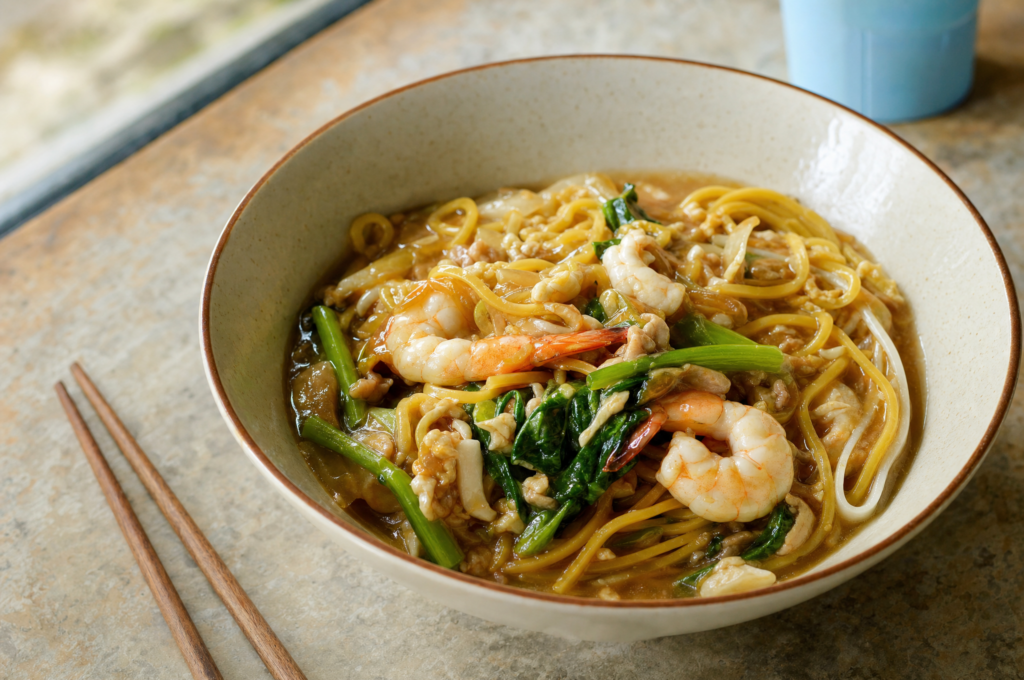
Hokkien noodles are a useful first stop in the island’s Chinese-influenced food tradition. A Thai government cultural feature describes Phuket Hokkien noodles as thick yellow noodles stir-fried over high heat with seafood and a rich sauce. The name alone does not tell you whether a particular bowl contains pork, seafood, egg or a particular broth, so ask the vendor if an ingredient matters to you.
O-tao is a Phuket-style oyster dish made with soft batter, taro, egg and oysters. Lo-ba is fried pork served with a dipping sauce, while o-aew is a local chilled dessert made with jelly, syrup, shaved ice and toppings. These are not interchangeable with standard Thai street-food labels; use the names as a starting point, then ask what the vendor is serving that day. Oysters, eggs, seafood sauces and shared cooking surfaces are important allergy questions.
Moo hong, a slow-braised pork dish seasoned with pepper and garlic, is a particularly useful restaurant order to compare across kitchens. The official menu story at Raya describes its version as a pork dish cooked for several hours. A different restaurant may use a different recipe, cut or seasoning. Look too for Phuketian or Peranakan-style crab curry, shrimp-paste and dried-shrimp relishes, local greens such as pak meang, and sour fish soups. These can be assertive, salty, spicy or seafood-forward. Ask about chili, fermented seafood and fish sauce rather than assuming a dish is mild from its English name.
Phuket was designated a UNESCO Creative City of Gastronomy in 2015, according to a current Thai government cultural overview. The designation is context for the island’s culinary heritage, not a rating of any particular restaurant. Treat local breakfasts, noodles and sweets as distinct from a booked sit-down dinner; doing both gives you a broader picture without trying to order every regional dish at one table.

Phuket Town: choose a focused meal
For a planned local meal in Phuket Town, Raya Restaurant publishes Phuket dishes including crab curry with coconut milk, moo hong, shrimp with tamarind sauce and local vegetables. Its official page gives the address as 48/1 Dibuk Road in Talat Yai and offers a reservation form, telephone and email. Use its menu link and contact route to check current dishes, service details and whether a reservation suits your party. Raya is a sit-down restaurant choice, not a guarantee that every traditional specialty will be available on a particular day.
Blue Elephant Phuket is another Phuket Town option for a more formal southern Thai and Phuketian meal. The restaurant’s current Phuket page links its menu and table-booking route, gives the address at 96 Krabi Road, and describes its historic Sino-Portuguese setting. Its menu page features dishes such as Peranakan tumee with king mackerel and a Phuketian turmeric-and-betel-leaf crab curry. Compare the menu and booking terms before making this the day’s anchor; this is a destination meal rather than a quick noodle stop.
These two venues are useful reference points, not a ranking. Raya’s own material emphasizes local household-style specialties; Blue Elephant presents regional dishes in a formal restaurant context. If you want breakfast noodles, an inexpensive dessert or a market snack, keep time for a separate stop in town instead of expecting either booked dinner to cover the entire street-food experience. Walkable historic streets and dining areas cluster around the old commercial core, but check the map and exact entrance rather than assuming a hotel anywhere in Phuket Town is next door.
Chalong Bay: make seafood a separate outing
Kan Eang at Pier is a named option in Chalong for a seafood-focused meal away from Old Town and the main west-coast resort strip. Its official site gives the address as 44/1 Moo 5, Viset Road, Rawai, Chalong, and links a full food menu and table reservation page. The current menu includes southern Thai dishes and seafood selections; the operator describes its setting as pier-side on Chalong Bay. Check the day’s menu, reservation details and road journey from your base before choosing it. Chalong is not an Old Town dinner detour on foot.
At seafood restaurants, clarify whether the listed item is priced or sold by weight if the menu presents it that way, and ask what sides are included. This guide does not quote a live price. If allergies are involved, speak with the venue before booking and again when ordering; curry pastes, shrimp paste, fish sauce, oyster sauce and shared cookware may matter. A vegetarian dish title does not establish that fish sauce or shrimp paste is absent.
Eating with children, access needs or dietary limits
For a group, choose the meal area before choosing the dish. A family with a beach-focused day may prefer a restaurant near its hotel and keep Old Town for a separate trip. At a sit-down venue, review the current menu, ask about child seating, room for a stroller, noise and any step-free entrance directly with the operator. A website’s general booking form does not confirm a high chair, accessible toilet, ramp or particular seating arrangement.
For allergies, celiac disease, vegetarian or halal requirements, share the exact ingredients you need to avoid and ask whether the kitchen can safely accommodate them. Local dishes may rely on seafood, soy, egg, wheat noodles, pork, chili, fermented pastes or shared woks. Do not infer that “vegetarian,” “mild” or a translation in a menu guarantees a safe preparation. If communication is difficult, show a clearly translated ingredient card, but still let the venue decide whether it can serve you safely.
One day: Old Town flavors in one cluster
Spend the day around Phuket Town rather than attempting both coast and town as a sequence of meals. Start with a local noodle or breakfast dish if a current vendor is open, set aside time for a chilled o-aew dessert or a snack, then choose one reserved meal at Raya or Blue Elephant. Check the restaurant’s own menu and booking page first, and keep the other venue for a future visit. If you are staying at a beach hotel, factor in the return transfer before committing to a late dinner.
Two days: town first, coast second
Use one day for Phuket Town specialties and a second for a meal close to your beach base or a planned Chalong visit. On the town day, compare a local dish such as Hokkien noodles or moo hong with a restaurant meal. On the coast day, Kan Eang at Pier can be a seafood-oriented option if its menu and location fit your schedule; do not combine it with an unrelated west-coast sunset plan without checking road time. A close-to-hotel dinner is a sensible alternative when the group wants an easier evening.
Three days: leave room for breakfast and dessert
With a third day, add a local breakfast or dessert stop rather than repeating long cross-island journeys. Keep one day centered on Old Town, one around your beach area, and use the third for either a different Phuket Town specialty or a separate Chalong seafood meal. Choose only one restaurant reservation per evening, and keep unbooked time for a vendor or market that is actually open. Food availability and market schedules change; verify them locally instead of building a fixed route around an old online listing.
Useful planning links
Open the official restaurant menu and contact pages at the point you choose a meal: Raya’s menu and reservations, Blue Elephant Phuket menu and booking, and Kan Eang at Pier food menu with its location and reservations. For regional dish context, the Thai government’s Phuket food-culture overview discusses Hokkien noodles, o-tao, lo-ba and o-aew. Menus, ingredients, hours and booking policies change, so confirm directly for your date.
Check the official sources
Schedules, admission, fares and service can change. Recheck these for your travel dates.
- thailand.prd.go.th (checked 2026-09-28)
- rayarestaurant.net (checked 2026-09-28)
- blueelephant.com (checked 2026-09-28)
- blueelephant.com (checked 2026-09-28)
- kaneang-pier.com (checked 2026-09-28)
- kaneang-pier.com (checked 2026-09-28)