
Lodging
Where to Stay in Provence: Marseille, Aix, Avignon, Arles or the Luberon?
Compare Provence bases by rail access, car dependence, parking, old-town walking and trip length, from Marseille and Aix to Avignon, Arles and the Luberon.
How long is your visit?
Choose an itinerary, or read the full guide below.
Check the full guide for arrival, ticket, accessibility and booking details.
Provence is easier to plan as a set of distinct bases than as one compact region. Marseille is a large port city with a metro and national rail links; Aix-en-Provence is a walkable historic center with a separate out-of-town TGV station; Avignon is a walled city with two stations; Arles pairs Roman and Rhône-country sights with rail access; the Luberon villages are rural and much easier with a car. Distances on the map can hide transfers, parking searches and slow country roads. Pick the place that fits the days you have, then check the last leg from station or parking to your lodging.
Which Provence base fits?
- Marseille: Choose Marseille for a city break, the Old Port, museums, food neighborhoods and a rail-connected arrival. The metro, tram and bus network helps, but a hotel near Saint-Charles is not the same experience as one by the waterfront; compare the exact address and your evening route. The airport is outside the city, with airport coaches to Marseille Saint-Charles and Aix-en-Provence as well as a bus connection to Vitrolles-Aéroport station. Check the airport operator’s current options for your arrival time. Marseille streets can be busy and hilly. If you rent a car for the Calanques or countryside, decide whether you need it every day before paying for city parking.
- Aix-en-Provence: Best for a refined, walkable city stay, markets, fountains, museums and an easy base for the Pays d’Aix. Aix’s central rail station and Aix-en-Provence TGV are different stations: the latter is outside the center and needs a shuttle, taxi or car transfer. The historic core is pedestrianized in places, so do not assume a hotel door is reachable by car. Ask about the correct luggage drop-off, parking reservation and walking route. A car helps for hilltop landscapes and scattered wineries, but it can be a burden for a city-only visit.
- Avignon: A strong rail-first base for the western Rhône corridor, with a compact walled center, the Palais des Papes and day-trip potential toward Arles and other regional towns. Avignon Centre sits by the historic center; Avignon TGV is a separate station outside the walls. Confirm which station your train uses and how you will connect. Drivers can use designated garages, including options by the center and outside the ramparts; check height limits, overnight rules and whether your hotel can admit a vehicle through restricted streets. The old town’s stone paving and lanes can make rolling a large case tiring.
- Arles: Choose Arles when Roman monuments, photography, markets and the Camargue are central to the trip. Its station is on regional rail routes linking the Rhône corridor, but schedules and connections vary. The historic center is compact and best explored on foot; lodging just outside the center may trade atmosphere for easier parking. A car is useful for Camargue landscapes and smaller villages, while rail serves city-to-city movement. Verify parking and the walk from the station or garage if traveling with heavy bags.
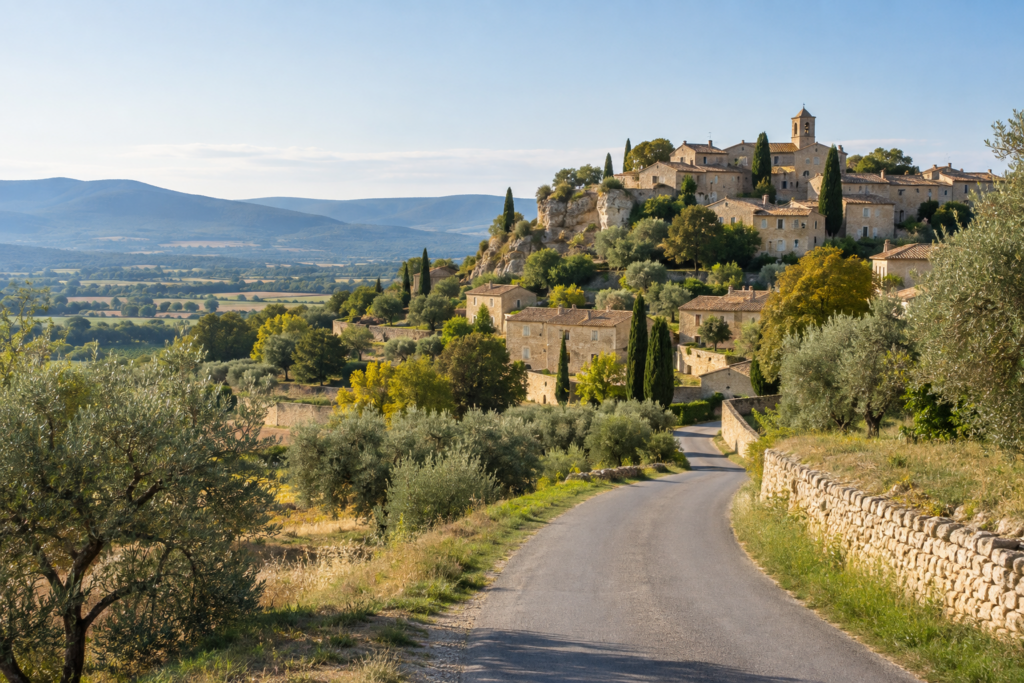
- Luberon villages: Gordes, Roussillon, Bonnieux, Lourmarin and smaller villages offer a countryside stay, but “nearby” can mean a winding drive rather than a simple transit hop. Regional buses serve some towns and corridors, yet timetables and service days need checking and the final mile to a rural hotel may require a taxi or pre-arranged transfer. A rental car is the most flexible choice for village-hopping; book lodging with confirmed parking and ask about the approach road, gate, unloading point and stairs. If you prefer no car, base in a town such as Apt or Cavaillon near a bus connection and plan fewer stops.
- One base or two: For a short visit, settle in one rail-connected city rather than trying to sleep in Marseille, Aix, Avignon and Arles in quick succession. For a longer trip focused on both city sights and village scenery, split the stay between one city and a rural base; moving once is usually less tiring than retracing long day-trip routes.
Transport, arrival and the last mile
Train: Regional TER trains connect major Provence cities and towns, while high-speed services use stations that may sit away from the historic center. Read the full station name on the ticket: Aix-en-Provence TGV is not Aix’s central station, and Avignon TGV is not Avignon Centre. Use SNCF’s live timetable and disruption information close to travel, particularly around works or seasonal changes. A rail itinerary is strongest between cities; it does not solve every rural transfer.
Airport and Marseille: Marseille Provence Airport lists coach routes to Marseille Saint-Charles and Aix, and a bus link to Vitrolles-Aéroport station. The RTM operates Marseille’s urban metro, tram and bus network. These are separate systems with different tickets and route maps, so check whether your airport ticket includes any city connection rather than assuming it does. For a late arrival, luggage-heavy transfer or remote hotel, compare a taxi or pre-booked transfer with the public route.
Driving and parking: A car is most valuable for rural Provence, especially if your days include several Luberon villages, the Camargue or countryside estates. It is less useful inside the historic centers. Aix restricts vehicle access in pedestrian areas; Avignon lists garages and access rules; Marseille has urban traffic and paid parking. Ask your accommodation for written directions to the authorized drop-off, garage entrance and reception. Never follow a generic map pin into a narrow lane without checking the property’s own arrival instructions.
Stairs and bags: Historic centers have stone paving, steps and uneven lanes. A hotel described as “central” may still be several minutes uphill from a station or garage. Confirm whether there is a lift, how far a car can approach, whether luggage assistance is available and where a taxi can stop. If arriving by train, pack for a short walk with bags unless the hotel confirms a closer transfer.
Seasonality: Rural properties, restaurants, local buses and visitor services may operate on seasonal calendars. Summer brings heat, busier roads and greater demand for parking; shoulder-season visits can have fewer transport departures or closed services. Check the exact travel date with the transport operator and property, and keep an alternative for rural last-mile transfers.
Choose by trip length
- One day: Sleep in the city where you want to spend most of the day. For an arrival by train with a western Provence itinerary, Avignon or Arles can reduce backtracking; for a city-and-coast focus, stay in Marseille; for a calm urban base and Aix itself, stay in Aix. Do not add a Luberon village overnight just to tick off one viewpoint unless you have a car and a confirmed late arrival plan.
- Two days: Keep one base and choose a tight radius. From Avignon, spend one day in the walled city and one in Arles or another rail-reachable town after checking the live timetable. From Aix, enjoy the center and use the second day for one preplanned excursion; use a car or tour for rural stops rather than trying to chain scattered villages by bus. From Marseille, focus on the city and one coast or island outing that is operating on your date.
- Three days: For a rail-led visit, base in Avignon or Aix and make one deliberate day trip, keeping the remaining days for the host city and nearby sights. For countryside, spend two or three nights in a Luberon base with a car and avoid changing villages each night. A city-plus-country split works well when the rural stay is at least two nights: arrive by train, explore the city, then collect a car for the countryside and return it near your departure station or airport.
Five properties to compare
Compare your dates, room configuration, cancellation terms, access needs and total cost directly with each operator.
- Marseille — La Résidence du Vieux-Port: A waterfront address at the Old Port for travelers who want the harbor on their doorstep. Check the approach and parking details for your room and arrival time. Official hotel site.
- Aix-en-Provence — Boutique Hôtel Cézanne: A central choice within walking reach of Cours Mirabeau and the old center. The hotel says its private parking is available by reservation; confirm space before driving into Aix. Official hotel site.
- Avignon — Hôtel d’Europe: A historic-center option at Place Crillon, useful for exploring inside the walls on foot. Ask the hotel which station transfer and garage arrangement best matches your arrival. Official hotel site.
- Arles — Hôtel Jules César: A central address on Boulevard des Lices, convenient for an on-foot visit to the historic core. Check the property’s current parking, accessibility and luggage-drop instructions. Official hotel site.
- Gordes — La Ferme de la Huppe: A rural hotel below Gordes on the road toward Goult. Its own practical-information page recommends independent transport and notes the limited local taxi/shuttle options; confirm operation for your dates and book transfers in advance if needed. Official hotel site.
For a first Provence trip with two or three nights, the simplest choice is often one city base—Aix for an elegant walkable center, Avignon for rail access to the western corridor, Marseille for a metropolitan and coastal focus. Choose the Luberon when the villages and landscapes are the point, and plan the car and last mile before booking.
Check the official sources
Schedules, admission, fares and service can change. Recheck these for your travel dates.
- hotel-residence-marseille.com (checked 2026-09-27)
- boutiquehotelcezanne.com (checked 2026-09-27)
- heurope.com (checked 2026-09-27)
- hotel-julescesar.fr (checked 2026-09-27)
- lafermedelahuppe.com (checked 2026-09-27)