
Food
A Food Guide to Seville: Tapas, Markets and Classic Sevillian Dishes
Plan a delicious Seville stay around spinach with chickpeas, pringá, fried fish, market counters and tapas bars in the historic center and Triana, with practical one-, two- and three-day routes.
How long is your visit?
Choose an itinerary, or read the full guide below.
Check the full guide for arrival, ticket, accessibility and booking details.
Seville is a city for eating in small rounds: order a tapa, explore a little, then pause at another bar when you are hungry again. The format suits the compact historic center, but the best meal plan leaves time to sit, rest through the hottest part of the day and cross the river to Triana without rushing. Use this guide to recognize Sevillian dishes and choose a few convenient places; confirm menus, hours and reservations with each venue for your dates.
Sevillian dishes to look for
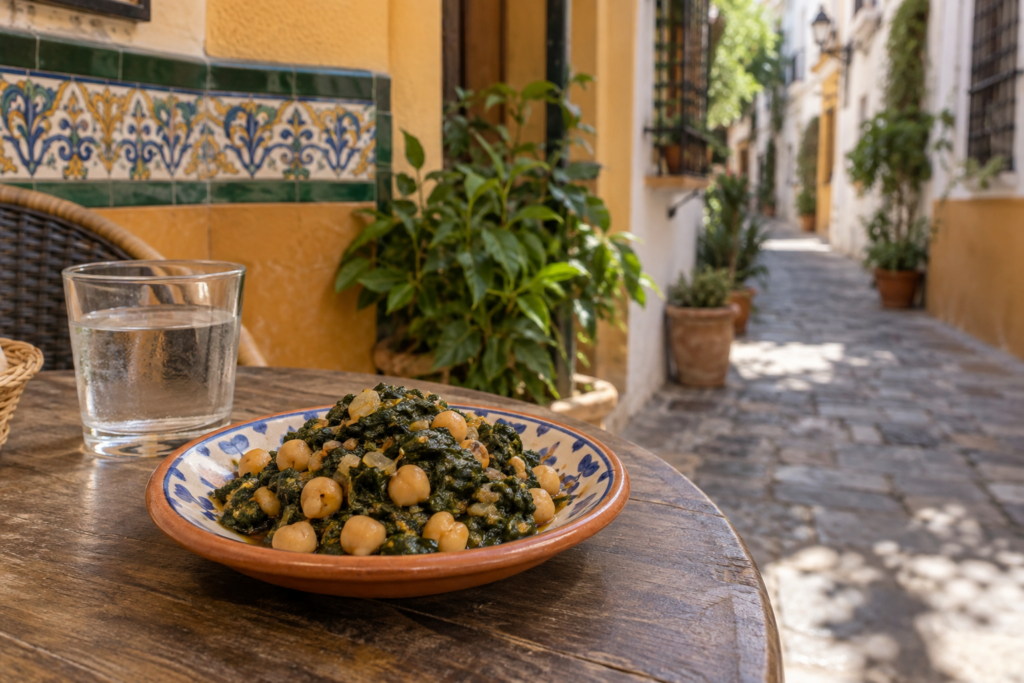
Espinacas con garbanzos—spinach with chickpeas—is one of Seville’s signature dishes. It is a warmly spiced, meat-free recipe in many versions, but kitchens and garnishes differ, so ask about stock, ham and cross-contact if that matters to you. Pringá is meat from a slow-cooked stew, commonly shredded and served in a small bread roll as a montadito; expect pork in many recipes. The city’s tourism guide also highlights carrillada (slow-cooked cheek, often pork), cola de toro (bull-tail stew), pavía de bacalao (battered cod), adobo (marinated fish, often fried), papas aliñás (potatoes dressed with oil and vinegar, sometimes with tuna or other additions), ensaladilla, and gazpacho. Availability and recipes vary by bar and season. Visit Seville’s tapas and dish guide.
For a broader taste, look for pescaíto frito, a selection of small fried fish, and seasonal seafood such as grilled squid or shrimp. Cold soups and salads are especially welcome in warm weather; stews and fried plates can feel more substantial. Tapas portions are small, while a ración is usually a larger plate for sharing. Sizes and naming are not standardized, so ask the server before ordering several dishes. Try one or two plates at a stop and leave room for another bar.
Seville’s sweet side includes torrijas and pestiños, especially associated with Lent and Holy Week, as well as convent sweets such as yemas. They are not all equally available year-round. La Campana and historic confectioneries are useful places to look for pastries; choose whatever is fresh in the case and ask about ingredients. Visit Seville’s confectionery route · Visit Seville on seasonal Lenten foods.
Centro and Alfalfa: historic bars and a flexible tapas crawl
In the central lanes between the Cathedral, Alfalfa and Encarnación, build a relaxed tapas walk instead of trying to cover a long restaurant list in one sitting. El Rinconcillo, at Calle Gerona 40, publishes a current menu and is a longstanding Sevillian tavern; check its official site for the appropriate dining room, menu and reservation details. Espacio Eslava, in San Lorenzo at Calle Eslava 3, offers a more contemporary tapas and restaurant setting, with its menu and reservations on the operator site. Treat either as a destination meal and book ahead where possible. El Rinconcillo menu and visitor information · Espacio Eslava menu and reservations.
For the classic small-plate rhythm, choose a few dishes from the board: spinach with chickpeas, a cold salad, a fried fish tapa and something slow-cooked such as carrillada if listed. Bodeguita Romero, at Calle Harinas 10 in the Arenal, publishes its location, service periods and a changing menu. It is a straightforward stop when walking between the Cathedral area and the river. Avoid treating any dish as guaranteed: the printed or spoken menu on the day is the final word. Bodeguita Romero menu, address and hours.
Bars may be busiest at lunch and later in the evening, and some traditional counters have limited seating. If you find a place full, move on and return later rather than building a tight schedule around a single table. A tapas crawl works best as a sequence of short stops in one neighborhood; crossing town between every plate wastes time and energy.
Triana: market stalls and a river-crossing lunch
Cross the Isabel II Bridge to Mercado de Triana, on Calle San Jorge 6 beside the Altozano. The market combines fresh-food traders with bars, cafés and other food businesses, so it can work for a casual lunch or a browse among produce and seafood. The merchants’ association currently lists retail stalls Monday–Saturday, 9 a.m.–2:30 p.m., and food service with separate daytime and evening periods; Sunday has hospitality service but the shops are closed. Hours differ by business and season—check the market’s live schedule and the stall you want before setting out. Mercado de Triana operator information · Market schedules · Visit Seville market profile.
Triana is worth pairing with its ceramics and riverside streets, rather than crossing only to eat and immediately turn back. The market’s historic setting includes the remains of Castillo de San Jorge beneath it, but market access and any interpretation spaces may have separate schedules. Choose a market meal if your group wants flexibility; for a particular dish or a seated restaurant, check the individual operator’s menu and hours.
Three practical food plans
One day: Keep the food route near the old center. Start with coffee and a pastry, then have a light lunch of two or three tapas—perhaps spinach with chickpeas, ensaladilla and a fish special—around Alfalfa or Encarnación. Rest during the hottest hours. In the evening, reserve El Rinconcillo or Espacio Eslava for a more deliberate meal, or follow the boards at nearby bars for a shorter crawl. If you especially want pringá, ask at several bars and choose one that lists it on the day’s menu.
Two days: Use day one for the Cathedral and central lanes, with tapas as a flexible lunch and a reserved dinner at one chosen restaurant. On day two, cross to Triana late morning or around lunch, browse the market while the food stalls are active, and walk the riverfront and ceramics streets. Keep dinner simple after a substantial market meal, or return to the center for a small plate rather than a second full feast.
Three days: Add a second neighborhood-based route. Spend one day around Alfalfa and Encarnación, one day in Triana, and one day in San Lorenzo and Alameda, where Visit Seville’s northern food route identifies bars including Eslava and options near Feria. Choose a market visit for daytime, a long meal for lunch, and a tapas crawl for evening; avoid scheduling all three on the same day. If your trip includes Holy Week or another major festival, reserve earlier and expect altered service, crowding and street closures. Visit Seville’s northern food route.
Timing, dietary needs and booking
Restaurants often concentrate service around lunch and later dinner, while market produce stalls may close well before bars and food counters. Use each venue’s current schedule, not just the neighborhood’s general opening hours. Reserve a table for a specific restaurant meal, and leave enough time for a proper pause between sightseeing and dinner. In hot weather, make outdoor market and river walks earlier or later in the day.
Traditional dishes can include pork, meat stock, fish, shellfish, egg, dairy, wheat or shared frying oil. Pringá is meat-based; adobo and pescaíto frito are usually fish, and batter may contain wheat. Spinach with chickpeas is often vegetarian but recipes differ. For celiac disease, severe allergies or strict dietary requirements, explain the need clearly in Spanish and ask about ingredients and fryer cross-contact directly. Seville’s city-backed Seville Gluten-Free Network provides a directory for gluten-free options; still confirm current practices with the restaurant.
Menus, opening days, seasonal sweets and market schedules can change. Check the linked operator or city tourism source again close to your visit, particularly on Sundays, public holidays and during festivals.
Official city and venue sources
- Visit Seville: traditional tapas and dishes
- Visit Seville: tapas culture and seasonality
- Visit Seville: pastries and convent sweets
- Visit Seville: Lenten foods and torrijas
- Visit Seville: northern tapas route
- Visit Seville: Mercado de Triana
- Mercado de Triana association: current schedules
- El Rinconcillo: menu and visitor information
- Espacio Eslava: menu and bookings
- Bodeguita Romero: menu and current service details
- Visit Seville: gluten-free network
Check the official sources
Schedules, admission, fares and service can change. Recheck these for your travel dates.
- visitasevilla.es (checked 2026-09-27)
- visitasevilla.es (checked 2026-09-27)
- visitasevilla.es (checked 2026-09-27)
- visitasevilla.es (checked 2026-09-27)
- visitasevilla.es (checked 2026-09-27)
- visitasevilla.es (checked 2026-09-27)
- mercadodetrianasevilla.com (checked 2026-09-27)
- elrinconcillo.es (checked 2026-09-27)
- espacioeslava.com (checked 2026-09-27)
- bodeguita-romero.com (checked 2026-09-27)
- visitasevilla.es (checked 2026-09-27)