
Food
What to Eat in Singapore: Hawker Classics, Laksa and Peranakan Cooking
Plan Singapore meals around hawker-centre variety, Teochew bak kut teh, Katong laksa and Peranakan cooking, with official menus and distinct one-to-three-day food routes.
How long is your visit?
Choose an itinerary, or read the full guide below.
Check the full guide for arrival, ticket, accessibility and booking details.
Singapore eating is easier to enjoy when you treat the city as a set of food neighborhoods rather than a checklist of famous dishes. A hawker centre offers many independent stalls and shared seating; a restaurant meal lets you plan around a particular cuisine and reservation. You can combine both in one day, but you do not need to cross the island for every meal. Menus, stall operations and service can change, so verify current details before you make a venue the anchor of your itinerary.
Start with the food traditions, not a ranking
Singapore’s National Heritage Board describes hawker culture as a living food heritage shaped by Chinese, Malay, Indian and other communities. It names dishes such as chicken rice, laksa, roti prata, satay, rojak and char kway teow. These foods have different histories and ingredients; “local food” is not one single cuisine. Use a meal to understand a tradition, then choose another neighborhood or style for contrast.
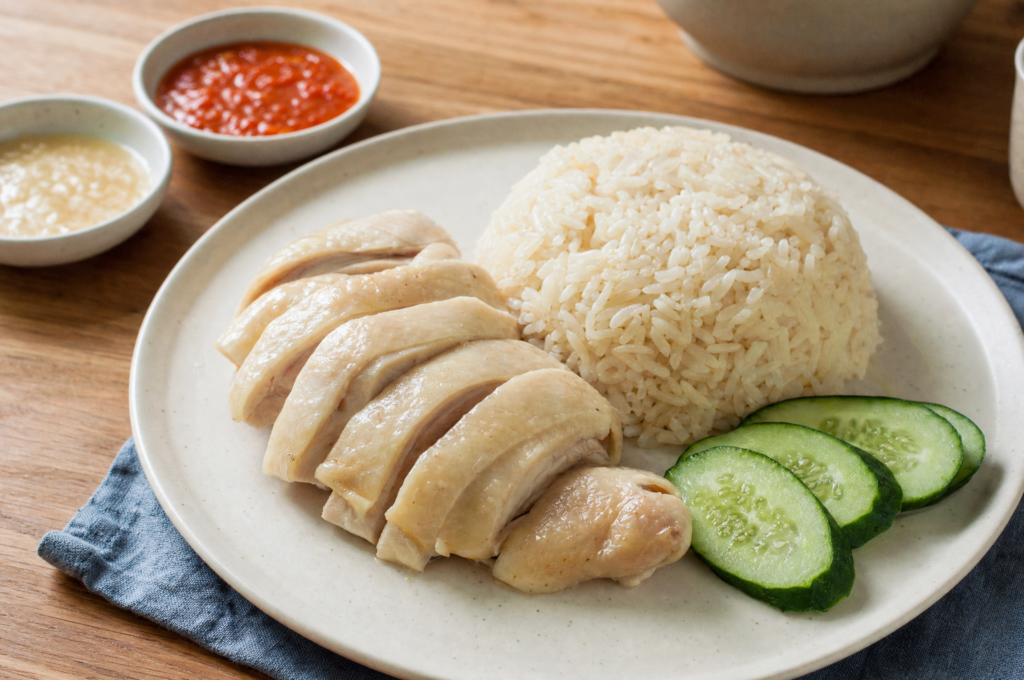
Chicken rice pairs cooked chicken with aromatic rice and sauces. The National Heritage Board notes that Hainanese and Cantonese versions are both part of Singapore’s food heritage, with poached, roasted and soy-sauce preparations. A sign saying “chicken rice” therefore leaves room for variation in cooking and condiments. Ask the stall what is being served that day and whether the sauce or stock contains ingredients you avoid.
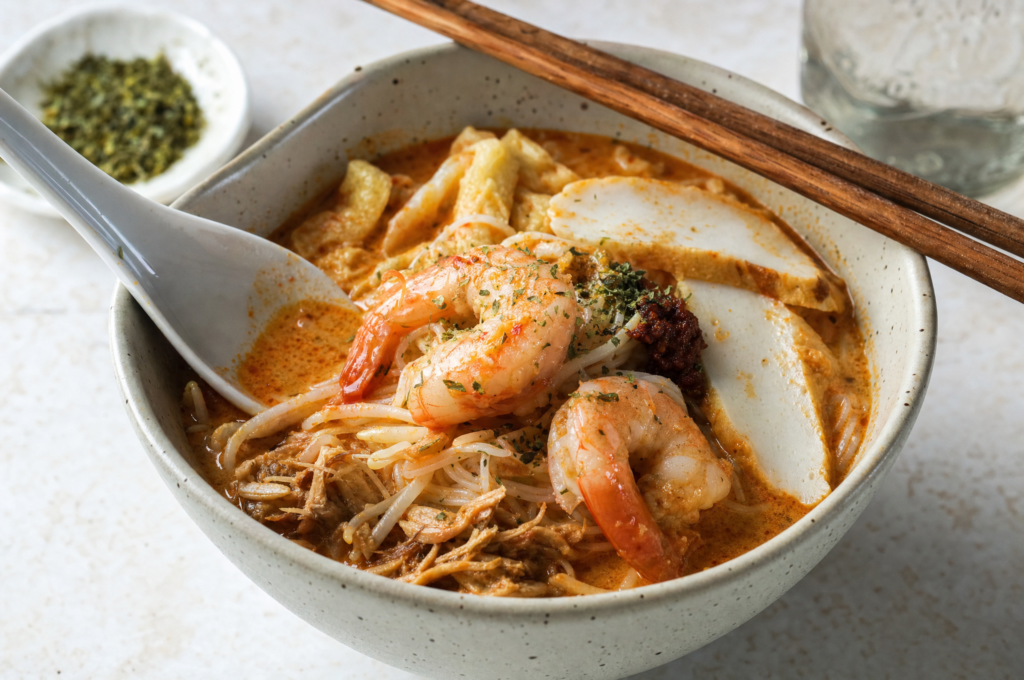
Laksa is a spicy noodle soup with a broad regional history. The Heritage Board’s description of Singapore laksa lists coconut milk, dried shrimp, fishcake and prawns among its core ingredients, while noting the cultural influences behind the dish. Katong is a useful district in which to explore the local laksa story, but the name of a style does not guarantee an identical recipe across stalls or restaurants. Anyone with shellfish or seafood allergies should discuss ingredients directly with the operator.
For a different meal, try bak kut teh, pork ribs simmered in a seasoned broth. Song Fa describes its heritage as Teochew and its style as peppery; the soup-and-rice format makes it distinct from coconut laksa. Other dishes to look for include char kway teow, a wok-fried flat-noodle dish; roti prata, an Indian-influenced flatbread; satay, skewered grilled meat; and kaya toast with coffee or tea. Recipes and availability vary by stall, so let a current menu guide your choice.
Three named options in three different areas
Song Fa Bak Kut Teh is a practical Chinatown/Singapore River anchor for a peppery Teochew pork-rib soup meal. The operator’s history page traces its origin to a 1969 pushcart, and its site lists Singapore outlets including New Bridge Road. The official menu lists soup dishes, braised dishes and sides; the outlet directory helps you choose a branch. Song Fa describes its dish as peppery Teochew-style in an operator food article. Check the current menu and outlet before visiting. This pork-focused option will not suit everyone.
328 Katong Laksa gives you a named stop in Katong/Joo Chiat, an area the National Heritage Board describes as rich in local food traditions, including laksa. The restaurant’s official menu features laksa, and its location page lists the East Coast Road branch and other outlets. This is a district meal, not a convenient detour from every central attraction. Check the current menu and branch before visiting; seafood ingredients make direct allergy checks important.
Violet Oon Singapore at ION Orchard is a sit-down choice for Peranakan and Singapore-influenced cooking in Orchard. The restaurant’s current ION page links its main and plant-based menus, gives the address at ION Orchard, and provides a reservation route. Its current main menu includes examples such as chicken satay, kerabu, ayam buah keluak and laksa dishes; the separate venue page helps with location and booking. This menu illustrates how several local traditions appear in a contemporary restaurant setting. Confirm the current menu and reservation terms, and contact the restaurant directly about dietary restrictions rather than inferring suitability from a dish title.
These are alternatives, not a “best of” list: choose Song Fa for a soup-centered Chinatown meal, 328 for a Katong laksa stop, or Violet Oon for a planned Orchard-area Peranakan meal. Each has an operator-published menu or current dining page, which is more useful than a dated third-party list. None is a substitute for checking the exact branch you intend to visit.
Hawker centres: variety with a shared table
Hawker centres are community dining spaces with independent vendors and shared seating. Chinatown’s Maxwell Food Centre is a useful stop in the central heritage area; the National Heritage Board describes its development from a market into a food centre, and Visit Singapore points visitors to chicken rice there. The National Environment Agency lists Maxwell at 1 Kadayanallur Street and publishes quarterly closure dates on its hawker management page. Individual stalls have separate schedules and menus, so treat the centre as a place to browse several choices rather than a reserved restaurant.
At a hawker centre, order from an individual stall, then find shared seating. Follow posted instructions and return used trays and crockery after eating: NEA states that diners at hawker centres, coffeeshops and food courts are required to clear their table litter and used items. For a family, this self-directed format is flexible, but it may involve queuing, carrying a tray and finding seats together. Groups with accessibility needs should check the actual centre layout and vendor line, rather than assume every path or queue is step-free.
One day: Chinatown and the Singapore River
Keep the first day central. Start with a flexible hawker meal at Maxwell Food Centre, comparing chicken rice, noodles and other dishes from current stall boards. Later, explore nearby heritage streets and the Singapore River area. For dinner, check Song Fa’s outlet page and menu for a branch on your route. Before a late return, use the LTA journey planner to check the route and timing back to your accommodation.
Two days: add Katong and Joo Chiat
Give the second day to the east rather than squeezing Katong between central appointments. Explore the Katong/Joo Chiat heritage and food district, then consider 328 Katong Laksa after confirming which East Coast Road outlet and menu suit your route. Keep the rest of the day local: choose a second nearby meal or snack by current operator information and leave space for walking. The trip across town takes time, so do not assume you can return to central Singapore for multiple timed bookings without checking the current LTA journey planner.
Three days: finish around Orchard
Use a third day for Orchard Road and its central shopping and dining area. If a planned Peranakan meal appeals, check Violet Oon’s current ION Orchard menu and reserve through the venue page. You could use a nearby hawker centre or casual meal for the other meal of the day, choosing from current listings rather than treating the city’s many signature foods as a compulsory checklist. This distinct third district balances the Chinatown and Katong days without repeating the same kind of meal or sending you to opposite ends of the island.
Dietary needs, families and changing details
Singapore’s food diversity also means recipes often include ingredients that visitors may not expect. Laksa can include shellfish and fishcake; satay sauce may contain peanuts; a vegetable dish may use shrimp paste, dried seafood or meat stock. Ask the stall or restaurant about ingredients and cross-contact in clear terms. Do not infer halal status, vegetarian preparation or allergy safety from a cuisine label. The Violet Oon ION page links a plant-based menu, but guests should still confirm ingredients and kitchen practices with the venue.
For families, hawker centres can make it possible for each person to choose a different dish, while restaurants can be easier when your group needs a booked table or a quieter meal. Carry only what you can manage through a busy queue. Check current opening days, location and reservation conditions on operator pages. A posted menu is a snapshot, not confirmation that a particular dish is available when you arrive.
Official sources
- National Heritage Board: Singapore hawker culture and representative dishes, plus its chicken rice and laksa heritage pages.
- Song Fa menu and outlet directory.
- 328 Katong Laksa menu and location information.
- Violet Oon ION Orchard location, menus and booking and its current main menu.
- NEA hawker-centre directory and tray and crockery return guidance.
- Visit Singapore Chinatown guide and Maxwell Food Centre heritage profile.
Check the official sources
Schedules, admission, fares and service can change. Recheck these for your travel dates.
- roots.gov.sg (checked 2026-09-28)
- roots.gov.sg (checked 2026-09-28)
- roots.gov.sg (checked 2026-09-28)
- songfa.com.sg (checked 2026-09-28)
- songfa.com.sg (checked 2026-09-28)
- songfa.com.sg (checked 2026-09-28)
- songfa.com.sg (checked 2026-09-28)
- 328katonglaksa.sg (checked 2026-09-28)
- 328katonglaksa.sg (checked 2026-09-28)
- roots.gov.sg (checked 2026-09-28)
- violetoon.com (checked 2026-09-28)
- violetoon.com (checked 2026-09-28)
- visitsingapore.com (checked 2026-09-28)
- roots.gov.sg (checked 2026-09-28)
- nea.gov.sg (checked 2026-09-28)
- nea.gov.sg (checked 2026-09-28)
- nea.gov.sg (checked 2026-09-28)
- lta.gov.sg (checked 2026-09-28)