
Food
Where to Eat in Tuscany: Florence, Siena, Lucca and Val d’Orcia
A regional food companion to Tuscan bread soups, Florentine steak, Sienese pici and sweets, Lucca tordelli, and Val d’Orcia pecorino, with practical town-by-town meal plans.
How long is your visit?
Choose an itinerary, or read the full guide below.
Check the full guide for arrival, ticket, accessibility and booking details.
Tuscany is too varied for one city’s menu to stand in for the whole region. Florence is the place for ribollita, lampredotto and bistecca alla fiorentina; Siena adds handmade pici, Cinta Senese pork and spice-rich sweets; Lucca has its own tordelli, garmugia and buccellato; Pienza and the Val d’Orcia bring pici, sheep’s cheeses, game and local wines. Choose a food focus for each stop, and plan meals around where you will sleep: hill towns and countryside wineries are not casual add-ons to a city dinner.
Regional dishes worth seeking out
Ribollita is a thick bread-and-vegetable soup built around beans and cavolo nero, Tuscan black cabbage. It is especially associated with colder weather. Pappa al pomodoro combines bread and ripe tomato with olive oil and basil, making it a natural warm-season choice. Panzanella is a bread salad with tomato, onion and basil. Recipes vary by household and restaurant; ask whether soups are available that day. Visit Tuscany’s Florence food guide.
Bistecca alla fiorentina is a thick, bone-in T-bone cut grilled over heat. It is usually sold by weight and intended for sharing; ask the minimum weight and price before ordering. Florence also has lampredotto, a tripe sandwich traditionally served at street stalls, often with salsa verde. It is beef offal, so it will not suit every diner.
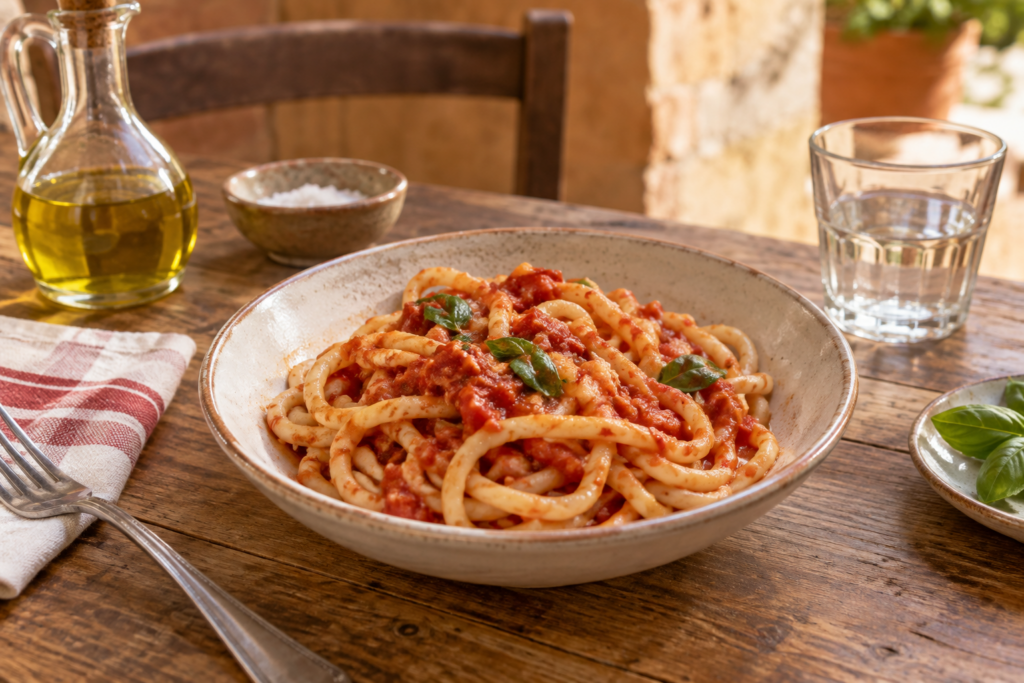
Pici are thick, hand-rolled pasta associated with southern Tuscany and the Sienese countryside. Try pici all’aglione, with tomato and the region’s large, mild garlic, or pici with meat sauce, wild boar or breadcrumbs. Siena’s sweets include almond-paste ricciarelli, fruit-and-spice panforte, and autumnal pan co’ Santi, with raisins and walnuts. Visit Siena’s food guide · Sienese specialities.
Lucca’s tordelli (spelled with a “d”) are filled pasta served with meat ragù. Other local dishes include spring vegetable soup garmugia, savory torta coi becchi, and sweet raisin-and-anise buccellato. The exact fillings and family recipes vary. Lucca Tourism’s traditional dishes.
In Pienza and the Val d’Orcia, look for aged or fresh pecorino, pici, Cinta Senese pork, Chianina beef, saffron, truffles and olive oil. Montalcino is closely associated with wine, while Pienza is known for sheep’s milk cheese. A menu’s local pairing might be pici with ragù or breadcrumbs and a glass of Orcia or another local wine; designated wine appellations cover distinct areas, so ask where a bottle comes from. Visit Tuscany on Val d’Orcia food and wine · Pienza’s official tourism portal on local products.
Farther south and west, the Maremma has a different food profile: tortello maremmano, a large ricotta-and-spinach filled pasta, and acquacotta, a seasonal vegetable and bread soup often finished with egg and pecorino. Treat these as a separate regional stop, rather than expecting them on a Florence or Siena menu. Visit Tuscany on Maremma food.
Florence: soups, steak and a central market hall
Florence is the easiest base for a walkable mix of trattorias, pastry shops and the San Lorenzo market district. Decide whether you want a slow, shared steak dinner or lighter vegetable-and-bread dishes; Florence offers both. For bistecca, plan around the required portion size instead of assuming it is an individual plate.
Beccafico — central Florence. Its published menu lists bistecca alla fiorentina, including a Chianina IGP option with a 1.2 kg minimum, and pici, pappardelle with wild boar, pappa al pomodoro and ribollita. The PDF menu is dated July 2025; confirm the current dishes, prices, minimum weight, hours and booking details directly before going. Operator’s menu PDF.
Mercato Centrale Firenze — San Lorenzo. The operator describes an upstairs food hall open daily and identifies a restaurant specializing in bistecca alla fiorentina; its address is Piazza del Mercato Centrale/Via dell’Ariento. The hall is about 900 metres on foot from Santa Maria Novella station. The indoor food hall and its stalls make flexible lunch or dinner easier than a reservation-led trattoria, but individual stalls set their own menus and availability. Check the operator’s current hours and which stalls are open. Operator directions, hours and booking information.
Siena: pici by day, almond sweets to take away
Siena’s walled center is hilly and compact enough to plan meals around a walking day. Look for pici and local cured meats, then leave room for a bakery stop. If your base is elsewhere, verify the return connection before booking dinner: regional buses and trains have different stations and timetables.
Osteria Sira e Remino — Via San Pietro 48. This operator lists hand-pulled pici with Chianina ragù, pici all’aglione, cinghiale ragù and cacio e pepe, alongside pappa al pomodoro, ribollita and local cured meats and cheeses. It is a practical choice for comparing pasta sauces in one meal. Confirm the menu and service times before visiting. Operator menu and address.
Dolce Siena — Il Campo 3/4. The shop says it has operated near Piazza del Campo since 1975 and sells Sienese panforte and ricciarelli. This works for a small dessert or a packaged gift; ask about ingredients and current stock. Operator products and location.
Lucca: filled pasta and a bakery stop
Lucca’s historic center sits inside its ring of Renaissance walls, making it easy to build lunch between a wall walk and a center stroll. Distinctly Lucchese dishes are a worthwhile meal here rather than something to seek out in Florence. A local tourism guide notes tordelli, garmugia and buccellato among the area’s traditional foods.
La Buca di Sant’Antonio — Lucca historic center. The city of Lucca’s updated profile describes the restaurant’s handmade pasta work and its tordelli lucchesi served with meat ragù. The page is a municipal cultural listing, not a live menu or hours page; verify opening times and dishes with the restaurant before making a special trip. Comune di Lucca’s restaurant profile · Operator site.
Buccellato Taddeucci — Lucca. Lucca’s municipal page records the bakery’s long history and its buccellato and other traditional sweets. Seek the raisin-and-anise bread for a snack or take-home treat; availability and shop hours should be checked directly. Comune di Lucca on Taddeucci’s buccellato.
Pienza and Val d’Orcia: pecorino, pici and countryside timing
Pienza works well as a food stop on a countryside day, but its hilltop center and neighboring villages are spread out. Public transport can reach many Tuscan towns, yet countryside connections are less frequent than city transit. A car or prearranged driver gives more flexibility for winery visits; never drive after tasting. If relying on buses, check the return before lunch and make the itinerary one or two towns, not a string of villages.
La Piazzetta — Pienza, Via della Madonnina 4. The operator’s 2026 menu lists handmade pici with pecorino, black pepper and fresh truffle; Pienza sheep’s-milk pecorino; Chianina beef; Cinta Senese pork; and wild-boar pappardelle. It states that the menu follows seasons and local ingredients. The menu identifies dishes and current listed prices but may change; confirm availability and allergens directly. Operator address and menu overview · 2026 menu PDF.
One, two or three days of Tuscany eating
One day in Florence: Have a seasonal soup or lampredotto for lunch, depending on appetite, then choose either a bistecca dinner shared by the table or a lighter trattoria meal with pici and vegetables. Walk through San Lorenzo or Mercato Centrale during its actual hours; the upstairs hall and ground-level market do not share one operating pattern.
Two days: Keep day one in Florence for a market lunch and a reserved bistecca meal. On day two, take the train to Lucca for a city-center lunch of tordelli, then return to Florence or stay overnight in Lucca. Alternatively, spend day two in Siena: try pici and buy ricciarelli or panforte before returning. Pick one city excursion so a slow lunch does not become a rushed transfer.
Three days: Spend day one in Florence, day two in Lucca, and day three in Siena or Pienza/Val d’Orcia. Lucca has a rail link on the Florence–Pistoia–Montecatini–Lucca corridor. Siena is also connected by regional public transport, including Autolinee Toscane’s Florence–Siena 131 or 131R route; check the current timetable and choose either bus or train based on your exact origin and return. Pienza has no station in its center: Visit Tuscany’s Pienza itinerary describes arriving by train at Chiusi and continuing by bus or taxi. Build a Val d’Orcia day around Pienza or one winery cluster and book ground transport, rather than assuming a spontaneous rail connection. Trenitalia Tuscany Line · Autolinee Toscane routes and schedules.
If the third day is in southern Tuscany, choose Pienza for pecorino and pici, or Siena for city food and sweets. Montalcino and its wineries add a separate driving or guided-transfer plan. A wine tasting usually consumes a meaningful part of the day; reserve it and arrange a sober driver or guided transport in advance.
Practical dining and transit notes
Traditional Tuscany can be both vegetable-forward and meat-heavy. Bread soups may be meat-free in one kitchen and use broth or garnishes in another; pici sauces may contain pork, beef or wild game; tordelli and filled pasta often contain meat, dairy, egg and wheat. Bistecca is beef, and lampredotto is tripe. Ricciarelli and many Tuscan biscuits contain almonds; panforte can contain nuts, candied fruit, wheat and spices; buccellato contains wheat and typically raisins or anise. Ask the restaurant about ingredients, stock, allergens and cross-contact rather than inferring from a dish name.
Florence and Lucca are straightforward city walking destinations, though historic paving and hills can affect mobility. Siena’s lanes rise and fall. Pienza and Val d’Orcia excursions involve rural roads and gaps between towns. Use current operator timetables for the travel date; regional service can vary by weekday, season, strikes and holidays. For Siena, compare the railway station at the edge of the center with the bus arrival point and lodging location. For rural tastings, never count on catching a last bus after dinner.
Reconfirm menus, prices, hours, seasonal dishes, transport schedules, reservations and allergy handling before travel.
Official regional, municipal and operator sources
- Visit Tuscany: Florence food
- Visit Tuscany: Tuscan dishes
- Visit Siena: Siena’s food
- Visit Siena: Sienese specialities
- Lucca Tourism: traditional dishes
- Comune di Lucca: La Buca di Sant’Antonio
- Comune di Lucca: Buccellato Taddeucci
- Visit Tuscany: Val d’Orcia foods and wine
- Visit Tuscany: Maremma food
- Visit Tuscany: regional transport
- Visit Tuscany: Pienza access planning
- Beccafico Florence menu
- Mercato Centrale Firenze
- Osteria Sira e Remino
- Dolce Siena
- La Buca di Sant’Antonio
- La Piazzetta Pienza
- Trenitalia Tuscany Line
- Autolinee Toscane Siena routes
Check the official sources
Schedules, admission, fares and service can change. Recheck these for your travel dates.
- visittuscany.com (checked 2026-09-27)
- visittuscany.com (checked 2026-09-27)
- visitsiena.it (checked 2026-09-27)
- visitsiena.it (checked 2026-09-27)
- turismo.lucca.it (checked 2026-09-27)
- comune.lucca.it (checked 2026-09-27)
- comune.lucca.it (checked 2026-09-27)
- visittuscany.com (checked 2026-09-27)
- visittuscany.com (checked 2026-09-27)
- visittuscany.com (checked 2026-09-27)
- visittuscany.com (checked 2026-09-27)
- beccaficofirenze.it (checked 2026-09-27)
- mercatocentrale.com (checked 2026-09-27)
- osteriadacarlino.it (checked 2026-09-27)
- dolce-siena.it (checked 2026-09-27)
- ristorantelapiazzetta.it (checked 2026-09-27)
- trenitalia.com (checked 2026-09-27)
- at-bus.it (checked 2026-09-27)