
Lodging
Where to Stay in Venice: Cannaregio, San Marco, Dorsoduro or Mestre?
Compare Venice’s historic sestieri with mainland Mestre by arrival point, vaporetto access, luggage route and the shape of a one-, two- or three-day visit.
How long is your visit?
Choose an itinerary, or read the full guide below.
Check the full guide for arrival, ticket, accessibility and booking details.
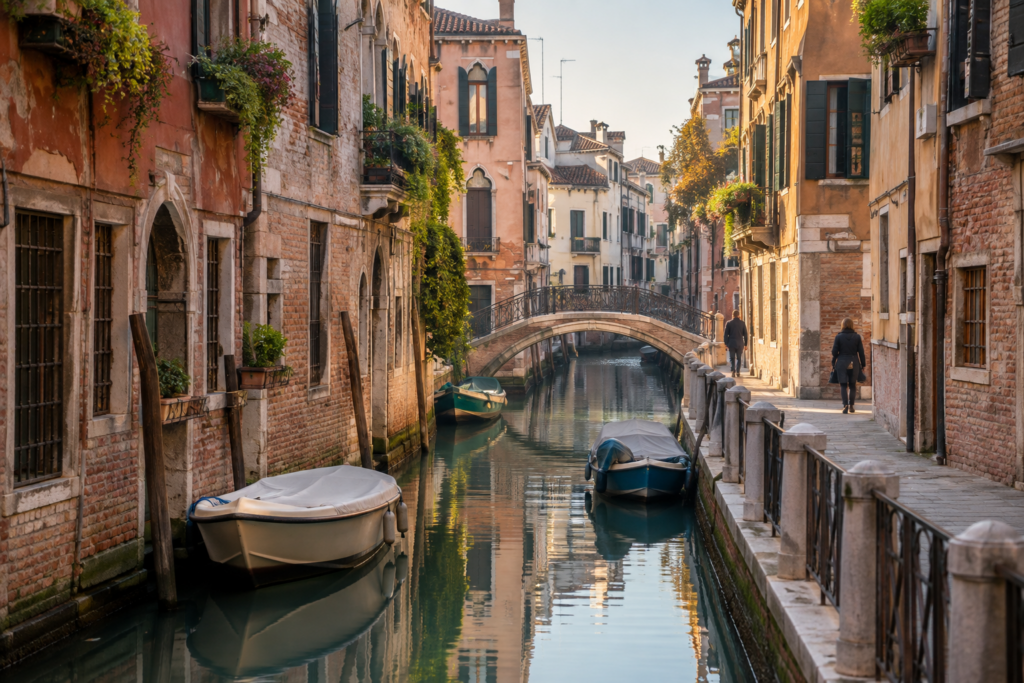
First decide which Venice you mean. The historic center is the lagoon city of calli, canals and bridges; Mestre is a mainland district across the Ponte della Libertà, with conventional streets and a rail, bus and tram commute to the historic center. The six historic sestieri are Cannaregio, San Polo, San Marco, Dorsoduro, Castello and Santa Croce. A listing described simply as “Venice” may be on the mainland or on a separate lagoon island, so verify the address on a map before comparing prices. On the historic islands, a short straight-line distance can still involve bridges, stairs, narrow lanes and a different vaporetto landing. Choose the actual arrival landing and luggage route before booking.
Choose your base
- Cannaregio: A useful all-round choice if you want to arrive from Santa Lucia station and stay near the northern side of the Grand Canal. The station end and the quieter northern reaches are very different addresses: central Cannaregio has Strada Nova, Guglie and access toward Rialto, while farther-north properties can add walking or a vaporetto ride to San Marco and the southern museums. The Ghetto, Fondamente Nove and Madonna dell’Orto are among the northern area’s anchors. Check whether your hotel is closest to Ferrovia, Guglie, San Marcuola or another stop; “Cannaregio” alone does not identify the easiest route with bags.
- San Polo and Rialto: Choose this central position for Rialto Market, the Rialto Bridge, Frari and Scuola Grande di San Rocco. It sits between the station side and San Marco, with many destinations walkable if you are comfortable navigating the lanes and bridges. The Grand Canal is a major divide: confirm which side of it the hotel is on and whether a vaporetto stop or bridge is the better arrival route. Market streets and Rialto approaches can be busy; a quieter calle a few turns away may feel quite different.
- San Marco: Best for a short visit built around the Basilica, Doge’s Palace, museums and the lagoon-front Riva degli Schiavoni. It minimizes the distance to marquee sights but is generally the most intense sightseeing core, and rates can reflect that. A hotel may be close to a stop on the waterfront but several bridges away from the actual entrance. Check the route from the chosen landing, the late-night atmosphere and whether your itinerary justifies paying for this location.
- Dorsoduro: Consider this south-side base for the Accademia, Peggy Guggenheim Collection, Punta della Dogana, Salute and Zattere, with Campo Santa Margherita as another local anchor. It works well for art-focused days and puts you across the Grand Canal from San Marco; crossings by bridge or vaporetto affect the route. Addresses toward the Zattere, Accademia, Campo Santa Margherita and Giudecca-facing waterfront are not interchangeable. If you mean Giudecca, that is a separate island with a vaporetto dependency, even though it is administratively associated with Dorsoduro.
- Castello: The broad eastern sestiere extends from the San Marco waterfront past the Arsenale and Biennale gardens toward Sant’Elena. Its western end is convenient for San Marco and major waterfront routes; farther east has a different, quieter itinerary and a longer return from the station or Rialto. For Biennale or Arsenale plans, compare the exact event entrance and nearest ACTV landing with the hotel address. Do not assume an eastern Castello hotel is near San Marco simply because both are in central Venice.
- Santa Croce: Useful if rail or road arrival matters. The western edge includes Santa Lucia station and Piazzale Roma, while interior streets around Campo San Giacomo dall’Orio are farther into the historic fabric. Santa Croce can also be a quieter starting point for Ca’ Pesaro and the Natural History Museum. Even a station-side hotel may require crossing a bridge with bags; a vaporetto landing can help only if it is on the correct side and the route to the entrance works for you.
- Mestre (mainland): Compare Mestre when a lower room price, ordinary road access, parking or a mainland itinerary outweighs late-evening convenience in the lagoon city. Venezia Mestre station has rail and ACTV bus/tram connections, and airport buses serve the station area. Each sightseeing day still needs a ride across the Ponte della Libertà to Piazzale Roma or Santa Lucia, followed by the historic-center leg; include tickets, transfer time, service hours and the return after dinner in the comparison. Mestre is part of the Comune di Venezia but is not the historic island center.
Five lodging examples to compare
These examples are identified through the operators’ own location or access pages; they are not rankings or endorsements. Compare the same dates and room type, full price including taxes, breakfast, cancellation terms, and the exact room features. Operator walking times and airport directions are their published guidance; check current services and your preferred route before relying on them.
- Hotel Antiche Figure — Santa Croce / station side: Santa Croce 687, opposite Santa Lucia station across the Grand Canal. The operator describes its location as near the station and Piazzale Roma and identifies a nearby vaporetto stop. It is the most arrival-focused of these examples, but reaching it from the station involves the Scalzi Bridge, so ask whether that bridge route fits your bags or needs and confirm the current landing-to-door approach. Official location and directions · Map: Hotel Antiche Figure.
- Ca’ San Polo — San Polo: Calle de la Malvasia 2696. The guesthouse operator places it near Santa Lucia station and a few steps from major public-transport stops, and lists the Frari and Rialto Bridge among nearby points of interest. Use it to compare a central San Polo address with a hotel on the station forecourt; check the precise route from the landing you will use because the word “near” does not count bridges or luggage. Official location and arrival information · Map: Ca’ San Polo.
- Hotel Ai Mori d’Oriente — Cannaregio: Fondamenta della Sensa, Cannaregio 3319. The operator’s location page places the hotel near the Madonna dell’Orto church and a vaporetto landing. This is a comparison for the quieter northern part of Cannaregio; it is farther from the station and San Marco than the district name may suggest, so check the operator’s current walking and waterbus approach. Official location and address · Map: Hotel Ai Mori d’Oriente.
- Palazzo Stern — Dorsoduro: Dorsoduro 2792/A, on the Grand Canal near Ca’ Rezzonico. The operator identifies nearby Ca’ Rezzonico vaporetto service and places the property near the Accademia, Peggy Guggenheim Collection and Salute. It is a useful south-side comparison for an art-centered stay; ask which landing and walking approach serve your room and arrival time. Official location · Map: Palazzo Stern.
- Hotel Castello — Castello / San Marco edge: Campo SS. Filippo e Giacomo, Castello 4365. The operator places the hotel a short walk from St Mark’s Square and gives a Marco Polo airport approach by Alilaguna Blue to San Zaccaria, then on foot. This is a landmark-side comparison that also has a water-arrival option; the operator’s published airport duration and route should be rechecked, and the final walk may include bridges and steps. Official hotel and directions · Map: Hotel Castello.
One, two or three days
- One day: Stay in the historic center if the main goal is seeing the city itself and you can manage the arrival transfer. For a station arrival, compare Santa Croce near Ferrovia with Cannaregio or San Polo after checking bridges and vaporetto landings. Base near San Marco for a monument-heavy day; choose Dorsoduro for its museums and south-bank route. Mestre can work when price or parking dominates, but a same-day return adds the mainland-to-island ride and last-mile transfer.
- Two days: Keep one base in the historic center. A practical split is one day around San Marco, Castello and the waterfront, and another around Cannaregio, Rialto and San Polo; or pair Dorsoduro’s museums and Zattere with Santa Croce. Use the vaporetto for a meaningful canal crossing, a longer waterfront journey or tired legs, and walk the closer lanes when the exact bridges make sense. If sleeping in Mestre, plan the last return service each night before committing to late dinners or events.
- Three days: One historic-center hotel usually saves a move and allows you to explore before and after day-trip crowds. Group San Marco/Castello, Cannaregio/Rialto, and Dorsoduro/Santa Croce into separate days, shifting the order around museum openings or a Biennale visit. Add Murano, Burano or Lido only after checking the current ACTV timetable and allowing for island transfer time. A Mestre base can still suit a budget-led trip, but count three round trips and identify the bus/tram/train stop, fare and operating hours. Switching hotels is rarely useful for a three-day visit unless the rest of the itinerary changes city or transport mode.
Airport, station and vaporetto planning
At Marco Polo Airport (VCE), the airport authority lists ACTV urban bus 5 and ATVO express bus to Piazzale Roma, and ACTV line 15 and ATVO service to Venezia Mestre station. Piazzale Roma is the road-vehicle terminal for the historic center; the authority says Santa Lucia station is a short walk across the Calatrava/Constitution Bridge from there. Water transfer is a separate choice: the airport’s dock serves Alilaguna, which is not an ACTV vaporetto. Airport guidance directs passengers along a signed moving-walkway route to the dock. A water route can land closer to some hotels, but it may have different ticket terms, stops, frequency, duration and operating hours than a bus plus vaporetto; compare the exact route and final walk, not just the mode.
For train arrivals, distinguish Venezia Santa Lucia, on the historic center, from Venezia Mestre, on the mainland. The Venezia Unica station page lists ACTV waterbus landings and routes at Santa Lucia; the ACTV journey planner and navigation timetable are the current references for lines, departures and service alerts. ACTV’s published standard urban ticket rules exclude Marco Polo airport journeys and Alilaguna; airport bus and water services have separate fares or operators. Confirm the current fare, ticket validity, validation rules and whether your route is included before buying a pass.
Walking is central to Venice, but the shortest map route may cross several bridges. Bridges commonly have steps; narrow lanes, uneven paving, high water, crowds, temporary works or a closed landing can change the practical route. Do not assume a hotel’s “near the station,” “waterfront” or “accessible” wording guarantees a continuous step-free path. Ask the property about the whole route from your chosen arrival point to reception and the booked room, including bridges or ramps, lift coverage, thresholds, luggage help and bathroom layout. Check official accessible-route information and current service notices for your specific trip; no route should be treated as step-free without confirmation.
Before you book
Confirm the full address, whether it is on the historic islands or mainland, the nearest named vaporetto landing, and the walking route from your actual airport, train or bus arrival. Ask the hotel about stairs, lifts, luggage storage, late check-in, room location and noise. Compare total prices including city tax, airport transfers and local transport. Recheck ACTV and airport operator timetables and service notices close to travel, especially for late arrivals, early departures, high water or planned works.
Official transport and destination sources
- Venezia Unica: reaching Venice and the mainland connection
- Venezia Unica: Santa Lucia station landings and ACTV routes
- Venezia Unica: Mestre station connections
- Venice Marco Polo Airport: bus, water and city connections
- Venice Marco Polo Airport: Alilaguna dock and boarding information
- ACTV: navigation timetable, stop map and service notices
- ACTV: urban transport ticket scope and exclusions
- Venezia Unica: accessible Venice routes and guidance
- Venezia Unica: Cannaregio
- Venezia Unica: San Polo
- Venezia Unica: San Marco
- Venezia Unica: Dorsoduro
- Venezia Unica: Castello
- Venezia Unica: Santa Croce
Check the official sources
Schedules, admission, fares and service can change. Recheck these for your travel dates.
- veneziaunica.it (checked 2026-09-27)
- veneziaunica.it (checked 2026-09-27)
- veneziaunica.it (checked 2026-09-27)
- veneziaairport.it (checked 2026-09-27)
- veneziaairport.it (checked 2026-09-27)
- actv.avmspa.it (checked 2026-09-27)
- actv.avmspa.it (checked 2026-09-27)
- veneziaunica.it (checked 2026-09-27)
- veneziaunica.it (checked 2026-09-27)
- veneziaunica.it (checked 2026-09-27)
- veneziaunica.it (checked 2026-09-27)
- veneziaunica.it (checked 2026-09-27)
- veneziaunica.it (checked 2026-09-27)
- veneziaunica.it (checked 2026-09-27)
- hotelantichefigure.it (checked 2026-09-27)
- casanpolo.it (checked 2026-09-27)
- morihotel.com (checked 2026-09-27)
- palazzostern.it (checked 2026-09-27)
- hotelcastello.it (checked 2026-09-27)