
Destination hub
Buenos Aires
From Recoleta's grand cemetery and San Telmo's tango halls to Palermo's cafés and Puerto Madero's waterfront, here is how to plan Buenos Aires on points.
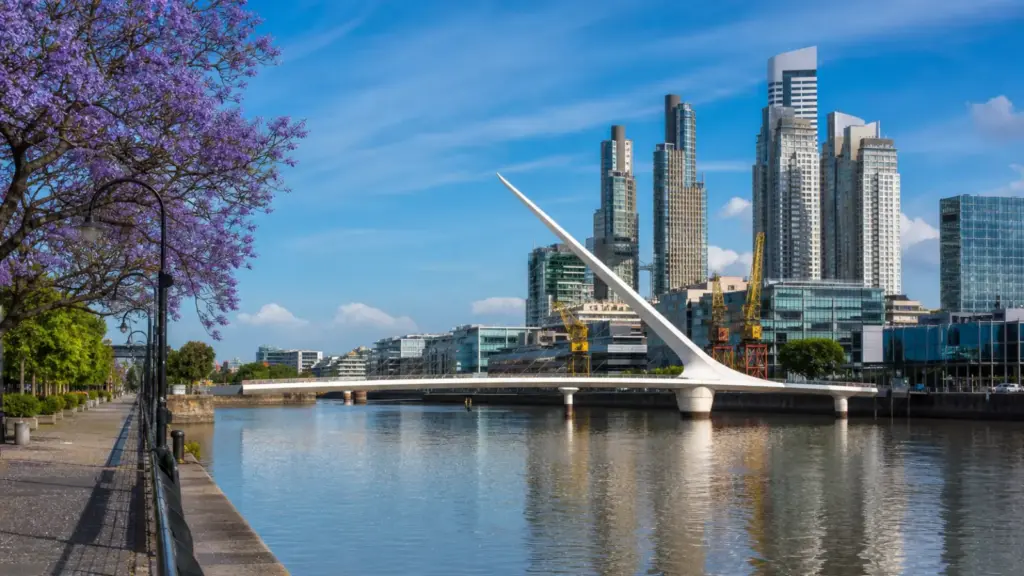
Buenos Aires is a big, walkable, late-night city. It has European-style boulevards, steakhouses, bookshops, tango halls and leafy neighborhoods that each feel like their own town. It suits food lovers, culture hounds and anyone who wants a long-haul city break that doesn't need a rental car.
Who Buenos Aires suits
- Food and wine fans. Steak, empanadas, pasta and Argentine wine are easy to find in every neighborhood.
- Culture and architecture lovers. Theaters, cemeteries, cafés and museums fill the center.
- Night owls. Dinner usually starts late, and tango shows and bars run well past midnight.
- Points travelers with flexible dates. Shoulder-season trips are often easier to price and book.
- Skip it if you want a beach holiday, a short flight from the US East Coast, or a trip with no planning. It's a long flight from North America, and you'll need to think about money, transit cards and street smarts.
When to go
Buenos Aires is in the Southern Hemisphere, so its seasons are the reverse of ours. Summer is December–February, autumn March–May, winter June–August, and spring September–November. (checked Oct 13, 2026)
- Spring (September–November). Temperatures hover around 15°C (59°F) to 20°C (68°F). (checked Oct 13, 2026) In November you can see the purple bloom of the jacaranda trees. (checked Oct 13, 2026) Spring can be rainy.
- Autumn (March–May). Buenos Aires is best in autumn and spring, when it's cooler and crowds are fewer. (checked Oct 13, 2026)
- Summer (December–February). It tends to be hot and humid, January is the warmest month, and many locals leave for the coast. (checked Oct 13, 2026) Temperatures can reach 30°C in January and February. (checked Oct 13, 2026)
- Winter (June–August). July temperatures run roughly 8°C to 15°C. (checked Oct 13, 2026) July and August are good months to visit, with cool evenings and fresh mornings that suit walking. (checked Oct 13, 2026)
Airfares from the US typically climb around the northern-hemisphere winter holidays and again in summer. We haven't confirmed fare calendars, so check your airline's price calendar.
Getting there
Buenos Aires has two main airports. Ministro Pistarini (Ezeiza, EZE) handles most international flights. Aeroparque Jorge Newbery (AEP) sits near the river and mainly handles domestic and regional flights. Check Aeropuertos Argentina for current airline lists and terminal details.
Several US airlines and Argentina's flag carrier, Aerolíneas Argentinas, have typically linked the US to EZE. We haven't confirmed current routes or schedules, so check each airline's own booking page. Most flights from the US are overnight.
How points help. Flights are usually the best use of points here. See our transfer partners guide for the full list. A few options that fit:
- Chase Ultimate Rewards moves 1:1 to United, Air Canada Aeroplan, Flying Blue and British Airways.
- Amex Membership Rewards moves 1:1 to Delta, Aeroplan, Flying Blue, Virgin Atlantic and British Airways.
- Capital One moves 1:1 to Aeroplan, Flying Blue, Turkish and British Airways.
- Citi moves 1:1 to Flying Blue, Turkish and Virgin Atlantic.
- Bilt moves 1:1 to United, Aeroplan and Flying Blue.
Search award space on each airline's site before moving points. Transfers can't be reversed.
Getting around
The Subte (metro) has six lines, A, B, C, D, E and H, and it's good for central trips. Check the operator's page for current hours and any station closures, because they change.
SUBE is the rechargeable transit card used on the Subte, buses and trains. Buy it at kiosks or the airport and top it up before you ride. Register it, because registered and unregistered cards are priced differently, and fares are in pesos and change often. The official SUBE site, sube.gob.ar, has current rules.
Transfers are cheaper. The second fare is 50% cheaper if you take two or more buses, subways or similar, and you can change up to five times within two hours. (checked Oct 13, 2026) On local trains the system charges the maximum fare, then refunds the difference when you tap out. (checked Oct 13, 2026)
For late nights or airport runs, taxis and ride-hail apps are usually easier. Many central neighborhoods are good for walking.
Where to stay
- Recoleta. Elegant and quiet, with museums and the cemetery nearby. It suits first-timers who want comfort.
- Palermo (Soho and Hollywood). Cafés, boutiques, parks and nightlife. It suits food lovers and longer stays.
- San Telmo. Cobblestones, antiques and tango. It suits history fans who don't mind some street noise.
- Microcentro and Montserrat. Central, near the main sights and transit. It suits short stays and Subte users.
- Puerto Madero. Modern waterfront towers and restaurants. It suits travelers who want a calm, polished base.
Using points here
We haven't confirmed specific Hyatt, Marriott, Hilton or IHG properties here. Search each brand's own site for Buenos Aires before you plan around a hotel. If a brand has a hotel in your neighborhood, check its point price for your dates.
For flights, first search award space on the airline programs above. A transfer partner will often beat paying cash, especially in shoulder season. Our transfer partners guide shows which cards feed which programs. Pay for hotel rooms and local costs with a card that has no foreign transaction fee.
Top things to do
- Walk the Recoleta Cemetery, a maze of ornate mausoleums beside a lively plaza and weekend market.
- See a performance at or tour the Teatro Colón, one of the world's famous opera houses.
- Stand in Plaza de Mayo, with the Casa Rosada, the Cabildo and the cathedral around it.
- Wander San Telmo's cobbled streets and its Sunday street fair.
- Photograph the colorful houses of Caminito in La Boca, and be careful in the area after dark.
- Browse the El Ateneo Grand Splendid, a theater turned bookstore.
- Stroll the Costanera Sur Ecological Reserve and Puerto Madero's docks.
- Spend a slow afternoon in Palermo's parks, galleries and cafés.
- Book a tango show, or a lesson at a milonga, to see the dance up close.
- Share a parrilla (grill) dinner and try an Argentine Malbec.
Check each attraction's own site for hours and ticket prices, which change.
Know before you go
- Entry. US citizens have typically been able to visit Argentina as tourists without a visa, but rules and passport requirements can change. Check the State Department's Argentina page at travel.state.gov and Argentina's migration authority before you book.
- Money. The currency is the Argentine peso (ARS). Exchange rates and cash practices change often, so check them before you go. Carry some cash and a card with no foreign fees.
- Tipping. Restaurants typically expect about 10% for good service. Check your bill first, since some places add a cover charge.
- Plugs. Argentina uses 220V power and its own plug type, so bring an adapter, and check that your devices accept the voltage.
- Safety. Watch for pickpockets and phone snatching on busy streets, buses and the Subte. Check the State Department travel advisory before you go.
More PerkJolt planning for Buenos Aires
- Trip guide: Buenos Aires on Points and Pesos: A 5-Day Plan
Last verified: 2026-10-13. Peso fares, airline schedules and entry rules are the most likely to change, so check sube.gob.ar, your airline, and travel.state.gov before you go.
Good to know before you go
. Confirm hours, fees, schedules and entry rules on the official pages before you book.
Sources
Plan the details
Food
Buenos Aires Food Guide: Parrillas, Empanadas and Café Stops by Barrio
Plan a parrilla meal, regional dishes and café stops around the barrios already on your Buenos Aires schedule.