
Food
Santo Domingo Food Guide: Dominican Dishes and Where to Start
Plan meals around mangú, la bandera, sancocho and mofongo, with current operator menus and a practical Colonial City food route.
How long is your visit?
Choose an itinerary, or read the full guide below.
Check the full guide for arrival, ticket, accessibility and booking details.
Santo Domingo’s food is easiest to explore when you treat the Colonial City as one walkable meal cluster and plan any farther restaurant as a separate outing. Dominican staples lean on plantain, rice, beans, meat, cassava and bright fruit; the dishes can be filling, and recipes vary from kitchen to kitchen. Start by choosing one breakfast, one substantial lunch or dinner and room for a snack, rather than trying to turn the entire capital into a single food crawl. For the city’s historic context and airport arrival options, see the Santo Domingo first-visit guide.
What to look for on a Dominican menu
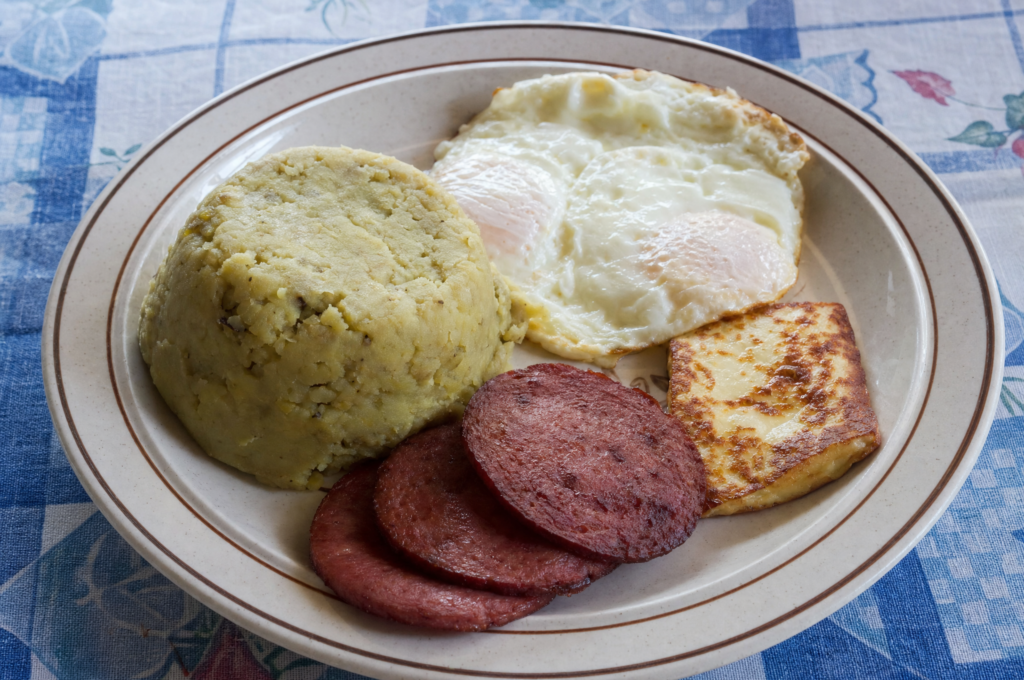
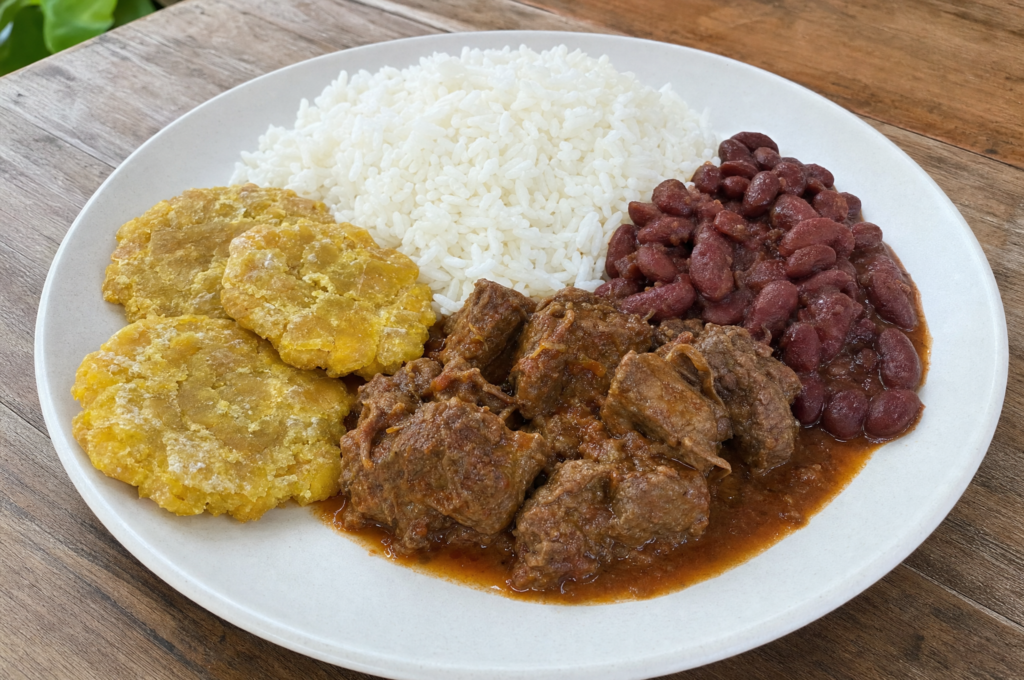
Mangú is boiled green plantain mashed into a soft savory base, often topped with sautéed red onions. The official Dominican tourism FAQ describes the familiar breakfast combination of mangú with eggs, fried cheese and salami; this is often called the three hits or los tres golpes. It is a hearty start, so one shared serving or a smaller breakfast may be enough before a long walk. A plate called la bandera brings together rice, red beans, stewed meat and a plantain side; it is a useful lunch choice when you want a complete meal rather than several snacks.
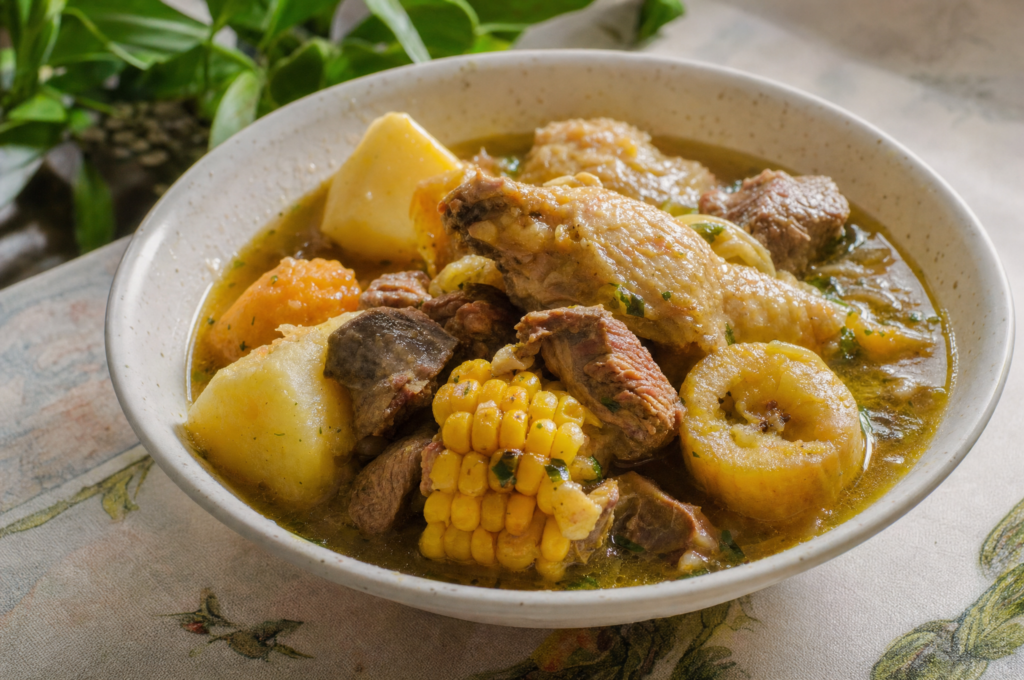
Sancocho is a substantial stew with ingredients that vary by cook and region. The official Dominican tourism FAQ describes a seven-meat version, while the Foreign Ministry’s gastronomy overview notes that the starchy staples called víveres are an important part of the dish. Ask what the kitchen’s pot contains rather than assuming one fixed recipe. Mofongo centers on mashed fried plantain, commonly combined with garlic and pork crackling, while restaurant versions may add cheese, meat or seafood. Moro de guandules is rice cooked with pigeon peas; the Foreign Ministry notes that coastal versions may add coconut milk, especially to the pigeon-pea variety. These staples make it easy to build a meal around a few shared plates, but they also mean a seemingly simple order may contain animal stock, dairy or seafood.
For a lighter pause, look for fresh tropical fruit drinks, coffee and small sweets. The tourism FAQ lists juices and fruit shakes made with fruits such as chinola, guava, pineapple, mango and papaya. Ask whether a drink is prepared with water, milk or added sugar. Travelers with allergies, dietary restrictions or religious food requirements should speak directly with staff, ask about stocks and cooking surfaces, and avoid relying on dish names alone. A menu’s English translation may not spell out every ingredient.
Two useful Colonial City dining choices
Jalao sits on Calle El Conde beside Parque Colón in the Colonial City. Its current operator menu publishes Dominican dishes including sancocho with mixed meats and root vegetables, a Jalao-style bandera plate, mofongo, chivo and desserts such as majarete and coconut flan. It gives a traveler a single decision point for comparing several familiar preparations in one central location. Read the restaurant’s current menu, address and reservation information close to your date; the menu and its posted hours can change, and live music or cover details vary. The restaurant’s current menu is not a guarantee that a particular dish will be available when you arrive.
Pat’e Palo is on Plaza de España, also within the historic district, but its offer is a European brasserie with curated local-flavor experiences rather than a casual Dominican comedor. The operator’s 1505 Heritage Dinner page describes cassava bread, yucca, coconut, fish and goat in a three-course format; it currently specifies a minimum group of eight. This makes it a relevant option for a larger party seeking a planned historical menu, not a drop-in recommendation for a solo traveler or small family. Ask the restaurant directly whether the experience and date suit your party, and compare the live regular menu and booking terms before committing. Do not treat the themed menu as a comprehensive picture of everyday Dominican cooking.
These two venues are both in the Colonial City, so they pair naturally with a day of monuments and plazas. They are not evidence that every historic restaurant has the same menu, atmosphere or access. For a more informal breakfast or a neighborhood meal farther from the old quarter, select a current operator listing near your planned destination, confirm its branch address and check whether it is open on your travel date before leaving the historic center.
Plan meals around the district, not a checklist
The Colonial City is the most efficient base for a short first visit because its historic walking loop and the two named dining options occupy the same general area. Keep lunch close to the monument or museum you have chosen, then reserve a longer pause during the hottest part of the day. The streets are an active neighborhood with residences, shops and businesses, not a dining theme park. Give the sidewalk and doorways room, carry water, and use an arranged ride for a restaurant outside the center rather than crossing the city for one unverified dish.
A meal in Piantini or along the Malecón is a separate outing from Colonial City sightseeing. Traffic and the exact pickup point affect the trip, so choose one destination and arrange the return before dinner. If you are staying outside the old quarter, cluster breakfast and one meal near your hotel, then plan a single ride into the historic area rather than making several cross-city returns. Use the city’s current transport and Metro information only where the actual station and last leg match your destination; the Metro is not an airport connection.
Restaurant opening times, kitchen hours, live music, menus and reservation availability can change. Check the venue’s own website on the day you plan to go. For Jalao, use its current address and reservation channel; for Pat’e Palo’s group experience, confirm the minimum party size and menu directly. A booking confirms a place at a stated time, not necessarily the continued availability of every dish described online. If an ingredient or allergy matters, ask the restaurant how it handles that specific request before you reserve.
One, two or three days of food
One day: Keep breakfast and the main meal in or near the Colonial City. Choose mangú with its customary accompaniments if it appears on a menu that suits your morning; then spend the warmest hours around a planned lunch and shade break. At dinner, compare Jalao’s live menu with the day’s route. Pat’e Palo’s Heritage Dinner is only a fit if your party meets its stated group minimum and confirms the booking. Do not schedule both restaurants as fixed meals in one day.
Two full sightseeing days: Arrive the evening before the first day, keep the nights after Day 1 and Day 2, and depart on Day 3: two full days ordinarily require three nights when arrival and departure days are separate. Use one day for the historic center and one for a planned modern-city or Malecón outing. Choose a central meal on the first day and one farther-afield restaurant only after checking its menu, location and transport. If you have only two hotel nights around the trip, you will usually have one full intervening sightseeing day, not two.
Three full days: Keep one hotel base and give the Colonial City a full day, a separate day to one modern-city area, and a flexible third day for a museum, garden or another neighborhood. Three full sightseeing days with separate arrival and departure days usually call for four nights; three nights provide two complete days between them. Make a distant dinner the anchor for its own day, and leave an open meal near the hotel for a late arrival, heat or rain. Do not plan a second cross-city restaurant simply to sample another dish.
Practical ordering and access questions
For groups, check menus before arriving and decide whether sharing works for the portion and dietary needs. Jalao’s live menu lists dishes with meat, dairy, seafood and plantain; ask about ingredients and preparation rather than assuming a dish can be modified. Pat’e Palo’s themed experience is listed for larger groups, so a smaller party should look at its current regular offering or choose another restaurant. Families can use the same advance check to confirm child seating, meal timing and restroom access. If step-free entry, wheelchair turning space, accessible toilets or a quiet table is essential, contact the venue directly; an address or general restaurant page does not establish those details.
For any meal outside the Colonial City, save the exact venue address and agree on the ride pickup point. Keep a flexible alternative close to the day’s final stop in case traffic or a changed menu makes the original plan impractical. That small amount of structure leaves space for the city’s food without promising an unverified route, table or recipe.
Current planning links
Check the official sources
Schedules, admission, fares and service can change. Recheck these for your travel dates.
- godominicanrepublic.com (checked 2026-09-28)
- jalao.do (checked 2026-09-28)
- patepalo.com (checked 2026-09-28)
- patepalo.com (checked 2026-09-28)
- perkjolt.com (checked 2026-09-28)
- mirex.gob.do (checked 2026-09-28)