
Destinations
Paris for a First Visit: A Practical Three-Day Planner

How long is your visit?
Choose an itinerary, or read the full guide below.
Check the full guide for arrival, ticket, accessibility and booking details.
Paris rewards a slower plan: the headline monuments are spread across the city, but a well-chosen base and a few grouped walks reduce backtracking. This guide is for a first visit of about three full days. Treat it as a framework, then check official schedules and timed-entry rules for your dates.
Arriving
Paris has two principal airports for most visitors: Charles de Gaulle (CDG) to the northeast and Orly (ORY) to the south. Rail access depends on the airport and your destination. The RATP visitor guide describes the current Paris Region–Airports rail ticket, which covers rail journeys between either airport and Île-de-France stations under stated conditions. Check the operator’s live airport access map, service status, and fare before setting out. A taxi or prearranged car can be easier with heavy bags or a late arrival, but confirm the official airport pickup location and total fare rules rather than accepting an unsolicited ride.

Local transit
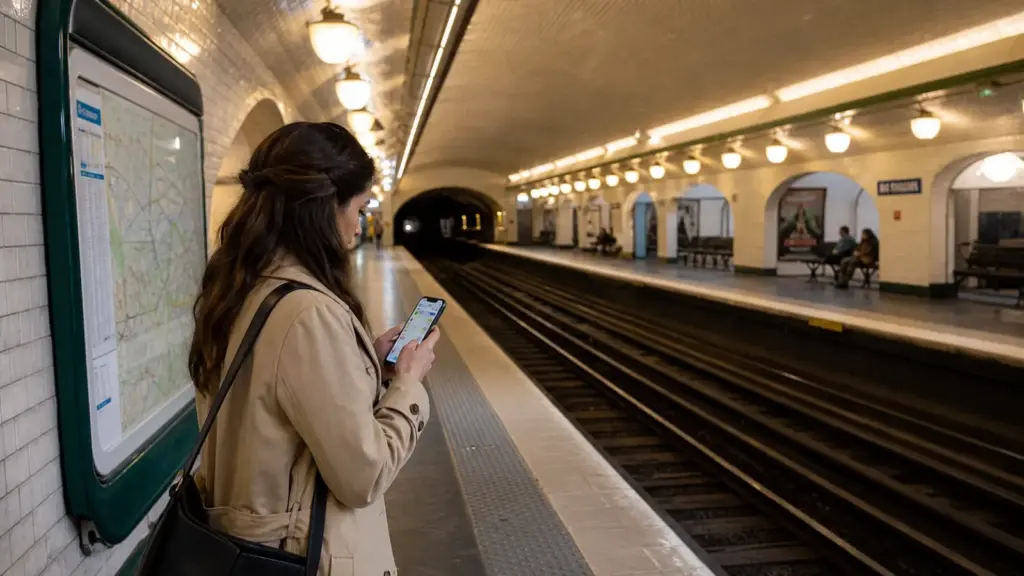
How to buy and use a city ticket: before leaving the hotel, plan the exact route in the official RATP/Île-de-France Mobilités app or journey planner. At a station, use a multilingual ticket machine or staff desk, or load eligible tickets onto a Navigo Easy card or phone. RATP currently says the Navigo Easy card costs €2 ≈ $2.24; one card per traveler. Choose the correct Metro-Train-RER, Bus-Tram, or airport rail ticket for the journey—airport rail access is a separate product category. At every ride, tap or insert your ticket, retrieve paper tickets, and keep the ticket until you exit; each person validates individually. Check the live terms before purchase because products and fares can change.
Metro and walking handle most central sightseeing; the RER and regional rail help with longer trips. RATP currently lists separate Metro–Train–RER, Bus–Tram, and airport tickets, plus a Paris Visite pass. A Navigo Easy card or compatible phone can hold eligible tickets; one card is required per traveler. Compare the precise journeys you expect to take: a pass is convenient, but it is not automatically the cheapest choice. Validate each ride and check whether your chosen ticket covers the suburbs you plan to visit.
Where to stay
- Central/1st–4th: useful for a short first stay and walks to major central sights; high convenience often comes with a higher nightly rate.
- Saint-Germain/Latin Quarter: attractive for historic streets, cafés, and Left Bank access; inspect the exact Metro connection and room size.
- Opéra/9th: a practical base for department stores, theatres, and several rail/Metro connections.
- Canal Saint-Martin/11th: lively dining and neighborhood feel; allow for a longer ride to western landmarks.
- Montmartre/18th: distinctive hilltop atmosphere; slopes and stairs may matter with luggage or mobility needs.
Paris’s official visitor office has a neighborhood-by-neighborhood accommodation guide. Compare a hotel’s total price, cancellation terms, room category, breakfast, and location before assigning value to a points night.

A balanced three-day outline
Make the Louvre morning concrete: select a dated time slot through the museum’s official booking service (recommended even for free-admission visitors), then use Metro line 1 or 7 to Palais Royal–Musée du Louvre. Allow the walk from the station to the Pyramid and arrive at the entrance shown on your ticket; the Pyramid is the main entrance. Louvre tickets are for the selected date/time and the museum says they cannot be changed, exchanged, or refunded, so avoid booking before your flights are firm. If the Tower visit has no suitable ticket or weather is poor, keep the Eiffel area as a flexible outdoor walk: RATP lists Bir-Hakeim (line 6) and Trocadéro (lines 6/9) as nearby stations; verify construction and service notices before choosing a route. The Tower’s official ticket time is when you should be beneath it, with 15–20 minutes for initial security.
- Day 1 — historic center: walk the Île de la Cité and Seine, then choose one major museum or monument with a timed reservation. Continue through the Marais and leave the evening open for dinner nearby.
- Day 2 — grand Paris: see the Eiffel Tower/Trocadéro area in the morning, then walk or ride toward Invalides and the Seine. Reserve a tower visit in advance if going up; otherwise use the riverfront and viewpoints without building the day around an unconfirmed slot.
- Day 3 — choose your pace: spend the morning in Montmartre, or choose the Latin Quarter and Luxembourg Gardens. Use the afternoon for a second museum, shopping, or an unhurried neighborhood meal. Versailles is a separate full-day choice, not an easy add-on to this itinerary.

Points and luxury considerations
Start with the trip’s fixed dates and preferred area. Compare the same hotel’s cash total with the points rate, including taxes, breakfast, cancellation flexibility, and any benefits you would actually use. Check multiple dates and room types because standard-room award inventory can be limited. Search the airline’s own award channels for the routes you can take, compare taxes and connection time, and keep a cash-fare baseline. Do not transfer flexible points until award space is visible and the transfer terms are confirmed. Avoid treating a displayed award chart or a past redemption as a promise of current availability. For a short trip, a central, well-connected hotel can be worth more than a nominally luxurious property far from your planned days.

Before you go
Recheck airport rail status, transit ticket rules, attraction reservation requirements, and hotel cancellation deadlines shortly before travel. This guide was checked on 2026-09-25; transport products and venue access can change.

Continue planning
Building a two-city itinerary? Read our London transit and neighborhood guide, then compare train and flight door-to-door travel time.